Would you like more peace? Does trauma drown out peace for you? Listen in as we dive deep and deeper still to find peace. Perhaps one of the most profound and powerful conversations in 542 episodes. Enjoy.
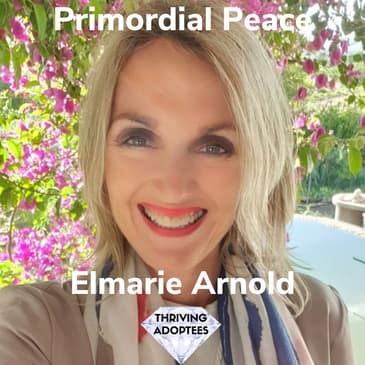
Here's a bit about Elmarie:
I WRITE TO BREAK THE SILENCE.
I was adopted through the closed adoption system in 1966, just five days after I was born. For decades, my story remained locked away—silent, like so many others. But silence never brings healing. "Un-Adoptically Me — My story. My truth. My voice" is my way of reclaiming my voice, my truth, and my identity.
Through 88 vignettes, I share the raw realities of adoption—the love and loss, the trauma and resilience, the search for belonging. My journey has taken me through deep pain and profound joy, and now, nearing my sixth decade, I embrace both. I live a tranquil life in a valley of vineyards, mountains, and open skies, a world away from the chaos of my past. I am happily married, grateful, and now fiercely passionate about the hearts of adoptees.
This memoir is just the beginning. I’m listening—to fellow adoptees, to readers, to the conversations sparked by this book. Their voices will help shape what I write next.
If you believe in the power of truth, in the courage of speaking out, and in the unbreakable strength of the human spirit, then you’re in the right place. Let’s continue the conversation.
https://foreverfree.co.za/elmarie/un-adoptically-me/
https://www.facebook.com/unadoptically
https://www.instagram.com/unadoptically
Guests and the host are not (unless mentioned) licensed pscyho-therapists and speak from their own opinion only. Seek qualified advice if you need help.
Want to learn more about thriving for you, your kids, your families or your colleagues? Pick a time to talk here
[00:00:02] Hello everybody, welcome to another episode of the Thriving Adoptees podcast. Today I'm delighted to be joined by Elmarie, Elmarie Arnold. Welcome to the show Elmarie. Thank you Simon, it's a pleasure to be here. Yeah, so listeners will probably tune in to Elmarie's accent probably the third maybe fourth South Africa we've had on the show. So you're out there making a difference.
[00:00:32] I think all the South African adoptees that I've interviewed for the show have got books and that includes Elmarie as well. So as always listeners, I would encourage you to look in the show notes and check out what Elmarie is doing and check out her book. So, Thriving Adoptees, what comes to mind when you hear the name of the podcast Elmarie?
[00:01:00] Well Simon, I don't think I'm going to have an easy uncomplicated answer here because for me it depends on who's asking and then who's listening. I'm asking. I'm asking. You're making it more complicated than it is. It was me asking. Just assume I haven't asked me. Okay, but then I can say, you know, from what perspective are you asking this question?
[00:01:29] Because if it's being asked from the eternal perspective, then I'm listening with my higher self. And then that comes from the realm where there's no space, no time, no separation, no harm, no loss, no trauma, because there's only wholeness and there's only love.
[00:01:53] And then in that space, Simon, thriving isn't something to achieve. It's simply being. So, for me it is, and I must say, this is my belief. I'm not expecting anybody to agree with me. But it is important that I'm also authentic and that, you know, I'm just being myself here.
[00:02:17] So, for me, it is consciousness revealing itself to itself and that is unbroken and infinite. But if the question is asked from the human perspective and the one who's listening is the one who has lived and longed, you know, who's known the ache of absence and the weight of stories,
[00:02:43] then for me, thriving is something I step into and it's a moment by moment process. For me, it is a sacred alchemy of turning my pain into wisdom and my wounds into expansion. So, it's the bridge for me between survival and transcendence, between forgetting and remembering who I truly am.
[00:03:12] So, for me to thrive is then both a return to my eternal self, but it's also a becoming. And it is the breath of grace over my life which says that I was never lost. All I'm doing here is I'm just finding my way home. Brilliant.
[00:03:37] I honestly believe that, Simon, and I believe, you know, it is multifaceted and it's taken me all of almost 59 years now to these things that mould inside me, that drives me to try to package it or to be able to explain it or to grow into it.
[00:04:07] And I don't think I'm ever going to be finished because it's also something that keeps on evolving with me as my consciousness expands, as I come to certain points where I suddenly get an aha moment like, wow, why haven't I seen this before? Why haven't I looked at it from this angle? Well, then everything changes and shifts.
[00:04:35] So, it's also very uncertain, but I find that it's in the uncertainty where the healing and the growth and the wisdom is because it's constantly taking me out of my own narratives, my own stories that we all want to tell ourselves. So, I'm very careful about what I say to myself because I know I am listening.
[00:05:05] So, last year we did a long spell. I did a long spell of asking people about healing. And there is no healing is required if we're already whole, right?
[00:05:25] Healing presupposes woundedness in a relative, a human form, in a psychological wound. So, for me, last week I came up with a halfway house, right?
[00:05:55] So, on the one hand we've got the primal wound. And at the other extreme, what would you sum up what you're just saying about wholeness?
[00:06:16] Would it be, I don't know, infinite wholeness or, you know, what word, what word, what two or three words kind of sums up that infinite, unwoundable thing for you? Sure. That is a complicated answer you've got there.
[00:06:41] What springs to mind is that I always feel like I'm a spiritual being and I'm incarnated in this life to pursue certain themes. And if I look at it from that point of view, then it feels to me like I've taken ownership and I've chosen to explore something.
[00:07:05] And for me, this is adoption, the trauma of being relinquished, not, you know, being taken away from my birth mother straight after being born. And I've had many experiences reliving that. So, I know there's something in my body that remembers that. But then I also believe that I am more than my body.
[00:07:35] And if I look at it from that perspective and I then see these things that I work on, quote, unquote, to become whole, then that process in itself isn't broken. I don't know if it makes sense what I'm trying to say. I just want to take you back to the question because I want to kind of lay out a path, a really simple path.
[00:08:04] I love what you're doing. I love this approach. I'm totally with you. And I'm trying to, I came up with this halfway house idea last week and I thought it was good because it's a step on the way, right?
[00:08:24] It's a, if the, instead of having to jump from one river bank to another, that's too far, right? If we put a stone in the middle, you know, put a stone in the middle and then we can land on that stone and can take us to the other side.
[00:08:42] So my word for the spiritual being, wholeness stuff that you came up with, I came up with this a few weeks ago is primordial peace, right? Primordial peace. So could, could you, could, could you kind of summer up?
[00:09:09] I mean, does that, does primordial peace, does that resonate with you? Does, well, does that resonate with you? And does another kind of little phrase come to mind that's closer to how you see? Yes, it does make a lot of sense. And Simon, I'm immediately thinking of the late Wayne Dyer. And he said something in one of his talks and it's always stuck with me.
[00:09:38] And he said, the soul is only interested in one thing and that is peace. And then he said, whenever you're confronted with a choice to make and you're not sure which choice should you take, A or B, then you must only ask yourself, which choice will give me peace?
[00:10:00] And even if the one that gives you peace doesn't make sense and it feels like it's doffed, then go with the one that gives you peace. Because peace, I think, is something highly to be aspired to. Okay. Because if I think of, yeah. Yeah, okay. So I'm going to put two of those words that, I love the pointer.
[00:10:25] I love the pointer that you're going to make a decision from that place of peace and wholeness. So I'm going to sum that, what you just said up in two words. I'm going to call it the peaceful soul. Right? The peaceful soul. Right? So I've changed my primordial peace a little bit. We've still got peace in there, but it's painful. It's all right.
[00:10:45] So if we've got the primal wound on one riverbank and we've got the peaceful soul on the others, on the other riverbank, the stone in the middle that can, I think that we can, you know, jump onto and then jump off is the, I've forgotten the word, primal paradox. Right?
[00:11:15] Primal paradox. So we've got primal wound, one riverbank, the stone in the middle that we land on, primal paradox and peaceful soul on the other riverbank.
[00:11:31] So what I mean by primal paradox, a paradox is when two things are seemingly different or true. I don't know. Opposing. Opposing. Yeah. Two opposing truths are held. Views.
[00:11:54] So the primal paradox is saying, right, on one level, perhaps the human level or perhaps the psychological level, we are wounded. But at a deeper level, we are always and we're always whole. And on that level is the peaceful soul.
[00:12:21] So it's a step on the other bank.
[00:13:05] The second part is saying, I was at a step on the other.
[00:13:13] And then I was just shouting to the Meulau who was the first part of the word, and then it was down to the last part of the world.
[00:13:42] Sorry about that, listeners. I don't know quite what happened there. My Zoom dropped out and then I lost myself. We'll have to have a look at that glitch. So I didn't catch any of what you said, unfortunately, Almarine. No, that's fine, Simon. Maybe it's all the energy coming from South Africa that's freaking the internet out.
[00:14:09] No, I was saying what this image of this stone and you've got the two riverbanks on the one hand, the primal wound and on the other hand, the wholeness.
[00:14:22] And if I then see this person standing on the stone in the middle, then I'm immediately thinking now there's a pool because either you're going to step back or you're going to jump forward.
[00:14:40] So for me, that stone in the middle means first and foremost awareness. And for me, it would be I need to be aware and conscious of what am I telling myself also about the primal wound, because even that the way I look at it is not set in stone.
[00:15:04] Like, yes, the memories or the fact that I experienced that I experienced that trauma as a newborn. That was very, very, very real. And I would be lying here if I have to say, listen, I was totally unaffected by it. I wasn't, but I'm not that newborn anymore.
[00:15:26] So for me now it is to look back and to evolve, to grow, to have a bigger view on it all, because just by doing that, just by looking back, I feel I can already change the narrative. And what I find is in, if I then talk about it, my body doesn't have that same reaction.
[00:15:54] It's like I feel I can even heal the physical sensations.
[00:16:01] So I think what you're saying is that we can, we're feeling our current meaning of the primal wound and our view of that, the meaning that we associate with the primal wound and the hurt that we associate with the primal wound. And that's not set in stone, to use your words, that's flexible.
[00:16:30] So this is about how we see our trauma being flexible. Is that right? Yeah. Yes. And healing as the awareness grows, because in my own life, for me, it's like peeling an onion. And sometimes I go back to a point where I've been a while back, sometimes it's years back.
[00:16:55] But then I'm at a deeper level because I've peeled off more layers of the onion. And I feel like the more I'm shedding those skins, the more I get to the core truth. And that core truth is that unwoundableness or unwoundedness or wholeness or however we want to define it.
[00:17:20] And that is also where that ultimate peace, I think, for me, would be. Yeah. Do you remember first touching this space and knowing what was going on? The big wake up call for me, Simon, was when I was 30 and I grew up my whole life knowing that I was adopted.
[00:17:50] Ever since I can remember, there was a beautiful story. I felt proud. I felt special. I was an only child. I was absolutely loved and adored. And I always said, I don't have a problem with the fact that I'm adopted. And I don't want to go and search for my birth mother. I'm happy. But then I was in a situation where somebody, she asked me if I had forgiven my birth mother for giving me up for adoption.
[00:18:20] And I felt an indignation like, you know, what are you talking about? There's nothing for me to forgive. And then, Simon, then I sat with the lady and I don't know. Something came over me and I started crying and it was like a dam had burst inside me. And the first words that spilled over my lips were, why did you hate it every time when I kicked inside you?
[00:18:48] And that totally threw me. Because I walked away there and I thought, you know, where are these words coming from? Why? Because I've never even thought about that. I haven't thought about an experience that I could have had in utero. I never pondered on it. But that day was a massive, massive catalyst for me.
[00:19:13] And from that moment on, I almost became obsessed with finding out who am I? Who do I want to be? How do I want to shape my life? And then...
[00:19:43] Sorry, sorry, listeners. This internet's really glitching. So can you take us back, Elmory? You said you were talking about the fact that from that moment on, after this big, this big, big moment for you, you became obsessed with finding out who you are and finding your story?
[00:20:08] Yes, because Simon, then I realised, but I do not want to be a victim of this. I want to gain ascendance over this. I want to have the victory. So, and then I realised, but for me to do that, it means I have to go within myself. And it is something that, you know, I don't know if you've ever heard of this.
[00:20:37] I say sometimes, you know, people say things happen to me. And that is when we're in victimhood. Because then it's something, I'm helpless in it. It's happening to me. But then when I start saying, oh, this is happening for me, then I can switch it and see, okay, there's some sort of a blessing here. There's some sort of a lesson or a good reason.
[00:21:01] And then the next stage is to say, but okay, things are happening through me. And then I realise I'm only the channel, the conduit. It's happening through me. But you talk about something you've discovered last week. Well, this afternoon, I thought, wow, there's another step now. Because now, for me, it is I must pay attention to the things that happen in me.
[00:21:29] Because it's from this place where I'm shaping my reality and I'm co-creating my world. And it's got nothing to do with nobody out there. It's not my birth mother. It's not my adoptive parents. It's not the many situations and experiences I've had in life. It is what am I doing with all of those things. And in that, I have free choice.
[00:21:56] Because nobody can climb in my head and force me to think a certain way. Yeah. So it's you choosing rather than trauma choosing. Yes. Yes. And the question is, who is the you that is choosing? Who is this?
[00:22:19] It is this Elmeri striving to become the best version of myself. Everything that I have inside me to bring all of that to fruition. And I'm still working on it, Simon.
[00:22:47] Simon, I think maybe if we have an interview six months from now, I might have a different outlook. But this is where I am currently. But the peaceful soul doesn't strive at all. It's just being. And that is the challenge. It is this to be in this state of simply being.
[00:23:11] And for me, Simon, is I regularly tell myself that I am enough. And I am where I am. Doesn't matter. I'm enough. As I am where I am. Because there's also that fine line.
[00:23:32] The minute I start thinking there's something wrong with me, then sometimes it feels to me that is also sidetracking me from where I actually want to go. Like you say, that stone in the middle of this river, I want to jump to the other bank. And then I must be wise in what I tell myself.
[00:23:59] And yet the peaceful soul is far more than just enough. Yes, I think in a way it is eternal. It has ever been. It will ever be. Will be forever. And then I also often tell myself that I am the one that I've been waiting for.
[00:24:28] So, this peaceful soul, it is in me. It's not something that I must look outside of me. And I'm not saying that I don't use tools to get me to that stage. Sometimes it's just being outside in nature. But it's this whole thing of the narrative, Simon.
[00:24:56] And yes, I've just become very, very, very conscious of what words I'm using. And with me, what precedes the words are the thoughts and the feelings. So, I try to be conscious in all of this.
[00:25:17] So, as you talk about the words thing, I want to go back to that enough word. And the fact that sufficient isn't a word that goes with peaceful soul for me.
[00:25:43] I came up with this, I don't know, sometime last year, this kind of idea. And it's another kind of a step thing. So, you know, for so many years, there's been, for many of us, the yearning ache of not feeling enough.
[00:26:07] And then somehow we see there's a relief in sufficiency, in being enough. And then if we keep going along the journey, there's the bliss of infinity. Yes. Yes. Absolutely. Absolutely. I agree with you 100%.
[00:26:35] So, what propels us along that journey, do you think? Or what propelled you along that journey, if I perhaps? The best way I can describe it is just to say it's a hunger.
[00:26:55] It is an insatiable drive and desire inside myself, which, yes, I also often wonder, is it something that I was born with? Is it something that I've grown into? Is it something? I don't know where it comes from. I just know that I have a very, very deep desire and that I'm constantly hungry.
[00:27:25] I don't ever feel like I've come to a place of complacency. Because for me, the minute I become complacent, then it feels I'm sliding backwards. And the complacency for me just means when I stop asking questions, when I stop, you know,
[00:27:46] asking questions of myself and when I stop looking at things deeper than what I see on the surface, when I stop listening deeper and feeling deeper, then for me that is where it starts going wrong for me because then I go into auto mode and that's never good for me. That's a sleepwalking thing.
[00:28:13] So, I mean, you talked to us, you used the word insatiable. For me, that word may be sitting in the early parts of the journey.
[00:28:29] Yeah, insatiable wouldn't, to me, wouldn't describe where you are now or your current relationship to your journey. The journey now seems far more enjoyable, far more less, you know, insatiable to me sounds desperate, you know.
[00:28:59] And I would think about, you know, the desperate yearning. When I think about my own experience, I would think about the desperate yearning. Yes, yes. The desperate, insatiable yearning, the ache of not feeling enough.
[00:29:16] But that kind of the difficulty and the darkness on the journey doesn't seem to me to be, doesn't feel to me to be reflective of the later stages of it. Yes. Yes.
[00:29:40] Now, Simon, if you and I had had this conversation the beginning of last year, I would have said I agree with you 100%. But something happened in my life last year, which I don't want to talk about here because it's all in my memoir.
[00:29:58] But that experience has brought me to a place where I've got a renewed awareness now. And maybe what you're picking up now, what I'm saying about this, it's just because of what happened to me that I don't want this to be the final chapter in my life.
[00:30:27] So it's taken me a bit back, maybe retracing my steps or maybe pausing or maybe just unlocking some new depths inside myself that I wasn't aware that I had. Yeah. So maybe for me, Simon, it's like maybe these things work in layers.
[00:30:53] And like when I have the victory or ascendance over one, then something else pops up. But then I also have to agree with you. If we are simply being, then all of that falls away. Because what is it then that I still need to find out or to work on or to peel through the layers? So, yes, it is.
[00:31:20] It feels to me a bit more like snakes and ladders than peeling an onion back. Yeah, that's an interesting comment there. I've never thought of it like that. Yes. Yes. And my life tend to have some of these patterns of snakes and ladders in it. So, yeah, I'm definitely going to think on that one.
[00:31:50] Thank you, Simon. Yeah. You talked about going forward and then going back. So I'm just trying to put a metaphor. Yes. Yes. That kind of captures what you said. You know, sometimes like that thing that I talked about, the three, the banks of the river and the stone in the middle.
[00:32:17] That's kind of my stuff that I'm putting out there for the sake of our conversation. Whereas the snakes and ladders thing, it was my metaphor to kind of match what I heard in what you said. Yes. Yeah. I don't at this stage have a very clear, definite answer for you on that. But I'm definitely going to ponder on that.
[00:32:44] Because, yes, it is a challenging thing that happened last year. And, yeah, I just think this is where I'm currently at in my journey, Simon.
[00:33:05] And I know when we have a, if we should have a follow-up chat, say, a couple of months or even a year or so further down the line, I'm going to have moved beyond this point where I'm currently at. Yeah. You see, so there's a confidence there.
[00:33:27] There's a confidence, there's a knowing, there's a certainty, there's a definite feel, right? Yes. And that sort of confidence doesn't go, that confidence to me doesn't sit with the insatiable. There's a clash there.
[00:33:54] It doesn't, you know, on one hand, you've got insatiability, which has, you know, has a feeling of desperation. When I look at my own stuff. And you seem fairly sure, or more than fairly sure, you're definite that the journey will continue and the learnings will keep coming.
[00:34:25] Yes, definitely. Definitely, Simon. So, yes, my... What do you think keeps us stuck on this journey? What's kept you stuck on this journey? You see, once again, I'm so careful what I'm going to answer you now, because every answer I'm giving you, I'm shaping my reality.
[00:34:54] And I'm telling something to myself. And then the next question is, what I'm telling myself, is it something that I'm prepared to live with? Yes. So, sometimes I think it is just... I love to use the metaphor of a bird flying over my head and it poops on my head.
[00:35:19] And then I think, okay, sometimes I can't help it that a bird flies and it poops on my head, but I'm definitely not going to allow it to nest on my head and raise its young there. And maybe that is... I don't know if that makes sense to you or, you know, if you understand what I'm trying to say. We don't want to be covered in the stuff.
[00:35:48] No, definitely not. Definitely not. Well, there's that saying, isn't there? If you're in the ship, keep going. Yeah, if you're going through hell, just keep going. Don't park off somewhere and rest because, yeah, keep going.
[00:36:09] And I don't see my life as that, Simon, despite the things that has happened, that has manifested. I can't pretend that it didn't happen. It happened, but I'm not going to let that define me. I'm not going to let that put me in a prison because it would be a prison that I've created for myself.
[00:36:34] And I'm not going to be the prisoner or the jail cell. I want to be free. Freedom is a very big word for me, very big. It's always been to be free to be me. Yeah. To basically step into myself and just be free.
[00:37:02] Because somebody also once said, there's no apprenticeship for freedom. Either you're free or you're not. Hell, that is a very tough concept to wrap your head around. Well, it's back down to how we define ourselves. You know, we can define ourselves. I think, did you use the word body-mind? I don't know. Did you say that? Or am I just imagining that?
[00:37:32] I don't think I used it specifically. Okay. So we can identify with our body or our mind or our body-mind for want of a simpler phrase. Or we can identify with our essence. So we can identify with the primal wound or we can identify with the peaceful soul.
[00:38:03] Yes. Yes. And, you know, I did a podcast interview with a fellow adoptee called Brett First yesterday.
[00:38:14] And I found it very tricky because we were largely discussing the body-mind or largely discussing psychology rather than the peaceful soul.
[00:38:37] And whenever I get, nowadays, when I get into that discussion around psychology, I just, I just go around in circles. I get, I get stuck. And I'm like, why, why do I, I don't, why, I'm not my psychology. So why do I want to identify with my psychology?
[00:39:05] Why do I want to explore my psychology? Yes, I hear what you're saying. And yes, I also agree with that.
[00:39:20] And then the other thing, Simon, is that I absolutely believe that the times we are living in right now, that I feel there's a lot of help coming towards us from the unseen realms, by lack of a better word to describe it. That actually helps us to overcome these things.
[00:39:47] And I feel these limited or these paradigms and the way we look at it and the way, I almost want to say we're being told how to interpret certain things,
[00:40:06] that there's a fresh perspective or a fresh energy coming to help us evolve out of this. Let's then say, step out of the poop and, or, you know, not park off while you're going through hell.
[00:40:27] It feels to me like I'm getting help because it feels to me like I'm getting insights, I'm getting new ideas, I'm getting awarenesses that I've not had before. I don't know if you also feel that way because you interview many people or I don't know, then if not, then it's perhaps maybe just something that's applicable to my own life.
[00:40:56] But then that's also good enough for me. Well, I believe that we're right at the, we're right at the, the vanguard of this, this stuff on, on this podcast.
[00:41:24] Yes. Simon, would you just define vanguard for me? I just want to make sure that. The leading edge. Yes. Yes. By, by, by, by leading, I mean the, the, the, the, the, the, the spiritual edge. Yes.
[00:41:45] So most, it's like, you know, what, a world that used to be all about our essence and about spirit became a world that was, largely about psychology.
[00:42:07] And now that world's going into a, now, now we're going into something that's psycho spiritual. So it's, it's, it's a mixture of both. And yet, if, if I had to sum up the biggest learning or my biggest personal learning and the biggest personal,
[00:42:34] the biggest learnings that I've heard from fellow adoptees is it is that our essence, how we, how we see our identity is far more powerful than how we, than our psychology.
[00:43:06] So I would, I would say the spiritual side, for, for want of a better word, for want of a better verb, trumps psychology. Yes. It, it, it, it has a far bigger, it, it's a far bigger, far more healing or, or growth.
[00:43:36] Yes. It's, it's a catalyst. It's, it's a far bigger force in our life. Yes. Yes. Yes, Simon, because I think there also now, we're tapping also into the, the field of, of energy. And, and what I've, I've come to realize is that everything is energy and you get low, dense energy or you get light vibrations.
[00:44:03] And, um, I want. I agree with you. And the, the stories are very dense. Yes. Yes. Yes. Because it's depression, it's grief, it is anger. It is, you know, everything that went, that came with this package called the, the primal wound or the primal trauma. There's a lot of, of, of very dense energy there.
[00:44:31] And, and I'm not denying the presence of that energy because I'm not saying to any adoptee, listen, you are making up stuff. It didn't happen. It's not that.
[00:44:44] But I'm just seeing that there's an opportunity to turn that into those lighter vibrations where it is just better to be light and happy and free than it is to be depressed. And, you know, to, to, to, to carry those heavy, heavy energies because the heavy, heavy energy is a burden.
[00:45:13] And, you know, Simon, how long can we really carry burdens? And in the end, the burdens break us. And to me, that is the saddest thing. You know, if we should allow this thing then called primal trauma to in the end destroy us and, and break us and make less of us than who we are, because we are way more than that.
[00:45:43] But first of all, we must be prepared to step out of that. And I think maybe now I'm seeing your stone again in the middle of the river, you know, we must be, because nothing's going to happen while we're standing on the bank. We need to step. We need to step out of it. And that stepping is also not, not necessarily a singular action.
[00:46:10] It is a constant stepping because as these things lure you back into the past, for me, it comes with this conscious decision. No, I'm, I've, I've dealt with that. I've moved away. I've, I've healed that part. I'm not going back there. I'm not going to wallow in that story because I'm not the author of that story anymore.
[00:46:39] I'm now the author of a new story. And this story is better. And, uh, I've closed that book. So as you were describing that, um, I, some, an idea I've been playing around with early recently came to mind is the fact that the, the, the darkness needs, needs the light. Right.
[00:47:07] The, the black of the ink of a dark story needs, needs the white of the paper. If we're reading in a, if we're reading a paperback or a hardback, if we're reading a memoir, if we're reading a book on a Kindle, the, um, the pit that the book is,
[00:47:35] the, the, the pixels need, the pixels need the screen. Yes. And, and we, we, and the screen is, the screen is awareness. That, that's, that's the piece. Yes. But the piece is drowned out by the clamor of, of the darkness. Yes.
[00:48:05] Until we see the piece, the, the, the, the, the piece has to be there for it to be loud, for, for, for the voice to be heard. Like the, the, the, the music. The music needs, the music is in the gap between the notes, not in the notes themselves.
[00:48:33] And I, and I'm also thinking of nature. You know, we have day and night. And there are so many amazing things that happen when it is dark, but, but nowhere in nature will it just perpetually be dark or perpetually be light.
[00:48:52] And, and I think, Simon, that is also part of, you know, what, what I'm embracing is this, because now we're touching on, on a theme of, of darkness and light. And, and I think if I hear you correctly, you, you also saying that the darkness isn't necessarily evil or bad, by lack of a better word now.
[00:49:19] Well, judging, judging, judging the darkness, you know, like, it's like judging, it's like judging rain, isn't it? It's like saying, I don't, I don't want it to rain. Well, if there's no, you know, I'm happier when it's, I'm happier when it's sunny. I think I told this story last week on another recording, but it may have just been the conversation. I saw, I went to the swimming pool as I do.
[00:49:47] And I asked the lady behind the counter how she was. And she, she checked, she, she looked outside of the big windows of the swimming pool to, to see how the weather was. And then answered me, answered me in accordance with the weather. Right now. Now, and me too, I'd rather it be sunny too, but you know, like, but if there is no rain, there is no growth.
[00:50:14] You know, nothing, very little grows in the desert, does it? You know? And liquid sunshine. People call rain liquid, liquid sunshine. So, you know, judging, trying to shove our feelings away, our negative feelings away, judging our negative feelings, judging ourselves for having those negative feelings.
[00:50:37] It's all, it's all, it's all part of what we do. Yes. But life's a little bit easier if we do it less. Yes. Yes.
[00:50:58] And the more we, we become aware of what we do subconsciously, the more we have the opportunity to, to bring that into our conscious awareness. And then we can transcend that. And then it makes it easier when we get pulled back into those experiences.
[00:51:26] It becomes easier and easier to pull ourselves out of it. The darkness is less scary. Yes. Yes. That feels to me like a good place to bring it in. But as soon as I say that, I think, oh, we're finishing on Simon's thoughts, not Elmery's.
[00:51:56] I'm happy to finish on Simon's thoughts. Bring it on. What would you like to call this episode, Elmery? Oh, goodness gracious. No, Simon, you can't let this now end with a massive question here. Now, I know you've got something in mind.
[00:52:26] I've got my one. Give me your thoughts. Maybe I can expand on that or maybe just agree with it. Well, we had that word. I came up with that summation of what you were talking about. After Wayne Dyer. And that was peaceful soul. Peaceful soul.
[00:52:54] That might be a nice idea. And also, just one more thought on Wayne Dyer. He started off very, very mindset-y. Yes. Very psychological. Yes. And then he, but he shifted completely over his career, over his writing career. Yes.
[00:53:22] To be far more focused on who we are than how we think and feel. Yes. I think if I look at Wayne Dyer, and I mean, also remember, he grew up in foster homes. He, you know, he always said how many foster homes he was in because he was never adopted.
[00:53:51] And, yeah, he, also his journey. And I think if I look at Wayne Dyer, then I think that there is a man who moved from his head space into his heart space. Because the head, the mind wants to make sense of things and come up with answers.
[00:54:15] And that's also sometimes where the ego likes to, you know, also have its final say. And I think with Wayne Dyer's journey towards the end, he was just one big fat heart. Brilliant. Dare we, I don't show up if I dare call the episode a big fat heart.
[00:54:49] And that is where we should be, Simon. We should have big fat hearts because then it's not about how many times we're being hurt. But if you've got a big fat heart full of love, then it means none of that can really damage us. Yeah. There's another metaphor that pops for me when you talk about this stuff.
[00:55:17] And something that I think captures quite well the kind of primal wound to peaceful soul journey. You know, journey is the difference between a broken heart and a heart attack.
[00:55:48] Right? Yes. Yes. Like, I remember my dad's dad, we called him Pop. I remember him dying of a heart attack. And I remember being heartbroken. And I remember telling my Teddy about my Pop's death.
[00:56:14] And there's a real distinct difference between what killed him. Yes. And my emotional weather. Yes. And I think for me, that's the difference between feeling wounded and being wounded. Yes.
[00:57:10] I feel wounded. I feel wounded. We say, I am wounded. Yeah. And yet the peaceful soul is unwoundable. Yes. Simon, I'm sure you've heard that saying also that says, I am are the two most important words. Yes. Because everything else you say after that shapes your reality. Yes.
[00:57:38] And there was a stage in my life where I was very, very conscious. Because it's so easy. Oh, I'm tired. I'm hungry. I'm down. I'm depressed. I'm restless. I'm anxious. I am. So with each of those, I'm declaring, you know, my state. So to say I am broken or I am traumatized, I am. Yes. Yes.
[00:58:06] I'm, you know, I'm very cautious of what I'm saying because I'm listening. You are. You know, sometimes we think, oh, we just say these things. But you know what? I am listening to what I am saying. And how good is this for me if every day I say I am and then it's followed by something
[00:58:33] that is some of those lower density type of energies. It's not good. And it's not going to take me to where I want to go. Because, you know, if I want to go to Cape Town, then I'd better make sure that I'm on the train and I bought a ticket to Cape Town. I can't fool myself and, you know, be on my way to Durban. Sorry, I'm using South African cities here.
[00:59:01] But you get the drift. You know, you need to make sure you're on the train heading to the place, the destination where you want to go to. Fantastic. Thanks, listeners. Thanks, Anne-Marie. Pleasure, Simon. We'll speak to you very soon. Take care. Bye-bye.