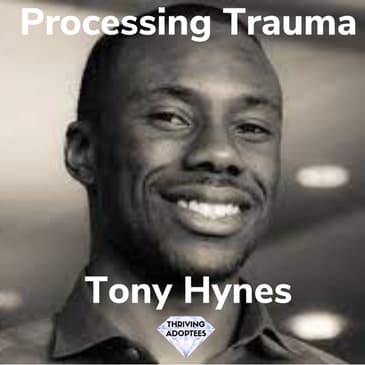
No-one asks a bereaved person if they've healed from the trauma of their loss. So why should others ask us if we're over the trauma of the loss of our birth family. What if we explored processing trauma rather than healing it? That's Tony's take. Listen in to a different take on relinquishment. It'll get you thinking. And processing.
Here's a link to Tony's previous interview on belonging. Listen in to Tony's learnings on feeling and creating that sense of belonging with insights on being comfortable in the uncomfortable, exploring culture, communication and much more. Fascinating. https://thriving-adoptees.simplecast.com/episodes/belonging-with-tony-hynes-interracial-adoptee-training-specialist
Tony, a former foster youth and adoptee, was adopted by a same sex couple in the mid 1990’s. He writes about his experiences growing up as both an interracial adoptee and as a child growing up in a same sex headed household in his memoir “The Son With Two Moms.”
Connect with Tony:
https://www.linkedin.com/in/anthony-hynes-283aa941/
https://www.facebook.com/TonyHyness/
https://www.instagram.com/tony_hy/
Guests and the host are not (unless mentioned) licensed pscyho-therapists and speak from their own opinion only. Seek qualified advice if you need help.
Want to learn more about thriving for you, your kids, your families or your colleagues? Pick a time to talk here
[00:00:00] Hello everybody, welcome to another episode of Thriving Adoptees podcast. Today I'm delighted to be joined by Tony, Tony Hines looking forward to our conversation today Tony.
[00:00:11] Thank you so much for having me, Simon.
[00:00:14] Yeah, so it's ages isn't it? It's got to be two years since we did the last one, maybe just done the message just over.
[00:00:21] I should have chat shouldn't I if I was as detail oriented as I should be perhaps I should have chat.
[00:00:27] So there's a link listeners is a fantastic interview with Tony last time.
[00:00:32] And so there's a link to that in the show notes but today we're going to talk about healing.
[00:00:38] So what does healing mean to you, Tony?
[00:00:45] Healing for me means really processing in healthy ways the trauma that you have experienced throughout your life course and as it relates to adoption.
[00:00:57] I don't necessarily always feel that healing even is the right terminology to use for us as adoptees because a lot of us are adoptees are experiencing things that were told to heal from that someone who was not adopted would not be told to heal from.
[00:01:14] For example, if I lost or someone who was not adopted loses their parent loses their mom loses their dad to cancer.
[00:01:23] Five years later after that death, that person is not then asked, hey, have you healed from the death of your parent death of your mom the death of your dad.
[00:01:35] But as adoptees often we are asked, have we healed from the trauma that we have experienced from being separated from our birth families being separated from our nations of origin being separated from our languages.
[00:01:49] So there are certain things in life that really do come with a sense and a feeling of healing or with adoption.
[00:01:59] There's this increased kind of complexity involved with the word is what it means with how we're coming to it and thinking about it.
[00:02:08] Yeah.
[00:02:10] Wow. I love that different, I love that different take on it right so the whole point of the podcast is to bring different opinions to this subject.
[00:02:22] And I really value the newer and more different is I think sometimes the better for us so this grief thing.
[00:02:34] So I adopted called Pamela Karen overcame on her a few months ago, and she was talking about one of the big things that helped her on her healing is looking at it like it's grief.
[00:02:48] So I think that the idea, the ideas that you're putting forward here that you know we wouldn't be we wouldn't be telling anybody to get over their grief would we it or heal from the grief we just we just wouldn't use that.
[00:03:06] We wouldn't ask them that question.
[00:03:09] And we wouldn't use that word so what what for you is a user processing.
[00:03:17] Is that the best word is that the best word or have you got other kind of words that you think we could explore.
[00:03:28] Processing is a good word I always think that there's room for improvement and growth around language and so I use processing other people use different terminology.
[00:03:38] Why I like the word processing is processing is something that's ongoing, something that's continuous, something that isn't finished.
[00:03:47] And what else is something that is ongoing isn't finished adoption and how we're feeling adoption we talk about it as this lifelong journey.
[00:03:57] So processing goes kind of hand in hand and synonymous that with this lifelong journey of adoption now we're considering it how we're thinking about it how we feel in our bodies about adoptees.
[00:04:10] So that's why I like the processing, but I do think that processing should go hand in hand with processing in healthy ways, because we can process things in ways that aren't healthy for us though.
[00:04:24] I could be processing a loss and I could be lashing out at the world.
[00:04:29] I could be really just angry at people and that could come out of my work environment or my home environment, or I could really be dissociating and pull back from society and be reckless.
[00:04:45] And all of those things still involve me processing, reprocessing the loss involved with my story and history.
[00:04:53] But is that processing in a healthy way? No, processing in a healthy way would be reaching out to people in my community who I feel comfortable venting with sharing with processing might mean finding a therapist who is well versed in adoption related trauma issues.
[00:05:11] Processing in a healthy way might mean taking a long walk or doing taking deep breaths.
[00:05:17] And so I think focusing on the processing is really important and then focus on focusing on you know what is healthy processing for you because it's going to be different for different people it's not uniform, but that's why I like that terminology it allows for that kind of ongoing conversation with oneself and with their community too.
[00:05:38] So are you talking about processing the feelings?
[00:05:45] I mean like so trauma seems to me to live on as feelings and you know you obviously mentioned the stuff in the body so it's the body work.
[00:06:00] It's not just the feelings it's the sensations as well.
[00:06:05] So it's what we sense in our body along with what would be called I guess we would normally associate with our heart in a way.
[00:06:16] We'd be thinking about healing, you know the feelings in our heart and the sensations in our body is that what you mean on the right lines?
[00:06:27] Yes you are and so we are thinking about our feelings in our body when it comes to that processing work.
[00:06:36] And we also know that there's scientific reasons why it's important to do that process and brought our feelings because our feelings also relate to how our bodies react to to those feelings to those traumas.
[00:06:50] So our bodies are reacting in cognitive ways meaning the way that we even communicate the way that we sleep, the way that we eat is impacted by feelings surrounding our stories surrounding trauma.
[00:07:06] And so processing healthy ways allows us to also sometimes to eat better to sleep better to communicate with others in our lives better.
[00:07:16] And when it comes to you know what are we processing specifically as adoptees usually what we're processing especially as adults also as children too is first that first separation from birth family.
[00:07:31] I was having a discussion with a clinician yesterday and she was saying I'm working Tony with an adopted family right now the adopted family.
[00:07:39] They're saying to me that well we adopted our child when they were newborn and when they were a newborn and we adopted our child 30 minutes after they were born they were separated from their birth mom and so we thought that there wouldn't be trauma loss associated with that.
[00:07:54] And so having a conversation with them about well that child spent the first you know nine months that gestational period with their birth mom hearing their birth mom's voice getting.
[00:08:09] You know nutrients from their birth mom during that first nine months and then even after birth was also hearing the voice of their birth mom.
[00:08:18] That was the only voice really that they had been hearing when they were in birth mom's belly and then the first voice that they were hearing in that particular circumstance when they came out of the womb when they were born.
[00:08:32] And now we're being separated from that voice for being separated from that smell for being separated from that face.
[00:08:40] So even though your child eight nine 10 years later doesn't necessarily have this visual memory obviously of their birth, their body still remembers those feelings that they had their body still remembers what that separation felt like for them.
[00:08:57] And you know scientifically that that's something that's harmful for for children and that's it's difficult. And so even that alone would require processing.
[00:09:10] And after that of course Simon that's not the only loss that that child is happy.
[00:09:16] And the other thing is that continued loss in this case and a lot of cases from being able to talk with their birth family growing up has a loss of the kind of information that other people just kind of have in privileged ways having baby pictures, knowing the names of birth
[00:09:34] knowing their family history knowing the medical information. So all these other things then tie into that sense of loss than that I'm holding with me.
[00:09:44] Whilst I'm being told a lot of times by society that I should feel grateful for being adopted that I should feel grateful for being in a different and quote quote quote better situation as an adoptee which we know to be just different and not better.
[00:10:01] And in some cases, the opposite not better some cases worse. And it would either way different and so all of these things are things that require us to really dig in and ask questions to adoptees about hey how are you feeling about your experience to give them permission there to give them permission to share.
[00:10:22] First is important because I think.
[00:10:25] And I'm not completely opposed to the word healing, but I think with adoptees sometimes what happens is, especially when coming from non adoptees.
[00:10:36] The question of have you healed comes before how are you feeling about, which is also something that is not conducive to helping us process all of what we've experienced in those healthy ways that I mentioned.
[00:10:51] So what's the difference between processing the feeling stuff, the feelings and processing the sensations in our body.
[00:11:02] What because they seem to be two different things to me clearly that connected.
[00:11:09] But what does processing mean for each different bit. I haven't got an answer myself clearly to this you know.
[00:11:16] That's a great question I think we need to have a processing sensations.
[00:11:21] It's involving how we feel a lot of times from a physical standpoint from a visceral standpoint. So if I'm awake at night, and my body is just jittery my body is wondering what to do with itself.
[00:11:42] That's a sensation that I'm feeling. So that would involve taking a deep breath and realizing that my body is feeling that realizing that one of my body is at high alert, and then realizing, okay what's happening in my body is it high alert.
[00:12:00] And again, I mentioned the hands shaking are my eyes kind of wide open. And in my jittery and other parts of my body, you know, am I breathing really heavily.
[00:12:13] So all that sensations involves kind of thinking about what my body is doing in the moment.
[00:12:22] And I'm going to involve some feelings are tied into one another, because you know it can also involve maybe my body, maybe it feels angry right now. Maybe I just, I just I'm clenching my fist and I don't know why that's a sensation.
[00:12:37] It's coming sensation is coming over you kind of in that moment. It's kind of in that moment. How am I feeling right now.
[00:12:43] And that's the sensation that's going on. Whereas with feelings, feelings are also things that can be sensations that we're thinking about in the moment the feelings involve more of a, you know how am I feeling kind of in a more general standpoint, and not just right now but how have I been feeling
[00:13:02] of today. How is not only my body and how does, how's my mind feeling about about my day and sad and happy. And am I worried and my nervous.
[00:13:15] The body can kind of tell us that we're nervous but is that what I'm feeling my feeling and nervous in my head do I think that I'm nervous because my body is doing these things.
[00:13:25] So from a kind of month to month or year to year standpoint, how have I been feeling over the course of the past couple months about this about my friend moving away. For example about my parent and I having a good relationship.
[00:13:40] And then also from that macro standpoint of it, how am I feeling on a day to day month month year to year basis about my situation.
[00:14:09] And so we can in our bodies and in our heads and our minds and state both of those things better about ourselves that leads to that healthy processing.
[00:14:17] Yeah.
[00:14:18] As you were, as you were talking, I was thinking about.
[00:14:24] I've had now two face to face sessions with a somatic and experienced woman.
[00:14:34] And so during the hour converse, the hour session with her, we do, we do some body work, and we do some discussion as well.
[00:14:47] So she's she's she's jumping between the two bits.
[00:14:53] So we've got the pure what's going on, what's going on for you Simon so what she did.
[00:15:02] So we were doing the kind of the she was just guiding me through the the the the the the the the the sensations.
[00:15:12] And as as she as she did that, I started crying.
[00:15:19] And so some tears came came out from me. So I'm and she was, you know, asking me.
[00:15:27] She's she was keeping it asking some little, you know, a few questions not not too much.
[00:15:34] And I actually are making comments on what might be going on.
[00:15:39] I intentionally did not answer anything back.
[00:15:44] I just stayed in there. I just stayed in the feeling space.
[00:15:48] And then after we've done that for a while, then we went into the then we went, you know, I opened my eyes and we went into a conversation about the about what had been happening.
[00:16:02] So we were kind of like, it's almost as if we started people talk about this.
[00:16:08] I don't know if you had this seat is about talking, you know, starting bottom up.
[00:16:14] So most most therapies pop down so it's it's brain first right.
[00:16:20] Whereas somatic stuff is they call it bottom up.
[00:16:25] So it looks at what's going on in the body as the as the kind of the the the point, the entry point.
[00:16:35] And then you look at the feelings so that in a in a kind like a like that's like a my microcosm really of what came to mind is as you were talking and so we can look at this in a micro.
[00:16:54] In a micro way, like what's what's happening for Simon in his what's happening for us at night. As you're saying, you know, like we know about it sort of anxiety and insomnia and how that play how that plays out.
[00:17:10] Look at it from the micro perspective the micro perspective was what happening for us in the moment what was happening for me in the moment of that session.
[00:17:19] And then we can look at the kind of the the macro side of it, which is our perhaps our learning around this stuff you know so if we're reading the best all down to Colt boy book about body keeps the score or we're reading we're reading Peter Levine book about somatic stuff.
[00:17:39] And that's kind of the macro, the macro side we're listening to a podcast to inform ourselves about the difference between these things.
[00:17:48] That's what comes to mind.
[00:17:53] For me, the processing of it in that in that macro moment is releasing the grief that since I hence the tears processing of the grief and then the processing of the feelings that go
[00:18:17] through the processing the physical and then processing the emotion.
[00:18:25] Yeah, I think you know doing both of those things are really important processing as you said the physical and the emotion allows to release a lot of some of these
[00:18:38] I don't say negative feelings, but I do want to say feelings that they've been weighing us down feelings that have been making it really hard for us to think about other things for a long time.
[00:18:53] And it doesn't mean those feelings and those thoughts will never come back.
[00:18:57] But sometimes it is helpful in ways that mitigate or a lesson the negative feelings that we have a negative sensations that we have associated with those memories.
[00:19:07] Yeah.
[00:19:10] What's important to you around this judging of feelings, Tony.
[00:19:16] Around repeat that around this.
[00:19:18] What's important to you around this, the judge, you know, talking about judging, you know, you're talking about negative feelings.
[00:19:26] What's your feeling right around this judgment of our feelings and calling them negative or positive what have you got on that as that as about these.
[00:19:39] I would say, yeah.
[00:19:42] Yeah, as adoptees, I think that it's a judgment and it's kind of a dismissal of feeling negatively is that there's a dismissal that goes on with well if I Tony feel negatively about my experience as an adoptee any piece of it.
[00:20:02] Then there's a well sometimes it's a why do you feel that way but there's also a well yeah I get that you feel that way but aren't you glad that you have this over this even though that part is bad isn't that part kind of worth it because you were able to get this.
[00:20:20] And, again, I feel like because there isn't a proper understanding of the loss of the grief of the pain involved with adoption process, the results in the first place.
[00:20:34] There isn't an understanding of how problematic statements like that are in the first place.
[00:20:40] The same kind of analogy I used earlier.
[00:20:44] If my father died, mother died and I inherited a million dollars let's say I inherited million dollar my father died at the age of 45 I'm let's say I'm 22 my father's 45 he dies of heart attack.
[00:21:01] And let's say he was well off this is just a scenario I'm just creating and I inherit million dollars.
[00:21:10] Some people might think in their heads but they would never say out loud.
[00:21:14] Hey, you know, isn't it's bad that your father died but aren't you glad though at least you got a million dollars out of it right you know like that's no one would ever say that.
[00:21:24] And there wouldn't, there would be an understanding, even if you had that million dollars that yes, this part of my life financially might be the financial side of my life might be easier.
[00:21:36] Right it might be more comfortable financially.
[00:21:39] But that doesn't negate the pain that I feel from my father's death.
[00:21:44] And so, even though I have this that doesn't mean that I can't still feel negatively about my father died.
[00:21:51] Even though I'm in a quote you know better community, which is it really means there's the only metric people are usually using for that when they talk about adoption is your in a richer wealthier area where the schools are better whether there's less crime.
[00:22:10] There isn't an understanding of well I'm an interracial without the assignment. So, if I'm growing up in a predominantly white community that's not diverse.
[00:22:19] That isn't necessarily a safer environment for me from maybe from the crime standpoint maybe it is but it isn't a safer environment for me has been proven from a racial identity standpoint from not experiencing racism in my community standpoint from my birth family being honored
[00:22:37] culture being honored so it's not a safe environment for me.
[00:22:41] A lot of times and most times for adoptees going up in that specific environment, but it's codified as this well.
[00:22:49] Aren't you glad you're in this better community. And even if I give people that argument to say well yeah I guess I am in a community, maybe that would have had less crime than the community that I would have grown up in with my birth family.
[00:23:03] That doesn't mean that I'm not sad that I'm not able to live with my sister that we're not able to see each other's face every day that I somehow would have still chosen this if I had the option to give me the opportunity I would say I don't know like this is this is just my life.
[00:23:20] I can't choose one or the other, because this is how this is how I feel and some adoptees will answer that question differently. Some adoptees will say well I would have chosen to grow up with my birth family or I still would have chosen to be with my adopted families.
[00:23:35] For me is I was given a decision when I was four or five years old to make. But if I was given that same decision at 16, you know, 17 years old, I can't tell you what it would be because I only know the life that I'm living.
[00:23:48] The life that I'm living has this adopted family who weren't perfect but did a lot of things in the quote to be right way, but also has birth family who I didn't get to experience live with see no information about and that part is painful so when it comes to the judgment of those feelings.
[00:24:10] The judgments of feelings around adoption are often incomplete because we, the judgments are incomplete. And therefore, a lot of times adoptees feel incomplete in our kind of processing of our feelings because we haven't been given permission to quote completes how we're feeling about our feelings because we get shut down a lot of times and told that we should feel grateful or glad.
[00:24:40] And that kind of where a lot of adoptees out there kind of shuts down those thoughts.
[00:24:44] It does yeah.
[00:24:45] It does.
[00:24:46] And I'm glad you took it in that way.
[00:24:49] I'm glad you took it down that route because it wasn't.
[00:24:56] There's some genius and wisdom in what you just shared, Tony.
[00:25:03] What about our feelings about our feelings and our internal judgment about our own feelings rather than society's judgment of our feelings and this question that you ask, are you whole?
[00:25:23] Have you healed yet?
[00:25:24] It's just like a really rude question, isn't it?
[00:25:28] It's like insecure.
[00:25:30] What's the word?
[00:25:32] It's a stupid.
[00:25:33] I don't often swear on the podcast but it's a stupid effing question really in it.
[00:25:38] But this to come from somebody outside.
[00:25:42] But what about internal and our own judgments of our own feelings?
[00:25:49] Yeah, that's another very important time.
[00:25:52] And I think the first thing that comes to mind is our own feelings about our feelings, not society's feelings and how hard it is to divorce those two things.
[00:26:07] Because a lot of times our own feelings about our feelings are coded by social desirability and how we think that we should feel about our feelings based upon how society feels about our situations.
[00:26:22] I was at a gala this past weekend and there was a Star of Adoption award that my organization, Center for Adoption Support and Education was putting on where we honor an adoptee who is just doing good things.
[00:26:45] And there was an adoptee, a younger adoptee who was 15 years old and she was speaking about her experience and she was speaking just about the love that she had for her family.
[00:26:57] And then I remember the end of this speech she invited her family on stage with her. She's an interracial adoptee and I think she has at least seven siblings and all of them are white and she's black and they took this kind of family photo, family portrait in the middle and it was very beautiful and great.
[00:27:24] Also though as an interracial adoptee who's, you know, double her age.
[00:27:30] I also wondered to myself, will she feel exactly the same in 10 years about describing how she feels as she does right now. She's 15 years old because what I've witnessed when I've watched 15 year olds 16 year olds 19 year olds who are adoptees so old enough to think credit
[00:27:53] specifically about their experience and to talk about it. So they've talked about their experience and normally kids in these particular age groups, especially in public facing forums, don't criticize not only their adopted family they don't criticize adoption at all.
[00:28:10] They talk about, you know, how maybe they were feeling sad but now they're feeling better and they talk about how great their families are. This is not all obviously this is just a trend for what I've witnessed.
[00:28:23] And then when you get into what I've witnessed from the mid 20s adoptees out there is saying things like when I was younger, I was doing things like that or now I'm estranged from my adopted family or now I'm talking more critically about my adopted family.
[00:28:43] Now, now I'm feeling differently about my adopted family. And I asked them, well why, why do you feel differently and they say, Well, I've been able to live independently from them now, or I was feeling this way for a long time and I didn't feel like I had permission or I didn't know how I was feeling
[00:29:00] like that's what people expected from me. And so it's very hard as an adoptee sometimes to recognize, okay, is what I'm feeling separate from what others are kind of telling me I should feel or is it just how I feel.
[00:29:14] And I think that those are legitimate conversations within kind of their own heads to have because it will leave them to eventually figure it out and to say, Okay, no, this is how I'm really feeling about this.
[00:29:29] I really am really proud of my adopted family and what, you know, we have been able to come to terms of connected in the sense of connectedness with each other. Or no, I actually don't feel good about my adoption I don't feel good about the way that I was brought to the United States, or I feel good and bad about different things related to
[00:29:54] my adopted experience. And those are, those are feelings that we have I think after exploring. And I had to do this for myself too. Because when I wrote my, my books I'm and I wrote the son with two moms which is a memoir I wrote about my life as a black adoptee girl with two white moms and I
[00:30:12] remember one of the first book talks that I gave. There was a family friend of ours, and everybody that was coming up congratulating me about you know how good my speech was how well I spoke everything that I said. And family friend comes up to me though and he says you know Tony.
[00:30:31] Yeah, that was a really good speech interesting. But how come you didn't really mention the fights the verbal arguments that you and your mom had when you were a teenager, because we in our church community, we heard about you know some of those verbal arguments that you and your mom had going back and forth at one another.
[00:30:51] And one of the first things I thought in my head was, well, I didn't, I didn't like avoid that I didn't avoid talking about that I just didn't I just didn't get to it you know what do you mean. And then do I remember.
[00:31:06] My mom was in the audience during that book talk she was sitting front row. And so what I responded what I've said the exact same things, if my mom wasn't sitting front row there.
[00:31:18] And I did notice though going back to that speech was recorded and listening to myself that I was like you know what. Yeah, I did make some reference to it.
[00:31:28] But earlier on in my speaking career, I was much more reticent to keep any criticism on my adopted moms and how they treated birth family or other things.
[00:31:40] And I think it was because I was affected by this expectation that I criticize maybe adoption, but stay away from criticizing a family adopted family and I realized that to do the work and where is it I want to do it to have families understand what they need to do and have adoptees feel empowered.
[00:32:03] It's really, it's really important to speak the truth and all of its forms related to my adopted experience which involves criticism of different different people family members in.
[00:32:14] And so I think that when I realized that for myself, I was also able to see my own experiences in a more holistic light and in a light that actually helped me process it healthier ways feel better about myself and about how I was feeling about my mom as well too that I can still love her and criticize her.
[00:32:36] I can do both. You know we can do both of these things.
[00:32:39] Yeah.
[00:32:41] And incredible stuff that is so much I don't know where to start.
[00:32:45] I guess first thing is, is that you know, recognizing that the emotion or emotions change over time and is clearly a biggie here you know so I was talking to you know I interviewed in a adoptee yesterday the one that I did yesterday for the podcast I released today with Sarah Sarah
[00:33:08] and she said that she didn't actually come fully out of the fog until she was in labor with her first son.
[00:33:20] And I think she's that was like them she was 30 or something like that so the some of those kids, you know the kids in the kids in the teenage years, some of them may be still.
[00:33:34] They're still in the fog to certain extent or and that's what happens you know where our feelings change obviously when we come out of the fog.
[00:33:47] The other thing was like who would, who would criticize their own parents, you know like a biological kid if the kids if the parents are in the audience so I think that's probably another.
[00:34:05] To me, it feels like a human thing.
[00:34:09] Is it exacerbated is it exacerbated is that is that made more prominent or more worse lack of honesty.
[00:34:18] If we're adopted, maybe I guess it got to be put person to person.
[00:34:25] And, and the other thing that pops into my head is you know if we're looking at our own judgment of our own feelings.
[00:34:36] You know from a from a personal just my my stuff on this was that I've been angry about being angry I've been I've worried about being.
[00:34:50] I've worried about worrying and does that great book by Dick Schwartz the internal family systems guy.
[00:35:02] Which is another sort of therapy and his books called no bad parts.
[00:35:07] And it's it's about doing the exact opposite to what I've done right so it's it's being grace is having grace for ourselves which which I which I take to mean in more perhaps straightforward language,
[00:35:28] not beating myself up about feeling shit sometimes.
[00:35:33] Yeah, yeah.
[00:35:37] Yeah, it's hard to do you know it's hard sometimes not to be ourselves up and especially for that adoptees coming out of the quote fog and I for different kind of opinions even on that language recently.
[00:35:50] I have a friend who wrote a piece about how he doesn't like the term coming out of the fog for different reasons.
[00:35:58] His name is AJ Brian and you can check that piece out on medium.
[00:36:02] And so I know that there are people who feel differently about that terminology, but either way, there is a sense of as adoptees that we're coming into more understanding about how we come to understanding our identity as adoptees kind of later than we would like to sometimes
[00:36:18] and how it takes kind of the birth of a child, a marriage, another life happening circumstance of milestone, you will, or just a random day in July for us to kind of have this kind of a light met over what certain things mean to us.
[00:36:36] And I think we beat ourselves up so much because we think that we should have figured this stuff out sooner. And that, as you mentioned there Simon part of that is a human thing, because as humans we do feel like ah, if I just know what I knew when I was, you know,
[00:36:52] 22, if I had known what I know now I would have taken over the world I would have done this I would go on this date. I just would have been so much better than and I then I am now so I do think that's a part of human experience.
[00:37:06] I think as adoptees, there's this added pressure because it's well, you know, there's a, you should have figured this adopt these stuff out when you were ages zero to let's say 21.
[00:37:21] And I think part of that has to do with how we talk about adoption. Usually if you look at a news story about adoption, there's a story or foster care. There's a story of a foster family who adopted children who adopted a six year old and eight year old in a frame adoption that successful.
[00:37:40] And there are still kids that are in these photos. We still don't really talk about adult adoptees that often and then we tell the quote story of a successful adoption. It's usually the story of an adoption before the child has turned you know 21 years old.
[00:37:57] And so what does that do well for a lot of adoptees out there. Well I'm 39 years old and I don't feel like a quote successful adoptee I'm still dealing with this stuff.
[00:38:08] And there's this pressure there as well because society has been telling us that we should have become successful if we had these certain things by this age or even if we didn't have these things now we're adults now.
[00:38:22] We just need to deal with it because that's what adults do generally we just deal with stuff and so there's that adult pressure of adults. We don't talk about you know still adults really need to process our own stuff and then that adoption related narrative either.
[00:38:37] So I tell all adoptees that are 50 60 70 years old and hey there's not an age at which you should have all the stuff figured out or any of this stuff figured out. There's a reason why we say adoption is a lifelong journey because you're always on a journey of self discovery as an individual and as an adoptee.
[00:39:01] And so there's nothing wrong with processing all the things that you've experienced and ways to make you feel different.
[00:39:08] Made ways to make you feel bad happy sad, and the other big piece that goes along with that adoption is a lifelong journey is we're constantly learning new things about ourselves as we get older.
[00:39:23] So because we don't have a lot of information. A lot of times we're learning new pieces of information about ourselves when we're 42 years old or 52 years old. I just spoke to an adult adoptee who reunited with her birth mom at the age of 55.
[00:39:38] After getting piece of information she didn't have for the first 54 years of her life. We have medical situations come up for us that we were unaware of that trigger our thoughts about adoption, our birth families and different things culturally to that may pop up so all of those things make it very difficult for us to then say
[00:40:01] well I actually just have this stuff figured out because new stuff is also popping up in relation to kind of in in also addition to that self discovery piece that we're doing at the same time.
[00:40:13] Yeah.
[00:40:15] And as you were talking I was thinking that the trickiest thing about this.
[00:40:21] I don't know if it's the trickiest one of the trick the most tricky things about this is this pre verbal trauma.
[00:40:29] So we can't, we haven't got what do people say we haven't got a pre trauma personality to refer to so we're as well as the lack of information that you're talking about.
[00:40:41] There's the lack of from the outside is the historical information, factual information that that sort of stuff. We've also got we haven't got that pre trauma personality that we can that we can realign with you know it wasn't it wasn't there for so many of us adopted from
[00:41:05] birth or in those early periods. And the other thing is that the way that we are with trauma where we are now in terms of trauma knowledge.
[00:41:21] And we know that so everybody's been going down the talk therapy route. And it doesn't, it doesn't work if you haven't got words for it.
[00:41:33] If you haven't got if you haven't got a memory you haven't got a memory of it you've got cognitive memory of the trauma so like it's even and yet society has been saying trauma you know talk therapy is the way to go so they've been sending us there
[00:41:56] and they've been sending us down the wrong route. And because they didn't know any better, and then judging us against when that that that wrong route hasn't worked out so it's like a double whammy of unfairness on us right.
[00:42:16] Oh for sure. Oh for sure you know it's a double whammy there because they haven't been able to kind of talk about their trauma before and they haven't been given the language for what it is in the first place there.
[00:42:29] Yeah, yeah.
[00:42:32] So,
[00:42:37] that to me that feels like a good place to bring it in.
[00:42:42] Tony, but what else would you like to is anything else that I've not asked you about.
[00:42:48] We've talked about this importance of the different language processing versus healing.
[00:42:55] We've talked about our own feelings going along with societies feelings thoughts and feelings and the point at which there is a divergence between the two.
[00:43:15] That's maybe that that is, you know, just using the the the coming out of the fog as a short hand kind of thing.
[00:43:26] One of the things that we've been talking about recently on the podcast is the fact that this out of the fog moment isn't one moment it's a series.
[00:43:39] Of moments.
[00:43:41] And so we are unconscious of something, then we become conscious of it that's coming out of the fog about that thing.
[00:43:52] And then we've got we've got the we've got the problem.
[00:43:58] We've got the challenge we've got the knowledge we brought it out of out of the darkness into light where we can kind of have a look at it.
[00:44:08] And that's what we'll be doing for the rest of our lives will be this ongoing journey that you're talking about is a series of becoming aware of stuff that we weren't aware of before.
[00:44:21] So it's not it's not once and done.
[00:44:24] And maybe that's why they out of the fog.
[00:44:28] You know, the the short hand that we use a isn't great because it applies once and done doesn't it.
[00:44:35] It's not like you know you you were using words like ongoing and continuous when you're talking about processing at the start of the conversation.
[00:44:49] So the fog means clear skies after that.
[00:44:55] So, you know if you're flying in your airplane and you're fog, and you're leaving the fog.
[00:45:01] It means you have clear skies now ahead of you.
[00:45:06] So that isn't the reality for a lot of people that would describe themselves as you know out of the fog.
[00:45:16] They wouldn't describe their lives as lives of clear skies, so to speak.
[00:45:22] Yeah, it's funny because I.
[00:45:25] I don't say I was exploring this a while ago.
[00:45:30] So the question the question that came to me was, what do we see after we've come out of the fog?
[00:45:38] And it wasn't clear skies actually.
[00:45:40] That's not what what coming out of the fog for me means is the fog lifts and we see the dark clouds of trauma.
[00:45:51] Right.
[00:45:52] The storm clouds.
[00:45:54] Right. And we and we see we become aware of our trauma and that's the start of processing it.
[00:46:04] And to to use your analogy.
[00:46:11] That's an ongoing journey whereby maybe the the trauma kept clouds thin.
[00:46:22] And then regather thin and regather thin and regather.
[00:46:27] And I would agree with that.
[00:46:31] And I'd also say that we are not we are not our trauma so we aren't the clouds.
[00:46:40] I'm less interested in exploring the clouds than I am in exploring the space, the sky, the space in which our trauma sits like who who I am rather than the trauma.
[00:46:59] I feel.
[00:47:02] Does that make any sense?
[00:47:05] It's beautiful. We said it's beautiful if you said Simon and I think that that's a really great way to view how you feel about coming out of the fog that it doesn't mean that problems don't exist anymore, that it actually allows you to more clearly see what
[00:47:24] problems have existed so you can begin to tackle them ways that are healthy moving forward. And I think sometimes with the fog analogy as adoptees and that's kind of this adaptive community.
[00:47:39] This is what my friend was talking about in his piece that he wrote was it kind of categorizes to him and to others, and to me as well some respects as enlightened adoptees versus non enlightened adoptees.
[00:47:55] So you can be an adoptee who's this kind of progressive adoptee who knows all this stuff about adoption understands it or you can be that adoptive over there isn't far and that it isn't really that cut and dry that there, there are plenty of complexities
[00:48:15] along with how we as adoptees examine our own experiences. And so even those of us that might have previously or do describe ourselves as out of the fog it doesn't mean that we're not still grappling with adoption related trauma or issues or that we understand everything
[00:48:34] about our experience or about adoption. And if there aren't things that people who would be described as being quote in this far that they don't understand it really complex ways about their own experience they do understand a lot of things about their experiences.
[00:48:51] And I think it's important to bring all adoptees kind of along whatever language or terminology we did focus on language a lot in this particular podcast but I think that the language piece is really important, but the processing that the feelings, the kind of internal work that people are doing on themselves.
[00:49:14] And the most important thing to take away here, continue asking yourself questions about how do I feel about my experience whether I'm adopted by birth or later on foster or not.
[00:49:27] And so those of us that aren't adoptees out there listening, how do you feel about things that have happened in your life. How they made you feel how do you think they impacted your decisions how do you think they impacted how you raise maybe your kids.
[00:49:42] How does it impact a cloud maybe even adoption to begin with. And so I think that those things are really important sticking points here, addition to the language in addition to understanding the societal impacts here.
[00:49:56] Yeah, for sure. Words are all we've got right.
[00:50:02] It's like I was talking about you know my experience with this somatic somatic key, a peeler somatic experience I can't remember what she calls this up.
[00:50:14] But I'm feeling some benefits of it.
[00:50:22] And yet when I listened to an audio book by Peter Levine who is the somatic, the founder of the somatic staff, it didn't work for me.
[00:50:32] And listening to the book didn't work for you because the language, like how can you put words to something that's somatic. It's a big challenge, right?
[00:50:44] And yet what we've got with a podcast, all we've got is words. So all we've got is the words.
[00:50:56] And so what you're saying about asking ourselves doing our own reflection, asking ourselves our own questions, feeling our own stuff, feeling our way through it.
[00:51:06] Because we're feeling beings that think, aren't we? We're not thinking beings that feel.
[00:51:16] We're feeling being, you know it's all about the feeling but how much feeling can you put in. We try to put as much feeling into the podcast that we're doing, right?
[00:51:26] But at the end of the day it is a podcast so it's words. The proof is in the pudding, not the eating, whatever hours to say.
[00:51:38] Reading the menu isn't the same as eating the pudding.
[00:51:42] Yeah. Now I agree with you Simon that I don't need to minimize language because language is extremely important and that's why I focus so much on language myself.
[00:51:54] I do think at the same time that sometimes the language that we use, the focus on is this good or bad language can also get us into positions sometimes within our own adoptee community.
[00:52:14] I focus so much for the outside community because we do want people to be not problematic when it comes to language that we're using to describe adoption.
[00:52:22] You don't want to say put up, you want to say placed etc. You don't want to say real parents, you want to say first parent or birth parent.
[00:52:30] So we know that language there from our outside coming into our communities really important.
[00:52:36] So it's within our own adoptive community that language in some ways amongst adoptees divides because we focus on the language and labeling based upon the language rather than in addition to the language focusing on why we're using it and what's happening.
[00:52:58] I don't want to say behind board in tandem why we started using that language in the first place.
[00:53:03] And so the reason that the fog, why that came up when this out of the fall terminology came up is because yes it is really important for all for adoptees to come to kind of this shared perspective about the feeling that they have not just experienced their lives but that they've kind of delved dived deeply into how they feel about it.
[00:53:26] But we want to try to do that without castigating one, one faction as more enlightened than the other faction as less in line.
[00:53:36] So sometimes the language that we've come up with has seen us doing that when we were really just trying to make sure that all of us could feel not good about our adoptions but better about how we process all the feelings surrounding that and that's,
[00:53:54] that's why we focus so much on those feelings that you talk about because it also helps us come up with better language, right? Because then we're saying okay this is how I feel when this particular language was used.
[00:54:08] Alright maybe there's a term, maybe there's a phrase, maybe there's a word that's actually better to describe that.
[00:54:14] So I use the term interracial adoptive, interracial adoption and there have been people that agree with me and I've talked previously about why I prefer that transracial.
[00:54:24] I've heard people say well I don't think that's a perfect terminology to use either.
[00:54:29] So I agree that in the future that will lead us to hopefully coming up with better terminology for this based upon how people are feeling about the language.
[00:54:39] So I agree the language comes kind of first and foremost and in tandem with how we feel about its usage.
[00:54:47] Yeah.
[00:54:48] And the, your friend that had written the piece is AJ what's the surname?
[00:54:54] His name is AJ Bryant and he's an adoptee self.
[00:55:00] He's an interracial intercountry adoptee, and he wrote a piece on medium and I'm forgetting the exact title but if you search his name on medium it'll come up and he wrote a piece about the fog and feelings around categorization around the being of the fog or not being in the fog.
[00:55:22] So it's really interesting.
[00:55:24] Read there and other adoptees have different opinions about these thoughts.
[00:55:29] Yeah, well I'll link to that in the show notes listeners so that's great being, I love the difference, the different perspective that you brought to the table here Tony really great and exploring the different perspectives I think that's where we move forward.
[00:55:48] Cool. Thank you very much listeners. Thank you Tony we'll speak to you soon. Take care bye.