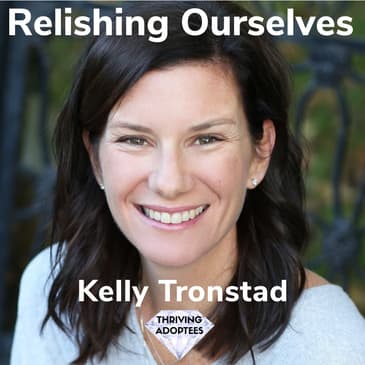
"We act how we feel" what a truthbomb! But how do you feel? How do you feel about yourself? Listen in as we dive deep into acceptance, gratitude so we relish ourselves.
Kelly has extensive experience as a Family Support Coach with Children’s Home Society and has also served as the co-leader of Bellis' innovative Tuesday morning peer-support group for women addressing the grief of no longer parenting their children. She was recently appointed to the inaugural State Board of Appellate Counsel and Training in MN. Kelly has an M.Ed. degree with licensure in Parent and Family Education (U of M Twin Cities) as well as a Graduate Licensure in Secondary Education from the University of St Thomas.
https://www.linkedin.com/in/kelly-tronstad-05934b198/
https://www.facebook.com/MyBellisCommunity/
Guests and the host are not (unless mentioned) licensed pscyho-therapists and speak from their own opinion only. Seek qualified advice if you need help.
Want to learn more about thriving for you, your kids, your families or your colleagues? Pick a time to talk here
[00:00:02] Hello everybody, welcome to another episode of Thriving Adoptees podcast. Today I'm delighted to be joined by Kelly, Kelly's Tronstad. Looking forward to our conversation, Kelly. Me too. Thank you so much for having me. Yeah, so Kelly runs Dallas with a team and it's a team that support, well some of the people that support are birth parents, right? So birth moms and birth dads.
[00:00:29] So I guess we're, that's a bit of the context for our conversation listeners. So Kelly, what does thriving mean to you? Oh gosh, that's a great question. So I think thriving means that, for me personally, it means I'm not just existing every single day. I'm not just getting by every single day and doing the things that I need to do just to stay alive.
[00:00:59] But actually relishing in my life or discovering something new about myself or about others or about the world that I'm living in. And so either learning or doing something to make my surroundings, the people around me a better place. So there's quite a lot there, yeah? I'm going to start with relishing. Yeah.
[00:01:26] Because for a while I've been thinking, well, if I had to do a follow up program to thrive, what would it be called? And nothing has really grabbed me until you said the word relishing. I was thinking, you know, we could relish, relish could be a follow up, a build on from, from, from thrive. What does, what does relishing mean to you?
[00:01:54] I think, I think just soaking it all up. Um, I've been seeing a lot of, um, of videos lately, like on Instagram and stuff. And the, the caption of it is says, I forgot that this was the whole point. And it's really, it's like videos of just the water coming in on the ocean, like the waves lapping in, or like snuggling with your dog on the couch or whatever.
[00:02:18] And just like soaking in the actual moment that you're in without expectation for what is to come or what has happened, but just being present in that exact moment and enjoying it for what it is. Yeah. That to me is relishing. Yeah. Um, I was thinking of the presence word before you said it. So that was a delight to hear.
[00:02:43] And I actually recall some time last week thinking, I quite, I quite like stroking my, my dogs. Why don't I do that a little bit longer? No. Right. And then there's all this, all these therapy dogs aren't they going into, going into old people's homes, or I don't know what they call them in the States, senior, senior living, senior living, assisted living. Yeah.
[00:03:13] So, uh, they put a lot of, uh, they bring dogs, people bring dogs in, uh, to, to, to some of those homes, those assisted living places for just for the old people to, to stroke. Mm hmm. Yeah. Cause it kind of brings our, brings our brains down a bit. Does it? I mean, yeah, I think it's like a source of comfort source of soothing and healing.
[00:03:41] And now that you're saying that, I think it's really interesting that we bring them in like at the end of life, you know, it's like, like we've done all of these things. Like we don't take the time in the middle of our life to savor these things. And all of a sudden now we get dogs ranted to us at the end of our life to savor and to, you know, enjoy, like, why are we to your point? I should be sitting here petting my dog a little bit longer. I don't know why I'm not. And it's like, our brains are always consumed with this.
[00:04:09] I got to do this and I got to do this and I got to move on to the next thing. Like, why can't we just take a few extra minutes every, you know, and, and, and enjoy these things instead of waiting for the end of our life to do it. Right. Grant, you know, like rewarding us at the end of our life with getting to pet a dog. We should be petting dogs. Yeah. All day, every day. Have you read, um, the power of now, but I can't, I never know whether it's taller or. Tall, you never read. Oh yeah.
[00:04:37] I've never read that book, but I do follow a cart. I think I say told, um, but I do follow like his Instagram page and things like that. So I always get, I love his writings. And so I will, whenever I come across those, I really, they really speak to me. Yeah. Do you, do you remember a particular time where this, this, this, this, this idea of relishing came to you?
[00:05:08] Oh gosh. You know, I think, um, I hit a time in my life in my late thirties and my kids were probably. Like eight, 10 and 12. And like, they were, they were needing less of me. They were, they were not requiring my assistance as much as they used to.
[00:05:34] And like my whole life had been filled with just always doing for them and always doing the next thing. And all of a sudden I found myself with a lot of space and time on my hands or more. So, I mean, most people would say, how could you with an eight, 10 and 12 year old, but I did. I felt myself with more time on my hands and it felt so empty to me. I didn't know how to enjoy quiet space and time. It felt overwhelming to me and it felt uncomfortable to me.
[00:06:02] And, um, after doing some pretty deep soul searching for about a year and a half or two years, um, it, it, it came to me that I had been living a life that was like, so up here, like just constantly going, constantly being engaged and never taking the time to rest. And I didn't know how to sit in a moment very well.
[00:06:25] Um, so it took me several years of undoing and then filling up my time and space with things that really mattered to me. And now you can ask anybody. I am, um, the queen of relishing. Far too much time relishing sometimes. Um, but it's like, I, I finally feel like, it's like my nervous system has calmed down.
[00:06:51] I am in such a good place mentally, emotionally, spiritually, physically with myself that I can enjoy. I want to enjoy each and every moment. And, and that does not mean my life is perfect by any stretch of the imagination, but I've worked so hard to get to a point where I can, um, even when things are going, you know, when things are challenging.
[00:07:17] I'm able to just kind of float and ride those waves a little bit more. Um, and that is something I had never been able to do the 40 years before I had this kind of breakdown and breakthrough. Yeah. So like I said, it is took a lot of work and it continues to take a lot of work, but I'm in such a better space because of it now. Yeah. What, what, what, what do you think it was that led to those?
[00:07:46] You said, did you say breakdown and breakthrough? What, what, what was, what, what was, what was the fuel for the, for the breakdown and the breakthroughs? Um, I think just redefining my identity. I think my whole life I had always identified with what everybody else needed me to be. Um, and never really took the time to figure out who I was just for me.
[00:08:15] Um, and that left me, you know, when nobody needed me, I didn't really know who I was. So I had to figure out who I was without anybody needing me to be one way or the other. Yeah. So that was my, my breakdown was realizing that nobody needed me all the time anymore. Like, especially with my kids.
[00:08:43] And then I break through was me figuring out who I was without anybody needing me. Yeah. And that has, what has led me to, to where I am today and doing all of the things that I do today. Yeah.
[00:08:58] So you, you took quite, you, you, you, you mentioned the kind of the nervous system slowdown and the, the, the web, the, the website, the, um, the, the, the balance website talks a lot about, um, ambiguous loss. Of, of the, the, the people that you serve. Yes.
[00:09:25] Uh, does, does, does ambiguous, how does, does ambiguous loss lead to kind of alert nervous systems? Is there a, is there a link between those two? Yeah. What does that? Absolutely. Yeah.
[00:09:48] Well, so ambiguous losses, first of all, is just this concept that, um, when you, it's losing something without the ritual, without the support, without the, um, closure necessary to, to help in the healing process. So it could be losing someone physically, but not mentally.
[00:10:13] Um, so like, you know, uh, they often attribute like people who are, you know, um, if you lose somebody who is up, has become a prisoner of war missing in action, or, you know, just. And when on a, on a ship and the ship was lost at sea. So like, you don't know what has actually happened to them. So they are still present in your mind, but they are not physically present. Um, but it can also be reversed where you have somebody who's physically present, but not mentally there.
[00:10:40] And like, we talk about like Alzheimer's disease or dementia being a case like that to where you can see somebody is physically there, but they are not mentally there. So for the people that we support, um, who are no longer parenting their children, um, or who have children that are parented by others, their children are still alive and present in this world, but they don't have the knowledge, um, around how their children are doing. Um, what they're thinking, um, what they're thinking, how they're feeling.
[00:11:07] And it creates this anxiety, um, for wondering and longing of, you know, how is my child? I, I, I, I don't know. They can't, you know, wrap their arms around this concept that my child is out there, but I have no idea how they are doing. And the fact that it is done without, you know, more often than not without their consent, um, or without, you know, it's, it was forced upon them.
[00:11:36] It, it compounds it. And then to top it all off, you know, like for a funeral, when a loved one passes away or, um, you know, community gathers around you. Um, I don't know how it is in the UK, but here in the U S everybody brings a casserole when somebody passes away, you know what I mean? So it's like, you have this support, you have a ritual surrounding this loss, but with, um, this ambiguous loss that none of that is present.
[00:12:01] So you're left alone with these feelings and, you know, and a lot of times for the women that we, or the men and women that, that we support, um, their, their former support team completely leaves them.
[00:12:15] Um, their family and friends don't want to be associated with them any longer because they have, especially if their children were removed from their care because of some sort of like, um, you know, in, in society's eyes, immoral act or, um, you know, choices that they made that were poor that resulted in their children leaving. So then people distance themselves from them. So not only are they left with the loss, um, but they're also left with shame and isolation as a result of it. Yeah.
[00:12:45] So, I mean, there's, there's lots of parallels between what they're going through and what the, the kids go through. Mm-hmm. Yes. Yeah. And, and I would, and it's really interesting because the, before I came to Bellis, I worked, um, for a, um, a placing agency, um, where we, um, we helped, uh,
[00:13:16] adults, um, you know, we would match them with children in the foster care system. Um, so I would work with parents who were adopting children out of the foster care system and, um, helping them to understand what these children were going through. So oftentimes these children would come into this, you know, a foster family or adoptive families home and the, and the families would be so overwhelmed with the behaviors of the children when they came.
[00:13:42] And I'm like, I just need for you to pause for a second and understand what this child has been through. This child has been forcibly removed from the home, the only home that they've ever known, the only caregivers that they have ever known, whether it was good, bad, or indifferent. That is, it really doesn't matter. This is all they have ever known and have the, you know, completely out of their control had been placed in multiple different, you know, um, places until landing here.
[00:14:09] I'm like, can you imagine the anxiety and the fear and the insecurities that these children have having gone through this deep, deep trauma? Um, and then they come to you and, and, you know, we act how we feel, right? So I'm like, if you're a seven or eight year old kid and all of this has happened to you and now you're in this home and parents are like, I don't know why they are acting up. Like we love them and we've given them all these things.
[00:14:39] They should be just fine. And that you going back to that nervous system thing there, these kids, their nervous system is so heightened. I mean, it is like off the charts and same for the parents that have lost custody of their children. Like that anxiety, that, that lack of, of, of a feeling of, of, uh, of a sense of control. I mean, that's really all anxiety is, right. Is that, um, that fear or that feeling of a loss of control. And this is what both children and parents are going through.
[00:15:09] Yeah. And it makes us act in a way that is, you know, not necessarily characteristic. It shuts us down or makes us act out. Yeah. So how would you compare and contrast the, the, the losses experienced by, uh, the ambiguous loss of the, uh, adoptive.
[00:15:31] Sorry, of the birth mothers and birth fathers versus the ambiguous loss of the adoptees or the kids who are adopted. Yeah, that's a great question. Um, I, I would say it is, um, very similar.
[00:15:49] Um, and I mean, I guess the only, the only difference maybe is that we hope that the children are surrounded by support and love and understanding from their adoptive parents. Or from their foster parents, that is not always the case. Um, I can attest to that because I've, I've certainly seen that.
[00:16:12] Um, whereas the, um, biological parents in this ambiguous loss are often, they are shunned and they are shamed by society. They are not surrounded with that, with that love and support. Um, and that is what Bella's aims to do is provide them with that, you know, that understanding, that nonjudgment, um, in order to help them, you know, come back into the folds of society again.
[00:16:37] Um, but that is a very unfair statement for me to make about children who have been adopted because like I said, that is in a perfect world. Their adoptive parents or, um, foster parents have a total understanding of the trauma that these children have gone through and meet them with that unconditional love and support and guidance. But that's not always the case. Clearly. No.
[00:17:00] Um, what popped into my head was, uh, I interviewed an expert in PTSD. Probably. No, I didn't interview her.
[00:17:13] I, I, I, I spoke to her maybe four and a half years ago when I was just kind of starting off in the adoption space and people that, you know, there's, there's, there's, there's videos online there, um, where people compare the loss, the loss of parents with PTSD. Um, and so it's an interesting subject for me.
[00:17:42] And I, I, I was saying, I asked this PTSD researcher. So what's the difference that makes the difference? Because from the stats that I've seen in, so most PTSD studies started, uh, post Vietnam. Um, and I, and I asked this, I asked this researcher, so what's, what's the difference? Because not everybody that V that went to Vietnam got PTSD.
[00:18:11] That, that seems, that's, that seems to be, that's a thing. That's, that's, that's a theme. That's a thing. I, I, I expected that the rate of PTSD, I thought PTSD would be universal. Right. Amongst all the people that have been to Vietnam. And it isn't.
[00:18:35] And, uh, the, the, the numbers that get PTSD is actually lower than the people, the, the people that do. And I asked this researcher, so what's the difference that makes the difference between the people that get PTSD and the people that don't? And she said, well, it's down to the support. Mm. And she started listing all the support.
[00:19:06] And I said, well, that, that's very interesting. Yeah. Um, that's all external. What about internal? Like the internal resources of that person. Right. Mm-hmm. Uh, that, that inner, that inner resilience, inner stoicism, inner strength, whatever you want to call it. You know, that, the, the stuff that's individual to them.
[00:19:34] And she didn't, she couldn't answer the question. Hmm. Which I thought was very illuminating. You know, she, she was only, she, she only knew an answer that looked at the external support. Um, do you, I, that's, that struck me as, as a little bit strange. Mm-hmm. Does it, does it strike you as strange? Because it might just be me, right? Yeah. Yeah.
[00:20:03] I guess I've never really thought about it in that way. Um, I mean, you know, uh, temperament certainly plays a role in people's ability to cope with things. Um, or they're, I think everybody has the ability to cope. It's just how they, you know, learning those coping mechanisms and the support around it. Right. Obviously temperament comes into play when we look at how quickly people learn to cope or how resilient they are.
[00:20:31] Um, so I do, I mean, I think you can't ignore temperament. I mean, that is biologically based and genetically linked. So that is something that it is inherently built into, into a person and absolutely plays a role. Um, but I think the far greater indicator of people's risk, because resilience can be built, right?
[00:20:56] Like you can, you, you have, you can build up your resilience through, um, going through experiences and having support and developing coping skills. Um, so, you know, if you have two people that have the exact same temperament, which obviously nobody ever could, but I'm just saying like relatively same. And you have one person who has support and one person who doesn't, the person who has the support is going to fare better than the one that didn't.
[00:21:24] However, if you have somebody who, you know, doesn't, you know, temperamentally speaking is like, you know, very far on, on, on a spectrum of like, you know, not very flexible, not very adaptable, not very, you know, highly sensitive. That, that could make things a little bit more, um, more challenging. She, she didn't say what, she didn't say what you said. She didn't say, oh, well, it's down to the temperament.
[00:21:51] Maybe I asked the question in the wrong way, you know, because she's a psychology researcher looking at PTSD. You think that she would know it. So maybe, as I say, maybe I asked the question in the wrong way. Uh, so, uh, um, people use, people use this word neuro, neuroplasticity, don't they, a lot when we're looking at, um, at, at trauma.
[00:22:14] And so when it, perhaps we could look at neuro, neuroplasticity as our ability or the ability for our temperament to change, would it be? Or, cause you, you were saying it's kind of set. I mean, do you, do you see, do you see temperament as something that changes or do you see it more or less fixed? Temperament is fixed.
[00:22:45] I mean, just like scientifically speaking, because like I said, it is, it is, you know, biologically based and is genetically linked. Personality can shift that personality is more like your temperament plus your experiences creates your personality. Um, so I think neuroplasticity comes into play when we look at how trauma impacts our brain. And like people think, oh, you can't recover from trauma and you can absolutely recover from trauma.
[00:23:14] Like just as the brain changes because of trauma, the brain can also change as a result of, um, healing from trauma. So that's what I think of as neuroplasticity, but our temperament is more, I think there's like eight, eight traits in temperament and that impacts our ability to, um, or, you know, like how we respond to things. And it is more or less fixed.
[00:23:43] I mean, there is a little bit of flexibility there, but if you have, you know, somebody who is highly sensitive, um, so that is a temperamental trait, they aren't all of a sudden going to turn into somebody who is not sensitive, much the same way as if you have somebody who is very low on the sensitivity scale, like they just, they don't, you know, their nervous system doesn't respond the same way as a highly sensitive person does. You can't change that.
[00:24:08] So I think that there is a difference, but like, I, it, it kind of goes back to that. Like when people are like, oh, I've had too much trauma. I'm never going to heal from that yet. You can, you absolutely can. That's where neuroplasticity comes in. Our brain can heal from trauma. Okay. It, it takes time, but it can be done. So before we dive into that one, um, I just wanted to kind of circle it back to what you said,
[00:24:36] just to kind of check my own understanding. Right. So you thought about this breaking down to break through. Um, as your personal experience. So if I'm, am I right in saying that perhaps your personality changed, but your temperament didn't? Is that? Yeah. Yeah.
[00:25:02] I mean, I will tell you, I am not the same person I was 15 years ago. If you look at me from 15 years ago and look at me today, I am not the same person. Okay. So my experience has shaped me for sure. Okay. So I'm going to have to dive a little bit deeper on my own time, right. Into what temperament means. Yeah.
[00:25:28] Because I think my definition, I think that my definitions and your definitions are perhaps different, given it, you know, bad, bearing in mind what you just said. So healing then, what, what does healing mean to you?
[00:25:47] I think for me personally, healing means I can look at all of my experiences and recognize that they have made me who I am today. And I like who I am today.
[00:26:16] Um, without being healed, I would wish away certain experiences, certain things that I had gone through. So, and so it's like, it's, um, acceptance and a little bit more. Yes. Yeah. But somewhere between acceptance and gratitude, is it? I don't know. Is it, is that, is that a spectrum? I don't know. Yeah, I think so.
[00:26:46] Because I, I don't know, like for the, the people that we support, I don't know if they will ever have, feel gratitude for no longer being able to parent their children, but they, they move towards a deep acceptance. Um, and my, my experience is I, I could never begin to speak about what it would be like to no longer be able to parent my children. I could never, ever speak to that.
[00:27:15] I, I have not experienced that. Um, so, but I, I like what you say there. I think it's more that we do have a lot of women who come to our group. We talk about radical acceptance. Yeah. And just the acceptance of how things are for better or for worse. It, they are, they are what they are. We can't change it.
[00:27:37] So how do we move forward with all of those experiences and still live a life that we can be proud of? Yeah. And that feels, and then I think gratitude comes from living that life. Like they're grateful that they have, they've gotten to the point where they can live a life
[00:28:02] that they can be proud of, but it's not gratitude necessarily. Oh, I'm, I'm so glad I don't get to parent my children any longer. That, I don't think that will ever, ever be the case. I can't imagine that for them, but having gratitude for how far they have come and to be able to live the life that they are, that they are living, being able to come out of that spiral. Yeah.
[00:28:28] As you were saying all that, I felt I could drawn into some question around the acid test, right? You know, would you, would you do, you know, do you wish anything had been different? And I think we get into, I think we get into a lot of speculation there.
[00:28:56] And it's a theoretical, it's a theoretical question. Right. Yeah. And does it, does it do any good? So, yeah. So if you had your time again, so somebody could ask me, if you had your time again, Simon, do you wish you'd been kept by your birth mother? Well, how, how could I know? Do you know, how, how could I, how could I make that?
[00:29:26] That would be, that would be just pure speculation. It's pure theory. It's pure. I think the word that we sometimes use is conjecture. And I don't, I don't know if I said it quite right, but it's like, it's kind of like a waste of time. Right. It's the, the acid test seems to be a, a waste of time.
[00:29:53] And I think I must've heard other podcasters or other interviewers asking these conjecture questions, which are just the wildest of, of, of, of goose chases. I remember hearing something that's just stopped me in my tracks a couple of years ago. And it was on this subject.
[00:30:22] And it was, what if your destiny is where you're at now? What, what, what, what if your destiny is perfect for you? What if your destiny is perfect for you?
[00:30:46] And I can't explain why it's, it stopped me, but it just stopped me because it was such, I guess, thinking about now, it's such a, a big, a big question. Right. Or, you know.
[00:31:08] Because then, I mean, I guess in, in the instances of the people that we support, it's like, well, what, what if this was all supposed to happen the way it happened? And that is a really terrible question or statement to pose to something like, cause how could it ever be right or ever be destined that, you know, people's children are removed from their care? You know what I mean? Like, that doesn't feel like a destiny.
[00:31:38] You know what I mean? And so we always have to be very careful in phrasing that. But it becomes more of, well, what if, you know, like there are, you know, there are other things out there for you to live a fulfilling life that you might not have discovered. Like, can you, the situation is what it is.
[00:32:04] So how can you fulfill, still live a fulfilling life despite what has happened? And maybe that's a different way of phrasing it. You know? Indeed. Right? Like, you know, go ahead. Sorry. There's a big distinction here. Right? Right.
[00:32:26] There's a distinction between spontaneous internal gratitude or destiny agreement. Right? And something that somebody forces on us. Right? So, like, the whole thing is, the whole thing in adoptee circles is, and I've never been told this.
[00:32:56] Well, I don't remember it. I've never been, you know, you should be grateful. Right? But I've never, I've never had that. But I can tell by your eye rolling, you're familiar with this.
[00:33:12] But if forced gratitude from without, you know, from a third party is completely different to internal spontaneous gratitude. Yes. A million percent.
[00:33:36] I don't think anybody reserves the right to tell us what we should and should not be grateful for. That isn't for anybody else to determine besides ourselves. Somebody can say, can you think about what you might be grateful for? Like, can you find some gratitude in where you are at today? But to suggest what you should or should not be grateful for.
[00:34:01] And yes, I did completely roll my eyes when you said that when adopted children, you know, if they are ever presented with the statement of, you should be so grateful that your parents adopted you. Yeah. Get out of here. Yeah. Get out of here. Get out of here.
[00:34:23] And I think, you know, the destiny thing, as I put it forward to, you know, it sounded like it could be a bit religious. And the kind of the gratitude, some of that, I think, comes from more of a religious take on adoption.
[00:34:45] And I think adoption is less religious here in the UK than it is in the US. Yes. It's a massive, it's a massive generalization, but it's just how I see it.
[00:35:07] So whereby, and I think what I mean by that is religious groups are still involved in adoption in the US. Very much so. And adoption agencies in the UK are a charity. Are charities paid? Secular is the word?
[00:35:36] They're not religious charities. Charities. They're not affiliated. They may have been in the past. Some of them may have been affiliated with churches, but not anymore. So I think that's what I mean about adoption being more of a religious phenomenon in the US. And I think the gratitude comes from, you know, from that. I get a feeling that it comes from the religious side.
[00:36:05] So let me go back then. And liking, you said liking who I am today. Despite what? The stuff that I went through. Do you see that acceptance and gratitude as places on a spectrum?
[00:36:37] Am I over-egging this? Does anything else come to mind in terms of what's important to you for healing? Have we exhausted the acceptance, gratitude space? Or is there more that you feel about that?
[00:37:05] I think, I mean, if I'm speaking for myself, I think the, yeah, I think it's just being content with who I am and where I am at.
[00:37:24] For the people that we support, there is so much self-loathing and so much guilt and shame surrounding who they are and what they have done. And I have struggled with that as well. And like a thing that we talk about a lot in group is the difference between guilt and shame. Guilt is feeling bad for something that you've done.
[00:37:53] Shame is feeling bad for who you are as a person. And I come from this notion that we are all inherently good. And I know that, you know, for talking religion, I know that isn't always the case. I am not a religious person. So I do believe that we are all inherently good. And our feelings are what make us, you know, influence our behaviors.
[00:38:23] So if we are feeling good, our behaviors are going to be more reflective of that goodness that we are feeling inside. If we are feeling bad, our behaviors are going to reflect more of that. They might be more self-destructive or acting out or, you know, lead to depression, anxiety, and all of those things.
[00:38:44] So I guess just trying to, and I guess I do this for myself, trying to see myself as inherently good. Yes, I have screwed up. Yes, I have made mistakes. I have hurt people. And a large part of my work that I've done for myself and what I try to help others do is like taking ownership of those behaviors,
[00:39:13] but not letting them own me. Yeah. If that makes sense. Like you don't have to be held hostage by your past or by your behaviors. Yes. Because it's not you. It's not you. Yeah. So it's differentiating between who we are and what we do. Correct. Correct. And so many people put that synonymously and it's not. And it happens young, actually. This happens really.
[00:39:40] Have you come across a guy called Don Miguel Ruiz? Have you come across him? An author? I've seen quotes by him. Yes. Yeah. Yeah. He's got a great book. He's got loads of books. He's a Toltec shaman, I think. And he's got loads of books and he's got.
[00:40:06] He's got one that dives into this and makes it and explains how it happens to us as kids. It's about how we are conditioned, how we are psychologically conditioned.
[00:40:34] And I'm trying to remember the name of the book because I've read a few or listened to a few of his books. And he's got, I think one of his first ones was where he looked at the formation of the, he looks at the, yeah, the formation of the inner critic. And he's got, which is very powerful.
[00:40:57] And then he's got other books, which are far more, I think the one that are far more preachy and behavioral, behavioral based. It's about the four agreements. And it's just driving me slightly nuts to figure out which one is what. I want to, I'm just on my phone checking, checking it out.
[00:41:21] Don Miguel, Miguel. Can't find it. I will put a link in the show notes to it.
[00:41:46] But it's, it's incredibly powerful about, it talks of the, talks about the origin of the inner critic. And it talks about one day we will be good enough. You know, you'll grow up and you'll be somebody. And the idea is that you're not anybody now.
[00:42:17] It's, it's, it's the Western view that you, that we've been talking about really about the treadmill and achieving stuff. And we'll, one day we'll be, we'll be happy when, we'll be happy when. Yeah. Oh, that, like, it kind of makes it, like, it gets me choked up thinking about it because it's so, it's so, like, we are rewarded. We're rewarded for being good.
[00:42:45] And we are punished for being bad. Like, even as children, right? Especially as children. When we behave in a way that is amenable to what the adults in our world can tolerate, you know, then, you know, we are, we are, we are, we're an easygoing child. Or we're a well-behaved child.
[00:43:07] And, like, the fear of punishment is what keeps us doing all of the right things, even if it isn't inherent to who we are. And even if our, some of our behaviors aren't necessarily bad, so to speak, but just different from what the adults in our life feel like is acceptable. That is so tamped down and so pushed down. It's like, no, no, no, no, no. I need for you to stay on this path.
[00:43:35] And if you start deviating this way, I need for you to come back because this is familiar to me. This is what is known. And when you start to deviate, I don't know what is down that path. So I'm going to keep my kid on this very narrow path that I am comfortable with. And everything else becomes taboo or it becomes bad. And I feel like that is just so, I'm a parent educator. Like, that's what I've been trained in.
[00:44:05] And when I talk to parents, they're like, oh, I just wish you would do X, Y, and Z. Or I wish you would be A, B, and C. And I'm like, okay, but your child is a unique individual. They are not meant to be a replica of who you are. They are not meant to walk the exact same path that you did. And you have to be okay with your child deviating from that.
[00:44:30] Even, you know, as long as it's not hurting themselves or anybody else, allow them to deviate. Allow them to be who they are. Allow them to have different thoughts and feelings. And allow yourself to learn from that. Like, when I became a parent, I think that that's what kind of started my journey. Like, I looked at my kids and I'm like, these kids are way different than I am. Yeah. And for a long time, I tried to keep them in a path because it was too, I didn't know how to,
[00:44:59] I didn't know how to parent somebody who was different from me. And once I released that and I just kind of let them go, that's when they started to flourish. And frankly, that's when I started to flourish. Yeah. And it's just like that revolutionized my whole life. So, you were a parent educator.
[00:45:25] So, you're a parent, you've worked with foster and adoptive parents and you've worked with biological parents, right? Correct. Yep. And both those, or all three of those groups, if we separate them, you know, foster parents, adoptive parents and people that raise their kids that they've given birth to biologically, you know, they all have that in common, right?
[00:45:54] Every single one. Every single parent has an idea of what they want their child.
[00:46:01] So, if you are listening, if you are listening, adoptee, then there's something quite significant there because it feels significant to me because we, if our parents have been that way, expected mini-me's, right?
[00:46:24] If our parents have been that way and we think that that's down to adoption, then it's a human thing. It's a parenting thing, not an adoptive parent. It's not an adoptive parenting thing. Correct. Correct. So, you might have had, who knows, right? It might have gone the same way. Yes.
[00:46:54] Yeah. I, like you said it perfectly. There is, I've never seen a difference in what parental expectations are for their children, no matter how they have come into contact with said child. Like, and I do think that that is a fear-based thing. Like, we know what we know, right? We're comfortable with what we know.
[00:47:16] When a child starts displaying behaviors, thoughts, attitudes, temperaments that are different from who we are as a person, it's scary because it's unknown. And we're like, oh, no, no, no, no, no, no, no. No, no, no. Don't be super sensitive. Don't be rigid and inflexible.
[00:47:37] Like, some of these, you can't, you can't just, and it, the miracle that opens up when we allow our children to be who they are, not who we want them to be, is, it's like a watershed moment. It is truly the most incredible thing.
[00:47:58] And I just, I, you know, even the most open and welcoming of parents, even the most, you know, like the parents who have really done the work and they're like, oh, I will love my child, whoever they are. It's great to say in theory, but when it really starts to happen, every single parent goes through that moment of, this is not what I, this is not what I anticipated. This is not what I expected.
[00:48:20] And they try to, you know, rein it back in, even, even if it's temporary, you know, and then they kind of come to their senses again. They're like, okay, it's all going to be okay. But because that's just human nature is to want to control. And as parents, we want to control, like we want, because it makes, it makes us feel safe.
[00:48:44] We don't want any harm to come to our children ultimately, but we have to learn to manage the throttle of that. Like, no, of course we don't want harm to come to our children, but we have to balance that with allowing them to be who they are and finding that middle ground of keeping them safe and having them feel protected without controlling them. Yeah. Wow. And it, it shifts, man.
[00:49:13] It shifts. It's real easy when they're newborns because they are reliant on you for every single thing. You, you are controlling the deck a hundred percent. And at about 18 months on that level of control continues to dissipate. Yeah. And some parents are better at letting that go than others. Wow. So I don't, I can't believe this, the hour is just flown by.
[00:49:39] Is there, is there anything that you'd like to share Kelly that I've not asked you about? Oh gosh. No, I mean, I, I'm just grateful because I feel like we've touched on so many different things. Honestly, Simon, I could probably talk for about four days straight about everything that we're talking about. And I know in our speeding that we have, you're like, we could stay on for days. Yeah.
[00:50:03] I just, I love the questions that you plant and it, it reminds me of, of all of the thoughts that I've ever have had or, you know, currently have about things. So, um, yeah, I could, I could do a deep dive into every single topic that we've touched on. Um, but I'm just grateful that we got to share as much as we did. Well, come back in six months, six months and we'll, you know, pick, pick the topic to dive back into. Gladly, gladly, gladly.
[00:50:33] Thank you. Thank you, Kelly. And thank you, listeners. We'll speak to you again very soon. Take care. Bye-bye. Thank you so much.