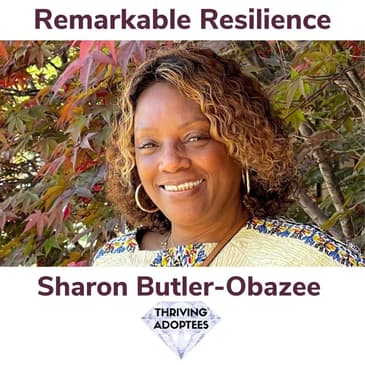
If you're going through tough stuff, this one's for you. Truly inspirational. Adopted at 9 months Sharon grew up in an alternative universe. One that felt completely alien to her. Her adoptive mother kicked her out of the house when she got pregnant at 18. Life got tougher until she found herself at rock bottom and attempting suicide. How did she turn it around? Listen into profound learnings from a remarkably resilient lady.
Find out more about Sharon here:
https://giftfamilyservices.com/about-gift-family-services/our-coaches/sharon-butler-obazee/
https://www.instagram.com/adoptionclarity/?hl=en-gb
https://www.linkedin.com/in/gift-family-services/
https://www.facebook.com/sobazee03/
Guests and the host are not (unless mentioned) licensed pscyho-therapists and speak from their own opinion only. Seek qualified advice if you need help.
Want to learn more about thriving for you, your kids, your families or your colleagues? Pick a time to talk here
[00:00:02] Hello everybody, welcome to another episode of Thriving Adoptees podcast. Today I'm delighted to be joined by Sharon Butler-Obazee. Looking forward to our conversations, really looking forward to it today Sharon. Oh me too. So Sharon is an adoptee and she is also an adopted person. That's what it says on your Zoom account. She's an adopted person. You're a mum.
[00:00:32] And you're a coach as well. You're a coach. Are there any other things that you use to kind of... Well, I'm a wife. I'm a mom. I'm a sister, a brother, all those... I can't be brother. Sorry. I'm a sister. I have brothers and sisters.
[00:00:53] But anyway, I am in reunion and yeah. So I think that's the only thing I can think of at the moment. Yeah. So what comes to mind when you hear the name of the podcast? When you hear the name Thriving Adoptees? What?
[00:01:14] Deriving Adoptees. It sounds like people who have overcome challenges in their life and are now capable of functioning at a level of comfort. So when you say comfort, you mean kind of emotional comfort or...
[00:01:38] Emotional comfort. Maybe they're also... They could have... Be economically comfortable. Yeah. You know, they could have physical means around them that they... That they basking... Where they bask in comfort. But I guess just in a general sense of feeling comfortable in themselves. Yeah. When we've talked about... When we've talked in the past, you said something like,
[00:02:07] I was angry with everybody. I was angry with everything. You said something like that. What did... That's how you felt growing up? I was... I felt angry because I was... I felt like I was misplaced in some way. You know, like, you know, like I was in an alternative universe. Yeah. You know, so I wasn't happy about that. Although... Clearly, no. Who would be? Who would be? Yeah.
[00:02:37] Although if you spoke with me or engaged with me or had a conversation with me, you wouldn't know it. I was very good at hiding it. So it was mostly living in my core and I didn't express it, you know, externally. The reason that I jumped in with the anger, the anger stuff is because you talked to, you know, we talked about economic and emotional comfort, right?
[00:03:05] And I thought that that was a lovely juxtaposition. Like, kind of put those two things together. When did you get... Did you always feel that you were in this alternative reality or was there a moment when you became aware of it or...?
[00:03:29] Well, I think I have to go back and think about who I was at the time and what my experiences were kind of at the time. You know, because I saw and engage with people who were... Yeah. That didn't look like me because I was raised in a community that was not diverse. The only diversity was our house and the house next door.
[00:03:55] And other than that, there were no other people, our children even, that looked the same. So what happened is that we were bullied and people were mean, calling us all kinds of names and everything else. And so... And then when I go home and tell my mom, it was like, well, we have to think above that. You have to... It's going to happen. There's really...
[00:04:24] Like, she's powerless, in other words, kind of thing. And so that's a hard thing to grasp as a child when, you know, you're in a situation where you're powerless and even your parents don't have a control. You know, so that wasn't a very... That kind of ignited the flame initially.
[00:04:47] And then there was a part where, you know, because I was misplaced in this alternative universe, my identity was not my own. You know, I was told that we were Scottish. And that's how... Because my maiden name was a Scottish name. So... And that we, you know, no one understood how a black person could be Scottish in the first place.
[00:05:18] And how that name came about. But, you know, through slavery, slave masters, name their children and their people, and you went by the name of the slave owner. And so that's how that came about. But it was kind of hard to go in school and they sit down and say, well, we want you to do your family tree. Well, what family tree? I don't have a family tree. I don't even belong here. I have a misplaced here. I'm not happy about that.
[00:05:46] And now you want me to do a family tree and talk about my Scottish background and have everybody laugh at me. That was hard. Yeah. You know? So it was coming at you from all angles, right? Yeah. Yep. Yeah. So you were all these different signs, all this evidence. Yeah. Coming at you. Everything was coming at me from different directions. And I'm only a kid. I think that at the time too, I wasn't...
[00:06:16] I was the oldest of everyone and I wasn't very happy about the fact that all this responsibility was placed on my shoulders. Yeah. And if something went wrong, it was my fault. Yeah. Yeah. So... Not your mums or your dads. No, it was my fault because I should have done such and such or whatever. Yeah. I was... Before you said the word, the phrase about it all being on your shoulders, that's exactly what I was thinking.
[00:06:45] Yeah. The metaphor that was coming to mind, right? Yeah. So you've got the weight of the world on your shoulders and you've got the weight of the world on your shoulders and you've got the weight of this injustice on your shoulders. Right. And you've got the weight of your sibling because you're the eldest... Yeah. You are the eldest of five, right? Yeah. Yes, I am. So you've got those four on your shoulders too. Mm-hmm.
[00:07:14] Every time, well, we want this and whatever. Why doesn't mommy say that? You know, we'd have our own little conversations about what we thought was right. Yeah. Or how it should go. And of course, I had to be the presenter of the alternative idea that everybody, you know, was agreeing to. So when I was rejected, it was they were upset with me because I shouldn't. Oh, I was, you know.
[00:07:42] Were you trying to explain this false reality to them? I tried. Yeah. Well, we'd have general conversations about, you know, how we felt, you know, especially my sister who was one year younger than me. We'd have deep conversations about it. Yeah. There was an age difference in the other one. So I didn't put that burden in with that. No, no, no.
[00:08:10] And were you, to what extent were your feelings and thoughts similar to your, to this sister that was just a young year? Oh yeah. Yeah. Very much so. So when, when my mother passed, my adoptive parent passed, we sort of got through the grief of losing a parent. It's never easy regardless of what you think your life was like, you know, to lose a parent.
[00:08:40] And, you know, we grieved for a year and we would talk to each other two or three times a day just to get through that. So, and we shared so many similar feelings about things. Yeah. Was there, was there any consolation in the fact that you both were living in this alternative reality? At least there were two of you. Yeah. Well, we had a partner in crime, so to speak. Okay. Yeah. Yeah. Yeah.
[00:09:09] And how old were you when your adoptive mom died Sharon? I, I was an adult. Um, she lived to be 89. So, you know, she was born in 1912. She did to be 89. Yeah. Yeah. Yeah. Was there a point that the world started to, the world started to feel a little lighter?
[00:09:41] No. No, I think, um, there was the expectations that my parents had of, you know, who we were going to be and how we're going to turn out. And, um, I sort of busted that bubble when I got pregnant at 18. Okay. That kills the whole thing. Our whole design, our plan is every, it's ruined now because you are now, uh, with child. And so guess what?
[00:10:10] Get out of our house. And so that only multiply, uh, the stress level and the, um, rejection that I felt overall, you know, as most adoptees do, you know, you feel rejected in the first place because your, your biological parent decided not to be view.
[00:10:33] And then, you know, you go through these little, small, uh, awarenesses of, you know, what the world is really like and you get rejected over and over and over again. And then the ultimate rejection was, you know, okay, it's time for you to move now. I'm 18. I have nowhere to go. I'm going like, where am I going? And I'm pregnant too. Oh my gosh. Uh, wasn't easy. Really disorienting.
[00:11:05] Yeah. So what did you do? I, I had no choice but to, um, move in with the father of the child, of my oldest child. Um, and so then, and then we got married. And so, um, you know, I thought at least that can gloss over the mistake I made.
[00:11:31] And, um, uh, it was not a successful marriage because you know, we're children and, uh, having, I ended up with three children before it was all said and done and, um, no time to focus on self at all. You know, it's just survival. How am I going to survive with these kids? And what can I do?
[00:11:56] Uh, my so-called husband was not very supportive at all. And so I just kind of squashed my feelings, forget about everything else. You just gotta make it through to the next step. You gotta make sure your kids don't die. You don't die. And you have food in your mouth. You have a roof over your head. You can get from one place to A to B and you can function in some capacity.
[00:12:26] Because luckily I think for me, I, my parents, my adopted parents were both functioning people. You know, they had, um, they would call call it categorize themselves as middle class. Um, they, I was a private adoption. So, you know, uh, I didn't come from foster care or anything like that.
[00:12:45] But, um, so they, I had examples of what it looked like, what it should feel like and be like for a person to engage with society and create some norms around themselves, uh, to at least have a barrier between, you know, the worst possible scenario and, you know, something better. Yeah. My goal is to increase. Yeah.
[00:13:11] So that, so, but this is quite a while ago now, right? I'm not gonna ask your lady her age, but something, something along the way was, there must've been some lift somehow.
[00:13:27] Some, what did you, did you take a lot of strength, like see your own resilience off, off the back of what, what you did to, to survive, to feed yourself and you, and your kids? Did that grow your self stuff power at all or what? I, I think that, um, I was resilient to the whole thing, you know, but I didn't understand that.
[00:13:57] I just understood that things were hard and I was trying to make sure everything got done. If I, if I, if I wasn't accessible, go to B, you know, and if B wasn't accessible, go to C and, and hopefully we don't have to go any lower than that. So, um, you know, I, I would. Persistence. Yeah. It wasn't like. Exactly. And there's not a lot you can say really about persistences other than just do it.
[00:14:27] That's exactly. Just do it. All right. How do I become resilient? How do I become persistent? Well, you just do it. Yes. You know, like some people might call it stubborn or some people might call it in the UK bloody minded, right? You just, you, you just stop it. We just stick with it. Well, how do I do it? Well, I just stuck with it. Yeah. But, but podcasters and people having conversations about empowerment, they want to know how, how do you become persistent? Exactly.
[00:14:57] It's not so, isn't it? You just do it. You have to do it. You've got no, there's no other option. It's persist or, uh, persist or leave the planet. Right? Yes. Yeah. Yeah. You know, the goal is to stay above ground. And so, and all the people that I'm hearing, you know, stay above ground and, you know, function in some capacity, you know, there's rules and regulations that you have to meet. And you, you don't do that. You know, you're going to end up in a situation that's not so lovely.
[00:15:27] So, yeah. So I've been called tenacious. I've been called all those things. Tenacious. Yeah. So basically, you know, I stuck my feelings. You know, it didn't matter what, how I feel. We didn't have time, did you? Who has time for feelings? Exactly. Exactly. But, and, and somehow I, I knew that this was not sustainable. I couldn't go on like this forever.
[00:15:57] And, you know, through relationships I had and, and experiences I had, you know, there, there was a little tiny crack in the facade that was beginning to interfere with who I was and, and how I might function that.
[00:16:16] And it was, it was showing up in a way that I, I didn't, I wasn't even aware of, you know, I guess it's something like when they say that they should, the individuals will go along and then have a, a break, you know, in their being and somehow need now more assistance.
[00:16:41] I, I didn't have that happen to me, but I did have, you know, a time when I was so frustrated. I felt like there are no resources, no allies, no one to support me. You know, I was just here on my own making things happen. And, you know, I, because of what I wanted to accomplish, I, and keep my kids safe. I, I kept them safe, but then at what cost to me.
[00:17:13] So it was, it was frustrating. And I went through some, you know, some bad times when, you know, I, I, I almost came close to taking my own life because, you know, it was just, I can't do this anymore.
[00:17:30] And so I then decided I, I, I better get some therapy or help or something because I'm, you know, and, you know, they, when that incident where I tried to take my life course, you end up in the hospital and they say, okay, what's going on? And so they refer you anyway. So I got a referral to someone who I began to talk to about the things I had experienced in life.
[00:18:00] I mean, my situation was so severe thing. I think my mother could have found me and, you know, tried to look for me in some way because I was upset. Obviously, I'm really mad now. And people know I'm mad after I was kicked out of the house and, but she never tried to find me even. She, you know, didn't reach out. I went for a five year period when I didn't speak to her at all.
[00:18:29] And then I decided I would reach out because I just needed help. I couldn't do this on alone. So I reached out. With some support and therapy and everything. So it did help to begin our relationship again.
[00:18:53] And my father, actually, who was the kindest, sweetest man you ever want to meet. He was sort of like gave me a vision of what a man should be. You know, he was he was supportive. He was kind. He was my mother used to say, when we went to the adoption agency and your dad saw you, he wanted you. He picked you up.
[00:19:21] And that's why we selected you, because your dad wanted you. And then quite me, we questioned in my mind. Well, we didn't you want me? My dad is only what it wanted me. You didn't say anything. You know, but I was very close with my father, even through all this. But what my mother rude the roost and whatever she said, go. Yeah. So she overrode him on the kick Sharon out. Yeah. I did. Decision. He wasn't at home.
[00:19:50] That's why he was at work when I left. So how old were you when you had this? When I had what? When you had the when you had the spell in hospital after the suicide attempt. Oh, OK. I was by then twenty four. Right.
[00:20:21] You know, and did was there was there a bounce after the therapy? Yeah, there was a bounce after the therapy. I started to become more aware. One of the things that my therapist said to me that was really striking is that you were raised by strangers. And I had never thought of that before.
[00:20:49] You know, I'd never come to my mind that, you know, OK, so these people that raised me, no wonder they didn't know me. No wonder they didn't understand me. No wonder they couldn't, you know, understand when I needed to be loved or hugged or kissed or encouraged. You know, they were strangers. They they. How do you act? How do I act when I see a stranger? You know, I you have to get acquainted and try and get to know the person.
[00:21:16] But there seemed like there was a shield or something between my ability to interact with them and them. But it's a different reality. Yeah. You know, it was an alternative reality and the alternative reality was driven by the fact that you were raised by strangers. And yet. Yeah. Your dad wanted you. Say it again.
[00:21:45] Your dad wanted you. Yes. Yes, he did. But he did. But with this. Dynamic. Dynamic. Dynamic in the house. You know, where my mother overshadowed everything that he thought. And, you know, and he was kind and loving and caring. And he didn't have that. Attitude towards, you know, anger or, you know, he was in power oriented or anything like that.
[00:22:13] So and he was always trying to make his wife happy. Okay, dear, we'll do whatever, you know, kind of thing. Yeah. So anyway. Well, one of the things that. That I think about quite a lot is, is the extent to which. How we feel. How we feel. We as, as adoptees, right. How we feel is down to.
[00:22:44] Shit parenting. Versus versus relinquishment. Right. I don't normally swear on the show, but I just can't. Do you know what I mean? Like it. It's like I. I didn't really. I didn't realize kind of how lucky I got. Oh, yes. Oh, I. Because I didn't have. I didn't have any comparison. Do you see what I mean?
[00:23:14] But now after interviewing so many people for the podcast and talking to so many adoptees, I have a comparison. So I can. I can see that the difference. And that's what leads me to. See this dynamic for want of a better word. The fact that. We're just one human being. We're one human being. We're one adopted human being.
[00:23:43] We're one adopted person with a certain amount of. Let's call it. Use your word, right? Emotional comfort. Emotional comfort or emotional well-being. Right. There's only there's only one of us, but this. And there's obviously clear. There's obviously lots of different factors in how. How we are, how we relate to the world, how. How at one with the world we are all.
[00:24:15] But it strikes me that. That the way that we're parented. And the way that we were relinquished. Can kind of combine. Am I making any sense here? That there's an unconscious impact on who you become. Because of those two factors. Yeah. Let me. Let me try and put it into.
[00:24:46] A. The. Perhaps a simplistic view that it'll just help us talk about it. Right. So. So this is my view. Right. So. So the view is that a lot of. A lot of us. My view. I'm putting out the potential. I'm. Sorry. I'm suggesting. That. That what we put down.
[00:25:15] To relinquishment. Can actually be. A result of poor parenting. Yes. Exactly. You're very. That's. I mean. I didn't find that out until after I came to understand. What the story was behind my relinquishment. And. My mother made choices. That influenced her to. You know. To give me up. But. She also had.
[00:25:44] Very poor parenting. I mean. Her parents were so hostile to her. Because they wanted. A boy. They wanted a fair skinned person. And they were dark skinned. I don't know how they thought that was going to happen. And. So. Bleach. Cruel. Bleach. Huh? Bleach. Okay. A lot of bleach. Should I drink it. Or just wear it. Yeah.
[00:26:14] I. Have a strange sense of humor. Yeah. Yeah. Well. Anyway. So. They were. They were. Cool to her. And they didn't treat her well. And so. Um. She was pregnant with me. When she was 19. And so. You know. And the beat goes on. Yeah. It does. So. The. So you've. You've. You've reached. You. You reached. Rock. Rock bottom. And then there's a.
[00:26:44] There's a. There's a bounce. We're starting to see some. Upward dynamic here. Right. Right. Right. This. Impact. This really impactful statement from them. From. Right. Raised. Raised by strangers. And. Some grace for them. Grace for your adoptive parents on the back of that. Yeah. I mean. Yeah. Some. Some grace for them. I. I think.
[00:27:15] At. When she said that. It. It kind of awakened me to. You know. Well. If. They. I was a stranger to them. And. They. Didn't. Couldn't support me and love me the way that. You know. I felt I should be. Maybe they did love me. But I. I couldn't experience it. Um. The way that I. I should have. Maybe. And so. Uh. I mean. The. People that. Love. Their kids.
[00:27:44] Don't. Kick them out to 18. Right. Point one. Sorry. I'm. Right. It's a good point. But I just came to the realization. That. If. I was going to excel at anything. I already had the. The. The. The. Ability. The backbone. I thought. I felt. You know. To. Become. Something better. But if.
[00:28:14] I didn't love myself. I didn't care for myself. I didn't help myself. If I didn't. You know. Do all the things. I needed to do for myself. Nobody was going to do it for me. Yeah. So that was the turn. The turning. The. Like. The turn was all about autonomy. Yes. Yeah. And that got you to the next stage. That got me through the next stage. It did. It helped me to. To.
[00:28:43] To begin to build. The internal. Support and sustain myself in a way. That I. You know. Could now. Express. Myself better. And care for my children better. And you know. Everything. Kind of like came together. And then I. I. In the process. I got married again. You know. And. Turned into the. The first steps. To become the person I am today. Yeah.
[00:29:13] And that's. That second marriage. That's the guy that you're married to still. Yeah. Yeah. Yeah. The one we spoke of earlier. The one we spoke of. The Nigeria. Heritage. So. Um. Was there a. Was there a point that. When you. Realized you couldn't do it all on your own. Or when you felt. You let your guard down. To let somebody else in. Presumably. You felt some vulnerability or. Yeah. It's interesting. You say that. Let my guard down.
[00:29:42] To let somebody else in. Because then my guard was high up. Yes. Yes. I mean. Yeah. I. I intentionally didn't divorce my first husband for nine years. Thinking. I'm never getting married again. Ever. And so. When I met. You know my current husband. Um. Over 40 years ago. Yeah. What's he called your husband? What's his first name? Fred. Fred. Fred. Yeah. Fred.
[00:30:12] When I met him. Um. And we started. You know. Interacting together. Actually my children met him first. And. Uh. So. That was sort of like the approval. I. I needed to. Even. Begin to speak to someone else. You know. Um. And welcome him into my home. And so forth. Um. That was a turning point. I knew that he was. He was so supportive. And caring. And helpful. And. And.
[00:30:41] He had ways that reminded me of my father. But I just had to remember not to make my mother's mistakes. Oops. That. That. That. That. That. That. That. That. I don't think he would let me anyway. So. But. Okay. Uh. Yeah. He's been so supportive and helpful. And.
[00:31:10] He helped me to. You know. To recognize. My. Ability. As a person. And. And. All that. Tenacity. All that. Resilience. All that. It helped me to. Move forward. And actually. You know. Um. Become successful at everything I did. You know. I. You know. I. It turned. I felt good about myself. I was moving forward. And I was doing the things I needed to do. To. Sustain.
[00:31:40] Myself. My family. And my marriage. And. You know. And then. To realize. You know. I am capable. You know. I. I. I. I'm. I'm worthy of. You know. Just. Common things that everybody. Probably thinks of as a child. That I thought I was unworthy. Of.
[00:32:11] Worthy. So. Yeah. So. Let. You know. It led. Me to. Uh. An awakening. And then. When my parents died. Um. I finally felt like I could. Figure out where it came from. And. And that's. What was the awakening? What. The awakening was. Um.
[00:32:42] After being in support groups. And everything. And listening to a lot of people's stories. About their adoption. And their reunions. And. And realizing. Hey. I could figure out who my parents are too. I have. A human right. To know. You know. Even though I'll probably. I saw my birth certificate once. But I. I knew that I. It wasn't. Necessarily an option. Um. To see that. I could. At least figure out. You know. Where I came from.
[00:33:11] And so that's what I started to do. Was approach. The process. To begin to see. You know. From where I came. And how. What were the circumstances. And. The. The whole. The thing that I realized. After. Understanding that. Is that even though. Um. I felt the relinquishment. You know. How kids are. Oh. My mother was. But it has a halo on her head. And she would have been a wonderful.
[00:33:41] To me. And I wouldn't be in any of the circumstances. I'm in now. If my mother had erased me. Well. It would have been worse. I found. It would have been. I don't know. I don't know. Who I would be now. If I thought I had it. Bad enough. With my adoptive parents. It would have been way worse. So. I'm. I'm here. And I. Learned. You know. The circumstances.
[00:34:11] Of my arrival. To this world. And. The choices. She made. And why. I ended up being. Who I am. Or where. Where I. Where I was placed. Um. And what surrounded that. And. The problem. I think. For her. She kept me a secret. So nobody knew about me. So. Anyway. Yeah. I had to go through all that stuff. And. Then I found my father. Who was still alive. What an amazing thing.
[00:34:40] You know. And. Understand who he was. And everything. It's just a whole long story. Yeah. That I know we don't have time to get into now. But. So. So that realization. That you. Actually. You'd been better off. With. Even. With this. Uh. Yeah. Let's put it politely. Strange. Adoptive mum. Mm hmm. Um. You. You would still be better off with her. Than you would have been. With. Your biological mother. Yeah.
[00:35:12] Right. My. So. What. So what was that. What was that like? Was. Was that. Spontaneous gratitude. What. What was that about? How did that. It took. It. Yeah. It wasn't spontaneous. It took me a while. Because. You know. I didn't know the truth at first. And it's always like steps. Yeah. A little would be revealed. And a little more. Then a little more. Until I finally had the whole picture. Um. Of what happened. And. How my siblings were raised.
[00:35:42] You know. Because she had. Five other children. No. Six. Six of the two. Two passed already. And there's four alive. So six. Children besides. Me. Song were seven. And I was relinquished. I was the only one that was. Relinquished. Yeah. You mentioned. I had an older brother. She kept him. And he died. Uh. From a drug overdose. Then it was me. And I was relinquished. And then. Uh. The other ones.
[00:36:11] I'll just say. Uh. If someone were to. Give them. Uh. A test to understand what their. A score might be. It'd be a 10. Or a 12. It was not. Not good. Really tough. Really tough. Really tough. So. That was. Did that change. I mean. How would you express. I talked about. Um. Spontaneous gratitude.
[00:36:41] And you said no. It was actually in stages. Uh. How would. Was that. Did that lead you to. A kind of. How would you express it. It's like a changing. Would you call that. Was a change in your mindset. Or. It was an insight. Or. How would you describe it. It gave me. New appreciation. For. Appreciation. Yeah. Yeah. For who my mom. My adopted parent was. And how. What she had to go through. And. Her miscarriages. And everything that she had to. Go through.
[00:37:12] To come to the decision. To adopt. Yeah. And. New understanding for. You know. Even my. Mother who relinquished me. You know. What she faced. As I mentioned. How she. Was not raised properly. And. Um. You know. It helped me to. See from a. Trispective. Point of view. You know. Who they were. What they encountered. Sit in their chair for a minute.
[00:37:41] And understand what they encountered. As I looked at my. Self. And. Saw. Who I became. And. At least. Of nothing else. I can say. That. I had a good life. And I have. Four beautiful children. And. You know. Life is good. Yeah. That feels the right place to bring it in. Sharon. Very good.
[00:38:14] All right. Maybe we can do a part two. Oh. Yeah. Whenever you'd like. Just let me know. We can talk more about my. My reunion. Yeah. Thank you listeners. And. Thank you. Sharon. There will be a part two. Right. I'm going to hold it to that. Just in case. Okay. That sounds perfect. Sounds perfect. Thank you so much. I appreciate you. And I enjoyed our time together today. I appreciate you too. Just hang on.
[00:38:43] Just one sec.