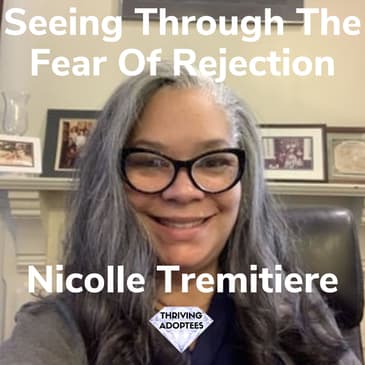
Here's a link to Nicolle's first interview https://thriving-adoptees.simplecast.com/episodes/experiencing-healing-with-nicolle-tremitiere
We can't talk ourselves out of our pre-verbal trauma. Our intellect can't heal pre-intellectual trauma. So what on earth do we do? Listen in as we dive into healing as an experience with adoptee and therapist Nicolle.
Here's a link to the EMDR International Association https://www.emdria.org/
Find out more about Nicolle at:
https://www.linkedin.com/in/nicolle-a-tremitiere-lcsw-79199a25/
https://www.facebook.com/TtraumaR/
Guests and the host are not (unless mentioned) licensed pscyho-therapists and speak from their own opinion only. Seek qualified advice if you need help.
Want to learn more about thriving for you, your kids, your families or your colleagues? Pick a time to talk here
[00:00:02] Hello everybody, welcome to another episode of Thrive the Adoptees podcast. Today I'm delighted to be joined by Nicolle Tremitiere. Looking forward to our second conversation. It's only four months into the last one so it's a treat. It's a treat to speak to you.
[00:00:18] Yeah, I'm glad to be here. Yeah. So if people want to check out Nicolle's first interview, there's links to that in the show notes. Last time we dived into a lot of EMDR stuff and flash EMDR and pre-verbal trauma.
[00:00:41] Why EMDR is great for looking at healing, pre-verbal trauma. So today we're going to start by looking at perhaps some of your personal healing moments. What are there a few that come to mind? Yeah, there are a few.
[00:01:01] I didn't start any kind of therapy until I was like 27 and that was as a result of me having a learning disability and they offer that as part of it. And I'm like, oh okay whatever.
[00:01:15] And so I learned a lot about myself in that process but I wouldn't say that there was much healing there. Healing there, there's more like education, awareness. Oh that's why I do that.
[00:01:28] And then the first time I went back to that same therapist actually because I knew she did EMDR. And this is a weird thing. I don't know if it was a medical issue but I got my thyroid taken out because I had
[00:01:44] thyroid cancer and I was in grad school. And I started having panic attacks. And I know now that sometimes when people go through an existential crisis, like I didn't have this plan for my life, sometimes they can kind of have some psychological impact.
[00:02:04] And so I didn't really know where that was coming from but she helped me get rid of the panic attacks. And it was really interesting what it tied into and it tied into a strange relationship that I had with someone.
[00:02:21] I don't even want to mention how this person was part of my life but a strange relationship where this person did some things that were inappropriate. But I mean it wasn't like sexual assault but it was did some things that were inappropriate
[00:02:37] and it changed the dynamic of a relationship. And I got really afraid of that. And I really think that has to do with relational trauma and my fear of being rejected or if I don't do this, is their relationship going to end?
[00:02:52] We had a good friendship but I started to learn that that relationship was not healthy. And that the person, I don't know if it overtly manipulated me but I really felt highly of this
[00:03:08] person and I realized that the relationship was going to change and I couldn't handle it. So that was the first time I did EMDR. And then when you are an EMDR clinician you go through,
[00:03:23] you practice EMDR on each other during the training and I wanted to work on some of the adoption stuff. And I said, I don't really have a lot of memory about anything but maybe we can just start somewhere.
[00:03:43] And I remember the person who did that, I envisioned a time where I was little, I don't have memory of this but I was thinking in my mind that I was in this room and my birth mother was friends with one of the people that worked there.
[00:04:02] And then she said, do you want to see her one last time? And then she opened the door and looked at me and my memory or thought was I started to go towards her and then she slammed the door.
[00:04:17] And I fell to the ground and I just was unconsolable. And I stopped and I was like, that's strange. And I asked the trainer, I said, did this really happen? She's like, I don't know, it really doesn't matter your body believes that it happened.
[00:04:35] And so I was just fascinated with the idea of that. And I really felt sorry for the little tiny kid that experienced that. The first time I was really able to say, wow, she was unconsolable.
[00:04:52] And so I think it's often for me when I am upset, I don't want anyone to touch me. I push them away. I have to go by myself and just gather my thoughts and that I think that's a maladaptive coping mechanism.
[00:05:08] I won't be open to co-regulation with anybody when I'm that upset. So that was interesting. Let me see what else? I did some EMDR with... Can I stop you there? Can I stop you there? Yes. Chris, there's a few things I could dive into from that. Okay.
[00:05:28] Right back to the start. What's about the thyroid cancer element. I'm sorry that you had to go through that. Right, it must have been a tricky time for you. And what changed my mind is the brain chemistry and the hormones going around.
[00:05:56] When you've got this thyroid stuff going on for you. So these two things, do they... Does that change lead to the crisis kind of stuff? I don't know if it was the thyroid itself. But what I think would happen was when I got my thyroid out,
[00:06:22] I felt suddenly awake like, oh my gosh, this is what I was really feeling lethargic before. And I was really super awake. I'm like, this is great, except that couldn't go to sleep. So I don't know what that's about. I don't know.
[00:06:35] I mean, I tried to get a medical answer. No one could give me a medical answer. And I struggled with insomnia for two years. So I don't know exactly what triggered that if it was psychological or medical.
[00:06:51] And it doesn't really matter the way that I would heal it is the same way or dress it is the same way I would tell any client. And I wasn't a therapist at the time.
[00:07:01] But now I know that I have a lot of stuff going in my mind all of the time. I don't know what I was thinking about specifically. But I think I was stressed because during that time,
[00:07:16] I was also fighting for my daughter to get appropriate education because she had dyslexia. And she wasn't writing paragraph sentences. And she was in sixth grade and she had a reading level of a pre-kindergarten. And so I was fighting like legal battles for that.
[00:07:39] So I think that might have contributed to it. So I don't know for sure, but... So the next thing that came to me as you were talking was about this fear of being rejected, which seems to be one of the top five things or bottom five things.
[00:08:10] Depending on how it's one of the key things here. So what's your take on that? I think that most adoptees, if not all... And I don't want to say no. Most adoptees probably have a fear of rejecting or abandonment.
[00:08:34] And we don't get to choose what that looks like. And sometimes we don't really realize what it is until it happens and we have language for it. So I think I was really becoming aware at that time of this fear of abandonment. And that is a real thing.
[00:08:55] And I couldn't explain where it came from because if you ask my mother at the time, we have a family. She did all the things, tucked us in our bed almost every single night all the way through high school when she was home. She... I don't know.
[00:09:14] You would think that maybe that would solve it, but it doesn't. And it's beyond the adoptive parent to heal this. It's so ingrained in our memory system that we don't even have language for it until we get older.
[00:09:29] But now that we do, I mean having a podcast like this can bring awareness to adopt these. It's like you can be the most adjusted person in the world and still have this peace of unstable
[00:09:45] sense of self that you're not going to be able to handle it if somebody leaves or if the relationship does not work out. And I think that as I get older and working through a lot of the stuff like unhealthy relationships,
[00:10:05] I really think that at 54, I have a better understanding of what I will and what I will not put up with as a woman who's single. I am single right now. I've been single for a long time.
[00:10:19] It would take a special person to get me to entertain the idea of being in a partnership with them because they're going to have to have their stuff together emotionally, physically. I mean not physically like I'm not a couple pounds, but financially.
[00:10:37] I want to know what your problem-solving skills are. I want to know how you act when you get in a tough situation. I want to see how you handle anger. I am definitely just, I don't want someone that's clingy.
[00:10:50] I want them to feel secure in who they are. So I think age changes the concept of relationship knowing that every relationship is not going to always work out and that's okay. It doesn't necessarily have to be a crisis. Yeah.
[00:11:08] And is this example that came out in therapy, the door, the birth mother slamming the door in your face? Do you think that and the rejection thing kind of sit together? Oh yeah, definitely. Definitely.
[00:11:27] I was becoming more aware of what this thing was that I didn't know what it was, but I felt several times before that, but it just culminated during that situation. Yeah, I think that they're all tied together. It happens even with friendships.
[00:11:47] It doesn't have to be a romantic relationship. I mean I have friendships that have dissolved or maybe ended abruptly and I remember feeling that same sense of anxiety or dread and I couldn't put my finger on it, but through therapy I'm learning about these things.
[00:12:09] I feel like I wouldn't say that I'm healed from it exactly. I know that I'm on the right path. I can say that. Yeah. You talked about change after therapy and the removal of the thyroid becoming more aware
[00:12:29] and on one part of that you were talking, this is a good thing I've become aware of this stuff, but on the other hand it led to this insomnia as you said. So perhaps it tweaked your hypervigilance.
[00:12:49] I do think that the combination of removing my disease, the thyroid that was making me lethargic and not really sharp along with all the sudden feeling of feeling awake and the mind racing because I have ADHD but it was on high alert.
[00:13:14] I would almost say if somebody was telling me this and it wasn't me, I would almost say it almost seemed like a manic thing but not my behavior about my brain. Right, it was on all the time. I was aware of it.
[00:13:31] I didn't feel comfortable with it a lot of times when people have bipolar and they're in a manic state or hypomanic state they feel good. I did not feel good. Right, so I can only liken it to that.
[00:13:44] That it was, I was very awake and I was exhausted at the same time as the months went on. Wow. Yeah. I tried to get someone to help me. They, oh we're going to help you and then they don't help you.
[00:13:57] The irritability that comes with insomnia is for real. I warned people though. I said please, please, I'm sorry ahead of time. I'm so irritated right now. You make a, you draw a distinction between kind of learning and healing. Yes. I think learning is so important.
[00:14:22] I mean psychoeducation, understanding what it is a therapist is introducing to a client even if it sounds crazy and I say that because if you tell someone I'm going to wave my finger in front of your face they're going to be what?
[00:14:41] So the education piece is so important. So we can normalize the language and for them to get comfortable with the mechanics of it and to encourage them to just notice what comes up. It's fascinating because some people have, they experience it very visually and I'm jealous of
[00:15:05] those people. Mine is kind of grainy but it's there but it's mostly thoughts like I'm having a conversation with myself and so a lot of times when we do EMDR somebody will come up with a question and it's, it could be rhetorical but it's usually not.
[00:15:21] Well I don't know what I'm going to do if I can't be with so-and-so and then I said just go with that. So we do another set of bilateral simulation and then when I say what did you notice that time? I'm just going to be fine.
[00:15:35] Like he is not everything. You know what I mean? Like you answer your own question. It's so interesting. And I think what's interesting too is that it won't change, like if you have a strong
[00:15:48] faith, like let's say a Christian faith, some of the things that you come up with are related to your faith. It goes with whatever it is that is in your mind and your beliefs. It won't contradict your beliefs but it'll help support them too. Yeah.
[00:16:04] In the healing process. So you talk about answering our own questions and most people not expecting that. They're expecting the questions to be answered for them, are they? In therapy no. That's something that we have to do as far as setting the right expectations.
[00:16:32] My job is not to answer questions for you. If I did that it would interfere with your own journey and that would be a tragedy. So I might ask a clarifying question or did you mean this or did you mean that?
[00:16:48] But in EMDR there's really not supposed to be a whole lot of talking unless it's for clarification or saying just go with that. It's a really true form of therapy, the way that it's intended with active listening.
[00:17:03] And then because everything that you have, everything that you need in your life is already up here. Like we already know it but it might be disorganized. So I think EMDR helps to organize the stuff that we already know. Yeah. Yeah.
[00:17:21] Like we both know if we were going to experience a relationship that ended abruptly, intellectually we know we're not going to die. You know? Like we will get past that. We've gotten past everything that we have ever experienced in our life thus far. Right?
[00:17:40] So but it's just because you're hyper vigilant, you're not thinking straight. And that's why like the grounding techniques and all the prep work that we do for EMDR is really important because they can self-sue in between appointments hopefully. But yeah.
[00:18:02] People seem to, I love this distinction between, I love this word psychoeducation because it seems to me that that's what the world is about. You know? There is a lot of psychoeducation out there. Books are about psychoeducation. Yeah. And you make a very big, an understanding isn't enough.
[00:18:26] And I think this, I think this really, why this lands for me is because I get very frustrated at the psychoeducation. No, like reading books like Oprah's book with Bruce Perry. Right? He's the guru guy. He's the trauma.
[00:18:48] He's one of the top trauma gurus, him and Bessel van de Kolk and all these sorts of guys. And yeah, the books are purely psychoeducation. They're not about healing. Nobody dives into healing. Well, I would say nobody dives into healing as much as we do on this podcast.
[00:19:08] Right? Yeah. Most adoptee podcasts are about stories. They're not about healing. And I'm getting goosebumps about that because that's what we're trying to do here. Is we're trying to listen. As you're listening to this, right? But we're going into the heart of healing. This isn't the same.
[00:19:36] I listened to our previous conversation this morning, Nicol. I said, no, listening to a podcast isn't the same as having a therapy session. Right? We correct. This isn't the same. But what we're doing is we're drawing some distinctions and simply by focusing on healing
[00:19:59] rather than trauma, simply focusing on healing rather than the story. Then we're doing that in the hope that that may create some kind of healing insights and shifts. And we got into this. We talked about this quite a lot last time. It's about being less triggered less often.
[00:20:28] Yes. It's about being triggered less often. It's not going to happen in a vacuum if you are adopted, whether or not you had loving parents or not. If you experience any kind of negative reaction that seems to last longer than most people
[00:20:47] when you have a breakup or a friend breakup or something like that, or you get ghosted and you decompensate. This is all of that stuff. You wouldn't think of that. You wouldn't think it's from the maternal separation or whatever birth mom was going
[00:21:07] through while you were in utero. But if you can't shake it and you really want to do a deep dive into personal healing, then you have to find a therapist that is very well versed in attachment and can help you identify
[00:21:27] and strengthen some attachment figures that you feel like even if the person is not accessible to you. But you saw a movie that this person was like, oh, the most nurturing mother you ever felt. She wasn't too much.
[00:21:43] She was really letting you experience life and have challenges and then talk to you through that. We need to identify attachment figures that we feel safe with because it's really about emotional safety. Right? So for those who may be interested, if you go on mdria.org,
[00:22:09] those are a list of international attachment, excuse me, EMDR therapists. Some of them are certified. Some of them are consultants and training. Some of them are presenters. I would find if you do a drill down that, look for someone that has attachment as one of the
[00:22:34] things that they work with. And that might be a place to start. So another way of looking... There's a link in the show notes. We're going to put a link in the show notes to that listeners. So it's EMDRIA. Yeah. EMDRIA.
[00:22:59] So that's the international association for EMDR and EMDR therapists. So... I love that distinction that you make between getting something rationally. Right? So you say we know that this isn't going to lead to us. This isn't going to kill us, whatever this loss is. Yeah.
[00:23:24] It's not going to kill us. Great. But and yet there's this catastrophizing. Yes. There's this catastrophizing. So there's the difference between getting something logically and getting something... What? What would you say would be the opposite of that? Well, no. There was the deeper. Not logically, not intellectually.
[00:23:46] I would say physiologically because if we look... Or neurobiologically because if we're looking at the way the brain is wired and how the body responds, that is the truth. That is where we want to know if you're really okay. And I'm not saying that everyone's not functioning.
[00:24:13] Yeah, some people are functioning. They happen to be in a relationship with a secure person. They might not have a need for this. But if you're in a relationship with someone who is avoiding, right? That's going to drive a person that doesn't have healed attachment stuff.
[00:24:33] Like if they're not healed, that's going to really take them for a loop. So, you know... So getting it physiologically is what you mean by that. We don't get that visceral response that we might use to get. So I can think of a gut reaction.
[00:25:03] And I feel it. I can think of threats, right? Me perceiving a threat of somebody pulling your way or somebody not doing what they say they're going to do or something like that. And I feel that in the pit of my stomach, right?
[00:25:26] So it's what you're saying, getting it physiologically is that when there are the symptoms, the physical symptoms... I would say so. For some people, when they experience something like somatically physiologically, like let's say for instance, they feel anxiety. When someone feels anxiety, how does that manifest?
[00:25:49] Well, some people might actually vomit. Some people actually might have diarrhea. Some people might completely shut down and isolate. So, yeah, if you manifest that way. So it's a change in our own physical response. So when it's happened before and when it happens again
[00:26:19] and the physical response is totally not there or it's a less extreme. Because I was thinking your results... Your examples that you gave were quite extreme and I'm just thinking about a feeling in the pit of my stomach.
[00:26:35] So it's basically a healing could be looked at as a kind of a de-escalation or a reduced physical response for whatever that means. And we've all got a different... Because sure, it's sad, it's upsetting. We might cry for a day but what happens after that?
[00:26:53] You say, well, it just didn't work out. I'm going to take some time to take care of myself and then do what you have to do. That's a very adaptive response to a bad breakup or something like that.
[00:27:11] If you're ruminating and cyber stalking and trying to show up and beg them, just give me one... There's something there that's like... And it's weird because they can't stop themselves from doing it. Even though if it happened to them, they would be totally turned off by it.
[00:27:32] I can think of a certain girl that I did that with, for sure. Yeah. And we've all done it. I won't do it again. I could tell you that. It's just... I only have... I'm on the second half of my life here. I don't have time for that.
[00:27:48] So part of that is age and some therapy and I'm not done. Because I really... Even if I have the best years of my life for five years,
[00:27:58] I still am going to do the work to make sure that I'm as healthy as I can for whoever I come in contact with. So you talked a couple of minutes ago about withdrawal and you talked probably 10 minutes or so ago about being inconsolable when we're speaking.
[00:28:18] And that really ranks and bells for me. Like I don't... Almost as... I'm thinking about certain instances where my response to people trying to console me has to be actually to push them away. I mean, if you grew up in this...
[00:28:43] I was just looking over some of my CEUs and I took this training and it was EMDR training, but it was talking about pathological bonding. And... That's a really good... No, but I think we do that a lot. I mean, I think we do it...
[00:29:05] Like depending on how we were raised and it has to do with like when kids are being raised by their parents, there should be a combination of co-regulation and auto regulation. But if a child is being neglected and they have to regulate themselves, they have to self-stue themselves.
[00:29:26] So sometimes they cry and go to sleep. Sometimes they'll hide or they'll have anxiety to make sure... I don't want to get in trouble again. So let me make sure that I'm doing XYZ. So when there is not appropriate parental attachment stuff going on,
[00:29:46] there is going to be this tendency to auto-regulate or you feel like you can't regulate unless you're with somebody. So there are two ends of the spectrum and those are not healthy. And so I think it manifests in not allowing people to console you when you're upset.
[00:30:09] You go off by yourself, you have to regulate yourself, but the idea of being able to co-regulate is something that I think will come later for some people if they get the appropriate help. Because all that, the anxiety or the avoidance is fight-or-flight 101.
[00:30:34] And the window of tolerance is like right here. And I know people can't see what I'm saying, but when we go to therapy, you want to open that window of tolerance so you can handle more.
[00:30:47] Because if you go up here, then you're out of your window of tolerance. If you go all the way down here, whether it's to isolate or dissociate, that is the opposite end of the spectrum and that's not adaptive.
[00:31:02] So therapy will help you open the window of tolerance and allow you to handle more, but we have to desensitize all the things that are creating that hyper-vigilance or that fear that if you don't de-escalate, go all the way down or to avoid,
[00:31:23] that you're not going to be okay. So we talked about that big change that happened for you after realizing after that event, the door slamming, the memory of the door slamming. Mm-hmm. What changed for you after that event?
[00:31:49] Well, I really, I think that started some inner child work to really, to take notice of the little girl that didn't have the tools to manage and to have compassion for her, visualizing her and saying, do you want to help her?
[00:32:09] Or do you want to leave her there? And of course, I want to help her. And it's really interesting because looking at my granddaughter, she's not me, but she is like, she causes this feeling of love similar to the little girl that I'm trying
[00:32:34] to rescue. And this little girl is being attended to, she gets in trouble when she's supposed to get in trouble, but she's constantly just loving on me, her mom, her grandfather, and she really feels connected to us.
[00:32:55] And I think that having secure connections when you're that little is super, super important. I apparently did not have secure connections. And you know, back in the early 70s, I mean, there's only so much that my adopted mom could have known or whatever.
[00:33:16] And I'm sure she did the best that she could, but there was 15 kids. You can't really attend to all the needs of 15 kids. It's just not physically possible. No, it's fine. Yeah. Yeah. Wow. Yeah. So do any other particular healing moments come to mind? Kind of thing. Yes.
[00:33:43] Yes. Yes, yes. Well, I might take that back because I don't know if that's exactly answering your question. I think for me, knowing what I learned in that training and then taking that information to
[00:34:04] the therapist that I was working with at the time and just working through some of the relationships that I had that were kind of like not healthy and needed to step away from them or not being them anymore.
[00:34:21] And I'm just talking about, like I'm talking about friendships too. I don't know. I mean, I'm trying to think. So it's the surfacing and then the dealing. I realized that I was, I definitely set more boundaries than I ever did in the last decade.
[00:34:44] And I realized that setting boundaries is not about not liking the person, but it's because you do value the relationship, but you don't want a relationship that is makes you feel icky. Or that you feel like you're being taken advantage of.
[00:35:03] So, or you feel like the person's going to leave if you don't help them with whatever. So in that way, yes. My everyday relationships I feel are healthier because of what I've learned in the therapy that I've been involved in. Yep. And I have closer relationships.
[00:35:24] I spend my time with people who are like-minded, who have gone through therapy. Like I have a really close relationship with my brother, Steve, who has experienced EMDR, is constantly trying to better himself and his family through therapy. And we trust each other. And it's a beautiful relationship.
[00:35:45] All of my siblings can't do that. And I still love them. I just don't have that kind of relationship with them. Yeah. Yeah. So what do you think gets in the way of our healing? Hubris. Hubris. And uh- What? Ego. Ego. Ego.
[00:36:06] Like really thinking, like your ego, like thinking that there's, that they have it all, that they can handle whatever. And I see the dysfunction and it's- And so some of my family probably think I'm very standoffish or inaccessible because
[00:36:25] my experience with relationships with them, you know, I don't feel like my spirit says no. You know, you love from a distance. I love you, but you know, I'm not going to come to your house and things like that. But um-
[00:36:40] And I love my family dearly, but again, I will not allow myself to be in relationships that are not healthy or if you don't reach out, I'm going to match the energy type of thing. I don't want to invest in someone.
[00:36:57] I used to over-invest in people that I consider friends or colleagues or whatever. And if I didn't get that same investment back, I just kept on investing in them. I'm not going to do that anymore. It's not healthy for me.
[00:37:10] So, you know, I'm just trying to find like-minded people that I feel comfortable with that doesn't cause my internal fear thing to pop off. And I just- So, I'm just more particular about who I spend time with if that makes sense. Yeah. Yeah. You mentioned our-
[00:37:34] So there's a gaging going on. There's a gaging for- Are you a safe person or are you not a safe person? Yeah. You know? There's a gaging and there's a- But it's not 3.2 versus 4.6. It's more of an intuitive kind of gut gaging.
[00:37:55] The way our body reacts to somebody tells you everything, you know? You might not have the specifics of why, but it will- It might slow you down a little bit.
[00:38:07] Let me wait to see how this person is or, you know, over time and not to jump right in like, yeah, let's go the trip. You know, let's go to Mal. We have to get- No, no, no.
[00:38:18] I'm not going on vacation with anybody that my internal clock says no, no. Yeah. Yeah. An idea- A memory popped into my head and it's a business one actually. It's- Okay. I had an instant distrust, dislike of a guy and then that I was interviewing
[00:38:47] who came for interview. As soon as he arrived on instant disliked him, but he was a good talker and I ended up taking him on as a member of staff and it went terribly. It went terribly when I over read my- I over- over-rode my instinct. Yeah.
[00:39:10] I'm just thinking what does that look like in a kind of client's therapist's sense for you? Well, whenever someone comes to therapy, you want to- We have to both feel like it's a good fit, right? Because some people are open to ideas. Some people are not.
[00:39:36] They'll come in and they want to be in charge of their therapy, right? And not in a way that is healthy but in a way that they want you to do this, they want you to do that.
[00:39:51] If they show up late, they want you to continue to give them the whole hour when you have somebody next and there's certain people that just aren't good fits for me. Now, there's someone- There's a therapist out there for almost everybody
[00:40:13] and just because they're not a good fit for me doesn't mean they're not going to be a good fit for somebody else. There's certain personalities that my alarm clocks just say no. They just say no and I usually can figure out within three sessions
[00:40:30] and either they'll leave therapy or- I'm going to say, I don't know if this is the right fit for you because a lot of times when people want to do EMDR, they think that the day that you come in, you're going to do EMDR
[00:40:44] and for some people they're willing to do that and that's okay, right? But for me and because I've- I don't know, hundreds maybe even a thousand EMDR clients, there's a lot of prep work especially for people with complex trauma.
[00:41:01] I am not going to do EMDR if I don't feel comfortable that you have enough resources to be stable in between appointments. So someone's really pushing that way, we're not a good fit. So what could you share with clients out there, listeners out there who are adoptees
[00:41:28] that could help them and give themselves a better self of time struggling for the work? Like what could happen? What I'm getting at right is that you said hubris and ego, I said what stops us healing and you said hubris and ego.
[00:41:58] So now I'm sure those people who have hubris and ego going on when they go to a therapist or whatever, I'm sure they don't realize. They think that they're being opened and they think that they think that they're being open when they're not being open.
[00:42:22] So I'm wondering what kind of self-awareness, what you can share about self-awareness for adoptees in general and in therapy? In general and in therapy, that's it. I would say that if your mindset is like I want to get better now,
[00:42:51] like that might be an expectation that's not going to be able to be met, especially with a more seasoned EMDR clinician because there's just not the desensitization part of it. It might be like taking information, they would have to have some patience.
[00:43:17] And if someone's been doing this for a while, we know what we're doing. We want to do a thorough examination just like if you're going to the doctor. Oh, doctor, I have this pain. Okay, we'll get on the table. Let me listen to your heart.
[00:43:32] Let me look down your throat. Let's get some blood work. Oh, by the way, it looks like you have a hernia. Now if someone comes in, feels your stomach says, okay, let's just cut it open. I would be like, wait a minute. Hold on.
[00:43:48] Like you don't have enough information, but I think that we just need to give ourselves permission to do the research. They could research themselves. Like if someone goes to my website, which I can't give it to right now because it's under construction.
[00:44:02] But if someone went to my website and they truly read through my website, they would have an understanding that this isn't going to happen on day one. Like I really need to gather some information. I want to know what kind of resources you have.
[00:44:16] If you've had EMDR in the past and it was more than like five sessions or whatever, that's helpful for me to know. How did you handle that? Oh, I did some current or whatever, but I was able to get myself together. Okay, well, that's good.
[00:44:29] That's good for me to know. But just to understand that we want to really make sure that you're the right candidate for this. And it might take some time before we get to the point when we can do EMDR.
[00:44:45] But again, I'm so grateful that I have Flash EMDR because if a person comes in and they're really keyed up about something, we could probably do something that day. But that's not everybody.
[00:44:57] It really depends on the situation and depends on the goals we have set out for that person. But just educate yourself first and then ask the questions in the first session and be open to whatever the therapist says.
[00:45:17] And you can decide whether or not you want to continue. Because we're not in the business of wanting to harm our clients. So if we're being impatient, then we're probably barking up the wrong tree. And I'm thinking back to myself in situations like this, talk.
[00:45:47] I have had first conversations with a couple of therapists over the last month or so. What I found myself doing was, well, I didn't waffle on too long. Okay, so I need to give them a little bit.
[00:46:13] When I got in touch with them, I gave them a little bit of background. And maybe half a page of A4, maybe a little less, maybe a third of a page of A4. So this is my journey. This is what I've done in the past.
[00:46:29] This is what I'm looking to do. And then I answered a couple of questions. But I didn't talk at the potential therapist for the hour. Like I said, okay, so I've shared a little bit about me. You've asked me a few questions.
[00:46:49] What else do you need to know and tell me about yourself? So I was conscious of the fact that I sometimes over talk. Talked on too long. So I try to kind of rain that in. So that shows to me a little bit of self-awareness.
[00:47:15] I made it clear that where I'm coming from. So it's a gentle information exchange, really, in those first stages, isn't it? And it's got to have a balance. What did you do with that therapy? Sorry? Why did you choose that therapist? Well, I was looking for...
[00:47:41] So last time we spoke, since then, the therapist decided to retire. So I needed... Well, I needed. That's a good question because I need one. I felt that I wanted to continue learning. Because I'm like, you don't want to keep on learning. And so I did some...
[00:48:05] And I had a sense that I wanted it to be local. I wanted to do it face-to-face. So that helped me understand. I knew that I was looking for something with a somatic bias to it.
[00:48:23] And so I spoke to one lady who was into what she called somatic EMDR. She was a good fit. And then towards the end, she said, I said, well, what would you advise me to do? Or what else could I do?
[00:48:39] And she said, well, you might look at something that is more pure clay, pure somatic. And that's the EMDR-ish to me. And I thought, okay. I thought good on her for me to explain it. So I found somebody locally. And I decided that for where...
[00:49:03] In terms of where I'm at, I thought something a little bit more somatic might help. And she did some stuff with me on that first session. So I decided to go with her. But it was pretty close.
[00:49:18] And if I just work out with the second lady, then I'll go back to the start. But I guess it's about balance. And it's kind of hard to... All right. So our advice is make sure that you've got a balance of who's doing the talking. Yeah.
[00:49:38] I don't know what we're doing. Well, I mean, if the therapist is doing talking, it really... It should be for understanding. You know, sometimes clients want to know more details. And it depends on what it is that I would share with them.
[00:49:51] But primarily it's really about holding space for them. And with somatic work, at least from my understanding, because my one friend is certified somatic practitioner. There's really not a lot of talking other than them saying, notice that, be curious about that. And there is some feedback.
[00:50:21] But I think it's really important that whatever modalities think you want to do to really look to see what that might look like, it would be helpful because even though I do EMDR, I am very intrigued by the somatic.
[00:50:37] But it costs so much to become trained and effective. Like we have to pick one or the other. Some people can pick all of them. That's great. But a lot of us don't have the funds to really dive deep into all of the bottom-up therapies.
[00:51:00] So we've covered quite a bit. Is there anything else that you'd like to share Nicole? No, I mean, I just... I really think that be your best advocate. Find out if a certain therapy modality is for you.
[00:51:20] If you have any fears, can a therapist address those fears or concerns? And just to really shop around. I don't get offended if I'm not for somebody. And with the attachment stuff, that's when I know, like, okay, that's fine. You know what I mean?
[00:51:41] It's really fascinating to work with people who know exactly what they want and have done their own research. So just be an educated consumer. Yeah, cool. Thanks Nicole. Thanks, Liz. You're welcome. We'll speak to you very soon. Take care. Bye-bye. Thank you.