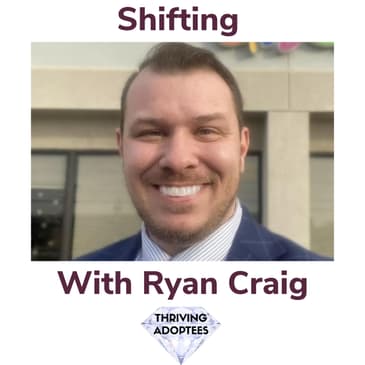
So much of our lives has been based on protecting ourselves. And understandably so when we've felt so vulnerable and insecure. How would shifting our focus move us forward? Listen in as Ryan takes me - and you - on a profound learning journey. A truly mind shifting and belief busting episode.
Ryan is adopted. He and his wife are the proud parents of two adopted daughters through kinship care, a son, and two beloved dogs who have yet to realize their own size.
Ryan is deeply passionate about loving and serving others, with a heart for making a lasting impact. He was first introduced to Hope’s Closet through its annual gala and was immediately drawn to its mission. Two years later, he joined the board of directors, and his passion for serving others ultimately led him to transition from his facility management career to become Hope’s Closet’s Executive Director.
Ryan’s greatest hope is that every child who walks through Hope’s Closet feels loved, supported, and truly valued.
Find out more at https://www.hopesclosetohio.org/
https://www.linkedin.com/in/ryan-craig-16a4b8168/
Guests and the host are not (unless mentioned) licensed pscyho-therapists and speak from their own opinion only. Seek qualified advice if you need help.
Want to learn more about thriving for you, your kids, your families or your colleagues? Pick a time to talk here
[00:00:02] Hello everybody, welcome to another episode of Thriving Adoptees podcast. Today I'm delighted to be joined by Ryan. Ryan Craig, looking forward to our conversation today, Ryan. Really looking forward to it, my friend. Yeah, thanks for having me. So, thriving. What does thriving mean to you, Ryan?
[00:00:21] That's a hard question. Because I think the world has a lot of ideas about what thriving is. That thriving is having a nice car, having the perfect job. You know, all these ideas about what thriving is.
[00:00:42] But to me, thriving is, in its most base form, is loving people when you feel unloved. It's caring for people when you don't feel cared for. Feeding someone when you're hungry. I think thriving is reaching a point in your life when you've decided that no matter what the circumstance, you're going to be your best and you're going to share that with people.
[00:01:08] So, it's thriving really, you know, people describe it often as, it's all about what you have and a state. But for me, thriving is more about letting go. And just kind of leading your life with joy.
[00:01:24] Yeah. I love it. Yeah. Yeah. I love it. I knew you were going to come up with some really good stuff from the conversation that we had last time, Ryan. Yeah, I had to think about it a lot because, you know, I have a lot of ideas, but just trying to put something that is really such a big and valuable concept into words is tough.
[00:01:52] Yeah. Yeah. Yeah. So, the first thing was, I thought you were going to go, so it's not in the outside world, right? It's not in possessions. It's not in the American dream or the British dream. It's not in the material stuff.
[00:02:22] Right. That bit from our conversation last time, I didn't expect to say, but I know that that's where your heart is, right? Right.
[00:02:38] But then when you said loving people when you feel unloved, that really took me back because people would normally say, well, it starts with us loving ourselves. Yeah. Yeah, for sure. And then we can share the others. But you flipped it around the other way. So, it's basically putting other people first.
[00:03:06] Yeah, I find that when I can really say that I'm thriving, I always attribute that to finding joy. And for me, I always find the most joy when I'm giving and I'm loving and I'm doing for others.
[00:03:26] So, for me, I feel like I'm thriving when I'm contributing to other people finding that and other people thriving. For me, that's where most of that comes from. Yeah. So, we kind of normally hear about that sort of joy from giving.
[00:03:52] I mean, that's only kind of like on my radar or more on my radar around Christmas time. We think of it like that. But that's not what you mean, is it? No, no. I think and it's easy to fall into that idea that, you know, giving is a charitable donation or, you know, volunteering.
[00:04:18] But for me, it's finding small opportunities every day to let someone feel appreciated for something they feel no one saw them do. Or saying thank you to someone that is doing something for the millionth time and they're going to do it a million more times and they never expected a thank you.
[00:04:42] So, to me, finding those small opportunities and taking advantage of it and trying to bless someone, that's when I feel like I'm thriving. That's when I feel like whatever's been holding me back, whatever's been holding me down, whatever hindrance, whatever weight I have, that goes away when I start lifting a weight off of someone else.
[00:05:08] And to me, that's thriving. That's, you know, thriving is really, you know, we, it's growing, right? Thriving is growing. It's perseverance. And I think when you get to a point where you go beyond just getting through things and it becomes a joy to do everything, it becomes a joy to experience everything.
[00:05:35] And you get to a point where you're really living life from a place of joy that that's thriving, you know, surviving, you know, just getting by. I feel like it's hard to find joy in that. Yeah. The other thing popped into my head is that maybe some listeners will know, maybe you know, maybe you're not, but me and my wife haven't got any kids.
[00:06:03] Right. And I knew that that wasn't that that was the way it was going to be before I proposed to her. But I, but I often think if I'd had had, if I'd had kids or by not having kids, did I kind of miss out on the sort of unselfishness stuff that you're talking about?
[00:06:30] Yeah. So my question to you is, how has, how has you having kids, your wife having kids, how has, what impact has had as, how important has that been in the, in the, in the philosophy that you've been sharing with us so far? Yeah, that has had a huge impact on it.
[00:06:57] I think, you know, we have three children. We have two that we adopted. My twin girls, Isabelle and Elizabeth. And our son Sterling, who's our biological child. And I think a lot of that comes, a lot of my outlook comes from being a parent.
[00:07:22] Because inherently you, you struggle to be selfish when you have children. It's a struggle to put yourself first. Even something as simple as eating a meal, because, you know, I have a nine-year-old with ADHD. And if I'm eating something that he likes, he's, he's going to enjoy that with me, whether I like it or not.
[00:07:47] So I think for me, having kids and having that relationship, that person that relies on you for, for, for everything, for their material needs, their emotional needs, their spiritual needs. A being that looks to you for reassurance, for, for comfort.
[00:08:17] This really, this really ties all that together. You know, everything you do starts to be for them. When you start thinking about, who am I? What value do I have? It, the word parent starts coming up.
[00:08:38] And, and it really, I think there are so many opportunities to lean into, you know, my, my definition of thriving is, you know, loving when you feel unloved, you know, you're, you're, you're loving and caring for these kids. You're, you're going out of your way to give them the life that you feel they deserve. And there's usually not a thank you.
[00:09:05] There's not always gratitude because they don't grasp the weight of what, what we do as parents and what we sacrifice as parents. So I, I think being a parent has hugely informed my idea of, you know, giving no matter what, loving no matter what. Yeah. It's funny you said no matter what, because those were the words that were coming to my mind. They're no matter what thing.
[00:09:32] And I was also thinking about my, about my own experience and, and how my parents prioritised and what came first for them.
[00:09:50] And, and when, when you've got, when, when you've only got your own experience to, to go off, it's kind of tricky because you haven't got a comparison. You haven't got a comparison. So in the world of, I'm not quite sure where I'm going with this. Well, I know where I'm going. I just don't know in the next sentence. Without a comparison, it's hard to judge. Right.
[00:10:20] And, however, when I have spoken to some of the adoptees that I've spoken to for, for the show, it's been very clear that, that, that their adopted parents were putting themselves first, not their kids.
[00:10:42] And, and, uh, so a, a guy I interviewed last week, he talked about, he was, he was, his job was to make, keep his mum, he said, keep his mum happy. And, and, and, and the, the arrival, like make, make her happy in the first place. Right.
[00:11:11] And that seems to be at a complete 180 from what you're describing. Right. I, you know, and I, you know, I, I, um, what was adopted.
[00:11:25] And so I understand, um, I, I understand the emotional complexity that comes with that and, uh, the, the fear of, you know, having these new parents and, you know, a new parent and trying to understand what, what do I do?
[00:11:52] Cause, you know, as it chill, all children want to do is, is, is, is make people happy. All, all, all children want to do is, is feel loved and, and, um, you know, and they want to impress. They, they, they, they want to show their value, um, from a very early age. And, and I think that's doubly hard for, um, children that, uh, enter an adoption situation.
[00:12:19] And so for my girls, I had the unique perspective of understanding that they want to be loved. They, they want to impress. They want to, they want to show their value, um, because they're coming from a situation where, uh, they're, they're questioning that value. What, why was I not good enough? Why, why am I even in this situation? And so that informed our perspective.
[00:12:44] And as parents, my wife, Megan and I, and just really pouring out love and, and, and showing them from day one that none of, none of the circumstance was their fault. Uh, none, none of this was, uh, none of the, none of the hard things that led to them being with us was their fault. But everything from then on was very intentional.
[00:13:14] You're here because we want you here. We pour love out on you because we care about you. And so just trying to show them that there was very little intention and, and chaos before. And that now things are very different. You know, everything's done with intentionality. Intentionality. And, and you have, you have to do that. You have to manage a relationship.
[00:13:37] I, from my perspective with an adopted child with intentionality, because they're, they're, they're just levels of emotional awareness and, and physical things, psychological things that, you know, a, a child that, uh, quote, you know, quote unquote standard. Family situation. They just, they just, they've never had to, and probably never will have to deal with. Yeah.
[00:14:10] As you were talking about, you, you, you, you, you talked about it being, uh, being not there, not their fault. The situation is not their fault. And as I scribbled that down for my notes, I, I, I look to pick up on what people say.
[00:14:29] And, you know, when I write the show notes for the, uh, for the, for the, for the pod, um, I, I, I, I saw that the fault word, the, the, the, the fault, um, word jumped out. Right. So we can look at fault as in, it's, it's not, it's not down to us, but we can also look at fault as in something wrong with us. And, you know, I wrote, I wrote down not their fault.
[00:14:58] And then I put forward slash faulty. Right. Right. And, and I, uh, between college and, um, between, between school and college, I worked in a coffee factory in, in Berlin before the wall came down. And I used to, my job was to watch these machines for, for them breaking down.
[00:15:24] Uh, and, uh, and I had another job, which was to, to, um, collect the, the bricks of coffee that were, uh, where the vacuum had gone. Right. So these conveyor belts, the, the conveyor, but the coffee came in those, you know, like those vacuum packed bricks, like they're little things. They came down on this conveyor belt.
[00:15:48] And then just before they went into the packaging machine, where they, the box was wrapped around them, uh, there was a little sensor that tested the vacuum. And if it, and if it didn't, if the vacuum had failed, then this little, uh, this almost like a fist came out and, and, and punched the faulty, the faulty packaging into a, into a, a bucket. Right.
[00:16:14] And one of my jobs was to, uh, to, to, to, to slip that, that pack and, and, or loads of those, uh, faulty packaging into another, into another bin that was then full of coffee. And that would go round back round and it would be repackaged. And, and that was the, the thing that came to my mind in terms of a metaphor for faulty. Right.
[00:16:42] And, and, and like, we feel that there's something wrong with us. So this, the, the, the, the vacuum would fail on this brick of coffee. It was faulty and, and, and, and, and therefore it wasn't going to make it further down the food chain. Um, and, and the, the kind of what, what's wrong with me. Right. And that's, and the beauty of that is, and that's, that is a, a great comparison.
[00:17:09] And just like, you know, these adopted kids, myself, my girls, you know, you feel that, right? We're the coffee. And it's not our fault that the vacuum failed. That was a machinery thing. But either way, we're now, you know, we're now beholden to this mistake that was out of our control. And we move on down the line. And for some reason, there's this decision that we're not good enough.
[00:17:39] Right. Or there's this problem, this error. It had nothing to do with us. And so then we're pushed down. But the beauty of it is, Simon, is that you opened that coffee up. Right. You put it somewhere else. And it had a chance to go back through and be repackaged. Right. Because you can't fault the coffee for a faulty machine. Right. It's not the coffee. The coffee is good coffee. It's great coffee. Eventually, it's going to make it somewhere.
[00:18:08] Someone's going to brew that. It's going to make their day. They're going to start their day. You know. And so that's, you know, that's those are my girls. Right. No. That was me. That was so many people that that no, no. For no reason for nothing that had anything to do with them. They find themselves in that situation. And it just takes that one person to say. That's not OK.
[00:18:36] And provide that second chance, you know, and I got that second chance. And that's why my wife and I wanted to give our girls that second chance. And it's just a beautiful thing. And that's, you know, and that's that's to me, that's part of thriving. When you when you have that situation and you have that decision where that coffee can go in the bin or that coffee takes a second trip around and gets a second chance. That's the difference between surviving and thriving.
[00:19:04] You know, in survival, you can say there's an error here. We're going to scratch that. We're going to move on for the sake of efficiency. That's surviving. Thriving is saying here's an ugly situation. We're going to turn that into another opportunity, another chance. That that to me is the essence of thriving. That moment where you make a decision out of love. And it's that that second trip around that that that is thriving.
[00:19:32] Thanks for extending my metaphor in a way that I've never seen it before. You know, I think it's I think that's really powerful. Yeah. I think that the whole I've become I've become addicted to metaphors, you know, like because otherwise, what have we got? We've got kind of weird abstract concepts. Right.
[00:19:55] And like we talk about what metaphors do for me is it makes the abstract concrete. Right. And we use that in our language. So we use the word grasp for understand. But we can also grasp for the coffee. Yeah. Grasping for it. It's right. So it makes the abstract concrete.
[00:20:23] And if it's concrete, then we our minds can get their their heads around them. Right. So our minds need something to hold to hold on to. And, you know, we thingify stuff. Right. We thingify stuff. We make and and for me. That has like it's a it's a it can be a double edged sword. Right.
[00:20:51] So it like because it takes something that is abstract and makes it concrete. We can grasp it. But then we might hold on to it. Not not the not the metaphor that we've been talking about. But, you know, I'm thinking about the kind of the primal wound metaphor and that that separate, you know, we thingify it. So it starts off abstract. It starts off as maybe an abstract. It starts off as a feeling and feelings, a sensation.
[00:21:21] And it is palpable. Right. It's something it's like, you know, the feeling we get in that I'm getting a feeling in my stomach. You know, like it's not this isn't an abstract emotion. It's like a felt it's a felt thing. And and and and that felt thing. Then we think thingify it.
[00:21:48] And then it becomes denser. It grows. It's like it's like a it's like a snowball. Right. So we we scoop up us. We scoop up some snow between our palms, make it into a ball and then we roll it to make the base of the snow, whatever we're making. Right.
[00:22:16] And we kind of we make it bigger. Yeah. And that that for me is sometimes when these these things that we make can become they can can can can become kind of monsters. Oh, yeah. Agreed. Agreed. And you you talked about it.
[00:22:47] What fascinates me is is that moment you I think use the word decision. Well, I know because I wrote it down. I mean, you it so we're not born. Thinking there's anything wrong with us. Right. We're not born feeling faulty. And so like and that you use the word decision.
[00:23:16] Is it is this a decision? Is it is it a belief? It comes from somewhere. Right. Right. Does it does it come from a feeling and then become a belief or or how do you do you know what I'm getting at? I'm running out. Yeah. No, I think I think I think human beings before we before we know anything, we feel things right.
[00:23:44] We I don't know that I like macaroni and cheese when I'm a baby, but I I feel that I'm hungry. I don't I don't know that I'm sad because. You know, mommy's over there and I want someone to hold me, but I feel alone and I cry, you know, so I think I think for me, the beginning of all knowledge, I think is probably feeling.
[00:24:14] And. And. And then we started, we started ascribing acquired knowledge to that, you know, acquired information. So I think. I think. I think no child is born feeling worthless or or or believing that they're unworthy of love or that they're undeserving or not enough.
[00:24:43] I think they start to feel. I think they start to feel. Lonely. I think they start to feel. A disconnection where maybe there should be one. And then. Then I think as we get more information that informs our ideas, you know, I see other kids with their parents. I feel alone, but now I start to think.
[00:25:11] Why am I not like that kid? What what is that kid have that I don't have? And so I think we we start to feel and then we start to learn. And I think one of the biggest problems is that we start to learn lies. You know, for years and years, I'm 36 years old. I've processed a lot of grief and trauma and learned so many truths.
[00:25:36] Through through hard work, you know, but at the start, it was I I feel this way. I feel hurt. I feel abandoned and then I'm supporting my feelings by seeing that, you know, my my birth mother, who I do know and had sort of a relationship with off and on. You know, I would see that there are other things that she's making a priority there.
[00:26:03] And then, you know, we just really we dig deep into into information and we start compiling. We start compiling that information and we start telling ourselves stories and we start asking ourselves questions. And I think we just start we start hurting ourselves by doing that. Yeah. You've got a real gift to describe this, my friend.
[00:26:29] I guess it's not a gift you'd want, though, is it? I mean, yeah, it's I mean, it's come through years of. Years of trying to articulate how I'm hurting and trying to articulate how I feel and then. You know, I've worked with youth for many, many years through my church and, you know, then with my own children.
[00:26:54] And, you know, now I work at a charity that that supports foster children and foster families called Hope's Closet. And I. I've had to find a way. To articulate. My pain. And the growth and the way I've been able to get, you know, to get through it, because if I couldn't do that, I can't help someone else do it.
[00:27:23] Right. And like I said, for me, thriving is. It's going beyond is taking what I have and sharing it. And so I've had to become articulate so that I can help because that's that's that's all I ever want to do is help. Yeah.
[00:27:46] One of the things that really popped out in that gorgeous segment and you talked about learning lies. And you talked about stories. And there's a lot of stuff about stories in the in adoption land.
[00:28:11] One of one of my biggest concerns is because you're right, does that we do learn a lot of lies. Right. So what what if our stories are? Do you use this phrase in the States, a pack of lies? Do you? Yeah.
[00:28:38] So what what if our stories are are a pack of lies, a story about who we are? I'm really talking about here, I think, are most most essential. What if if we if we're learning lies and we've we've got a there's a lie going on within us about who we are. And then we're sharing and repeating that lies.
[00:29:05] Then that that's we're back to my snowball. You know, people talk about that word, don't they? They said, oh, it snowballs, you know. Yeah. What. There's a danger there. I think there really is, because I think when we. When we start we start learning these lies and we start incorporating that into our story.
[00:29:37] I think all of us, I think every human being is searching for truth. Right. This big existential truth, the truth of, you know, who am I supposed to have in my life and my connections? You know. We're looking for truth. And so when there's a convenient lie or even one that's just repeated often enough, I think sometimes. Being.
[00:30:06] Being broken people. We accept that lie because it's there, because it's not not sometimes convenient, but sometimes that's it's just what we've heard over and over and over again. You know, I for myself, you know, with my mom, you know, I her name was Missy. Just over and over again. The lie that. She she she she wanted to be with me.
[00:30:35] She she for whatever reason, she just couldn't couldn't be with me, that she would she would come back someday. That there were these forces that were keeping her away from me. Right. Because that's convenient. Because that that means she's a victim. I'm a victim. And we're both just waiting for things to work out. Right. But that was a lie. She she was focused on other things. It was better for me.
[00:31:04] I know now that she was not not the best person to raise me, to be in my life, to be a parent and a driving force. But it's very easy. It's very easy to latch onto that lie. And until I found a way to free myself from that and to and to realize that there was so much more freedom in the truth that she's not coming.
[00:31:33] I'm I'm I'm on my own. That that she's not a victim necessarily. I'm not a victim that. We're both just dealing with the situation. And it's hard. It's hard. It takes it takes people lifetimes to free themselves from the lies and the stories that we that we tell each other.
[00:31:55] And and it's the questions that the biggest thing I think that that gets in the way of people thriving and finding freedom and finding their joy is is questions. It's it's the what ifs. It's you know, what if what if my parents had met six months earlier, then maybe this would have happened and then maybe this. And then I have another question. And then. Is it me or is it a thing I've done?
[00:32:21] Because we we start layering these questions and we start building a narrative that's not true. We we we create this soap opera. And it's and it's and it's all lies is telenovela of lies. And and eventually we get to a point where, you know, we were either stuck in that and we're miserable or we have to start digging our way out. And it's a lot of work. Isn't the central lie?
[00:32:52] The one that we make up about ourselves being faulty? Absolutely. I think that I think that's it all stems from that. It all stems from that. And society is doing a bang up job of of selling that to people that that we're we're broken. Right.
[00:33:14] You know, I think because we experience moments of brokenness or because there's brokenness in our lives, there are moments that are faulty that we we start saying it. I'm faulty. I'm broken. And, you know, I don't think that's necessarily the case. There might be.
[00:33:41] You know, I, you know, previous conversation we had, there might be there might be chinks in that armor there. There might be scratches and dents, you know, but what's underneath isn't damaged. You know, and we we aren't our armor. Right. We're not our armor. We're not the things that happen to us. And the world tries to tell us, Instagram, you know, any website, pick a website.
[00:34:05] You know, they try to tell us that because the hard thing happened, you're you're broken, you know, and there's there's books about it. And there's you know, there's there are podcasts about it. But, you know, we're we're not we're not those broken moments. You know, we're not broken people. We could be in broken situations. But we're so much more than the things that happen to us. I just got a warm buzz all over me.
[00:34:38] I love the chink of our armor. And so can you dive dive into that? Can you just break that down a little bit in case it hasn't landed? Yeah. I mean, I. The idea of self, you know, who we who we are, that core thing, our soul, whatever you want to call it. You know, we go through things and we experience loss.
[00:35:07] We experience betrayal. We experience all the all those those hard things in life. And. And. And it feels like we're broken sometimes. And I think I think the world tries to tell us that we're broken, that we're we're unrepairable, that that this this wound is so deep that you'll never recover. But.
[00:35:38] I think we all have on armor and, you know, in battle, there's going to be damage and there will be pieces taken out of that breastplate. There will be a dent in that helmet. And I'm not saying it's not going to hurt. It's going to hurt. You know, anyone that's ever worn a bulletproof vest, you know, you can get shot and you can survive. It might be hard to breathe. You might have a broken rib.
[00:36:05] So those things are hard and there might be lasting effects. But what's underneath isn't fundamentally changed. You know, I'm still me. And I and those things that happen only have they only have as much effect on us as we allow it. Right. If I start saying Ryan is his armor. I've changed my perspective and I've taken that damage on. I've I've I've taken on the identity of that that damage and that harm.
[00:36:35] And that's not me. And I think that that's thriving when we get to a point where we say I'm not the outer layer. I'm not I'm not those things. I'm underneath here. I'm me. You know, and it's it's hard. It's hard. It's not easy. But when you get to that place, that's that that's why joy is a word that comes up when I think of thriving, because. You know, to thrive to me is to shed all that and to be free of that weight.
[00:37:04] So what what you're saying. In a nutshell, is our experiences and our identity. And nor are our feelings who we are. Absolutely. We're so much more. Did I tell you, did I share this? The. The Starfest story with you last time. Because when. Which one?
[00:37:34] The Starfest story. Because when you talked about Kevlar. Yeah. I. I. The Starfest story that I have came to mind. Did I tell you about that? Didn't you? I don't think so. No. So we watch a lot of television. Well, we watch a lot of television. Two or three hours. Three. Maybe three hours television after. After we've had our meal. Because we don't have the kids.
[00:38:04] You know, they're distracted. And we watch a lot of cop shows. And so this story came to me. This analogy came to me. Like, so you're. You're a beat cop in one of the stories. One of the shows that we watch. It just finished called Blue Bloods. Have you watched Blue Bloods with Tom? Tom Sutherland. I have not seen it.
[00:38:33] But I know some people that really like it. Well, yeah. It's really cheesy. It's really cheesy. And it's a bit like. It's the Waltons meets NYPD Blue. It's all about the family. This Irish cop show. So you're a beat cop in New York. And you're.
[00:39:03] You're doing. You're walking your beat. And then there's this dark alley. You go past the end of this dark alley. And you see a bit of. You see something going on. You sense something going on. So that. The stairs. The hairs on the back of your neck. Stand up to alert. You know. To alert you to some danger. But you're a copper. So you kind of. You go towards it. You go towards it. And as you go down this dark alley. There's just one light. Right. And it. And it's.
[00:39:34] It's not. It's fizzing on and off. You know. It's like a faulty connection. And as. When it fizzes on. You catch this glint. You see this other glint. And you don't know what it is. And then suddenly. This. Guy's on top of you. And it was a knife. He's not. The glint was the glint of a knife. Right. He's. He's on top of you. And he's hit you with such. Such. Force. And. You realize. He hit you.
[00:40:03] He's hit you with a knife. Right. And then. And you're on the deck. And then you feel him going through your pockets. And your wallet's gone. And your phone's gone. And he's gone. Right. And then you. You reach inside. You reach inside. Underneath your. Underneath your uniform. And your jacket. And you. And you.
[00:40:33] And your hand. So you. You think you've been stabbed. Right. And then you. Kind of like you. You pull. You pull your hand back out. Of the uniform. And then you. You look at the. You look at your hand. Just as the light. Flashes on again. And you. You can't. You can't see any blood. Right. So. Then you realize. You had a stab. Right.
[00:41:03] So. You thought. You were wounded. But you weren't bleeding. You weren't bleeding. Because you stopped. Protecting you. Right. You know. And how. Yeah. Oh yeah. I'm sure. Yeah. There's fear. There's. There's pain. And. In the chaos of it all. Right. You're not. You're not. Thinking about it. You're just thinking. I'm being attacked. This. You know. It. The situation is overwhelming.
[00:41:33] And I. And. And oftentimes. I think that's how it is. Is. Until the dust settles. And. And the hardest part. You know. The hardest pieces of it are over. We don't realize. That we're okay. Because in the moment. It's. It feels like. There's nothing we can do. And then. Everything's gone wrong. And. You know. I think more oftentimes than not. I. I think we're. We're a lot more resilient. Than. Than we think we are.
[00:42:06] So. I've. I've got this theory. That resilience. Is. Recognized. Rather than strengthened. It. Say that for me. One more time. It. It's. It's seen. Rather than strengthened. But. The conventional way. Is. The conventional way. That resilience. Is sold to us. You know. You talked about. People selling and stuff.
[00:42:37] Is. You're weak. You're confused. You want to be more resilient. You want to be more resilient. I was. I know how. I know how you feel. Because I used to be you. And then I learned these things. About resilience. And if you. Come. And spend some time. And money with me. I will strengthen your resilience. Because. Resilience is strengthened.
[00:43:07] Like muscles. Are strengthened. By going to the gym. Rather than. Seen. Because. We. You know. We. We look. We got. We see some. Danger. Ahead of us. And we think. How am I going to get through this? And somehow. We do get through this. And then afterwards. We don't know. We look back. And we say. How on earth did I get through this? Well. It was the resilience. That. We had. But we didn't. Appreciate.
[00:43:39] So. Seen. Not strengthened. Recognized. Not built. Yeah. I think. I'm trying to. There was a quote. That I heard. A couple days ago. I. I don't know. Who to ascribe it to. But it was. Grit. Is just getting through it. Resilience. Is coming out. On the other side. Better. And I think there. And I agree with you. You know. There have been many times. Where I.
[00:44:09] I've pushed through. And I thought. I'm resilient. Right. I'm a tough cookie. And it's like. No. I. I just. I just grinded. You know. I just. I suffered through it. You know. And I made it to the other side. I'm not better. I didn't learn anything. If anything. All I've learned. Is that. You know. If I just. Keep my head down. And take the beating. It'll. It'll be over soon. You know. Resilience. Is. Getting to the other side. And. And saying.
[00:44:39] This is what I've learned. Next time this happens. I'm going to do. A. B. And C. Because. I know more. I've done more. I've seen more. You know. I don't have to do things. The same way. You know. And I think you're right. People sell that. They package everything. You know. For. $19.99. Three payments. You can get hope. You can get. Inner peace. You can. You know. All of it. You know. All of it. Yeah. Here's this. External thing.
[00:45:09] That's going to give you. Internal peace. Right. Inner peace. Yeah. Very concept. I. Wanted to go back. To something. You said about. 15 minutes. A second ago. I think maybe. Um. You were. You were talking. About. Questions. Being. The. Obstacle. Being an obstacle. To thriving. And. I was wondering. If you could. Share a little bit more. On that. Yeah. I think. For me. It's.
[00:45:38] The questions. Are the biggest obstacle. To thriving. Um. There. There's all these questions. Um. You know. And questions. Lead to a story. You know. There's a. A zen. Koan. I don't know. If you're familiar. With those. Of a. A monk. Who. He wakes up early. He. He wants to go. To the lake. Because he wants to meditate. In the rowboat. By himself. Because he knows. He won't be bothered. By anyone. And so. He. He rows out.
[00:46:08] To the middle of the lake. He sets down the oars. He lays back in the boat. He closes his eyes. He feels the breeze. The slight wave. Of the boat. And he's at peace. And then. Bang. Something hits the boat. And he immediately. He's in a rage. How could someone. Do this to me? There's a whole lake. Like. How could they. You know. Row their boat. Into mine. When I finally found. My center. And he gets up.
[00:46:38] And he's ready to. Chew this person out. And he sees it was just a log. That had. Floated by. And bumped into his boat. And when he stood up. In anger. When he'd let go of his center. He'd. He'd thrown all the work. He'd done away. Because of a story. Because of a question. Because of something. He had told himself. That's not real. That's not true. And I think we. I'm. Even now. I'm guilty of that. And so. I think it's the questions.
[00:47:09] When we start. We start asking questions. That. The answer. One way or another. Doesn't help us. Right. When I start saying. You know. If. If my mom. Hadn't met. That other guy. Would. Would she still be. With my dad. That. That's not a helpful question. That's not a helpful question. Because. A. I will never know the answer to that. And so.
[00:47:38] Then I'll have another question. And then a follow-up question. To that. And I think we. We go down a rabbit hole. And we start creating. You know. We start picking at wounds. When we start asking those questions. That there are. A. No answers to. Or B. Create more questions. And. And we start filling in the blanks. And we start. Creating a narrative. That's. That's not true. And then we start having emotions. And feelings. Based on.
[00:48:08] A lie. That we've told ourself. And I think that's so damaging. Because in our mind. We think it's just a little exercise. It's just a what if. What if I won the lottery. How. How would I spend that money. It's a fun thing. But then we start being envious. Then we start. Coveting what our neighbor has. Because. What would I do with that money. Well. If I had it. Would I have a bigger house than Jerry. Could I have a boat. Right. And we're just asking questions. That.
[00:48:38] The answer is irrelevant. Right. And it's. And it just. It starts to create. Harm. And ugly thoughts. Yeah. One of the reasons that I. I asked you. To share. To share. More deeply about that. Because. It was. Because I. I heard something. While I was. Listening to a podcast. Earlier today. That. That. Said. Said. The same.
[00:49:08] Sort of thing. In a. Well. Said the same thing. In a different way. And I stopped. I stopped the podcast. You know. I hit the stop button. Right. I'm not going to. Think anymore. And. It's. It's. It's the. It's the idea. That. Or the truth. That. Thinking. Doesn't. Lead to solutions. I would agree. The mind doesn't have the answer.
[00:49:39] The answer comes out of the blue. It. It. It. It comes out of the blue. It. It comes. In the gap. Oh. There's this. Great story about this. I heard. About. You know. This. CEO. High powered CEO. Big. Big corporate. You know. Fortune 500 company. It goes. It goes on. This. Training. About. Creativity.
[00:50:09] And solutions. And. The. The. The. The. Says. Well. They've done this research. And the best ideas. The. The best ideas come. To people. When they're not. Thinking. About. The problem. When they are. It's not when they're in a brainstorming. Meeting. At work. Or. It's when they're. Either. In the shower.
[00:50:39] Or. It's when they're on the drive. On the way to work. And that's. Where they have the best. The best ideas. I mean. And this guy. This CEO said. So. How many. How many showers a day. Should my people be. Having. That's. That is a. That is a. Great representation. Of CEO. Mentality. That is funny. Oh my gosh. But they don't. Right. Like. How many times. Have you.
[00:51:08] How many times. Have you gone. To bed. Ruminating. A problem. A challenge. Or whatever. Something you want an answer to. And. And then. You think about. Then the answer comes to you. The following. Morning. When you've not been thinking at all. Other than. Maybe you've been distracted by some. Strange dream of. Yeah. I don't know what. But the answer comes to you. Out of the blue. It's out of the blue. It doesn't come. When.
[00:51:38] When we're in. When. We're in the middle. Of our thought storm. We don't. Find. The piece of the answer. And like. Thinking. And peace. Are kind of opposites. Aren't they? Yeah. Yeah. I. I agree. I think. I think. When we finally. When we finally let go. And. And we settle into the quiet. It. That's when we. We find.
[00:52:09] I won't say we find the answers. We. Identify the right. Questions. I think that's the big thing. Is. You know. When we sit in the quiet. We start to. Let go. Of. Of. Of all of that. That continuous talk. All the. The lies. And the. The things that. You know. Our. The worst part of ourself. Is trying to convince us.
[00:52:38] And we take a deep breath. Then I start to ask questions. Instead of. Why didn't she want me? What was different for me. Than other kids? Why don't I have a mom. Like. So and so. And I. Asked the question. Like. How can I find. A woman. To be a mother. To my children. That is infinitely better. Than what I had.
[00:53:09] How can I. You know. Another question is. How. What can I do. To help make sure. That my children. Never. Have to ask those questions. They never have to wonder. Because they know. I make sure they know. And so I think. While questions. Can be the biggest hindrance. The biggest thing. Getting in our way. Of thriving. Reframing that. And starting to ask.
[00:53:39] The right questions. Starting to. Boil it down to. What are the things. I can do. To be better. And to do more. And to love more. And to love. More fiercely. When we start asking. Those kinds of questions. Like you said. Those answers. They come fairly easy. Because we're asking. The right questions. Yeah. And I think that's when. We start to thrive. When we. When we start.
[00:54:10] Finding that joy. We start. We start. We start asking. The right questions. We start. We start living in truth. Instead of. Possibilities. I think that's. That's really when things start to change. I know it did for me. Wow. That feels like a good place.
[00:54:40] To bring it in Ryan. Sure. I'm just. I'm just grateful for the opportunity to share. I just. You know. It took me a long time. And a lot of patience. And. A lot of patience from my wife. To. To kind of figure out. What. What it looks like to thrive. Because I. I had a distorted idea. Of. Of what it was. And. And because of those questions. And.
[00:55:10] You know that. All of that ugliness. I. Convinced myself. That I never would thrive. And I settled for. Just getting by. And. When I started to find my joy. And. I started to love. As. As. As big. And as much as I could. I. All that went away. And. Now I'm thriving. And. And. And we're here. And we're talking about it. And. And it's such a joy. I mean. It's.
[00:55:38] I'm very grateful for the opportunity to share. I'm grateful for you. My friend. I'm grateful to you listeners. We're both grateful to you listeners. Absolutely. Speak to you again very soon. Take care. Bye bye. Bye bye.