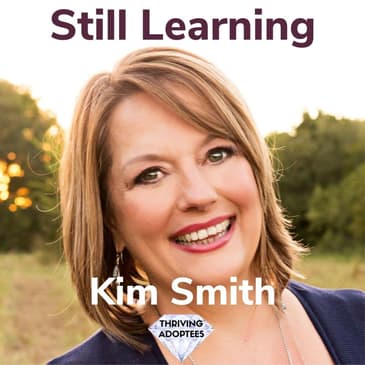
Raising kids - adopted or not - isn't a sprint. It's a journey. And the more we learn, the easier we can navigate the bumps along the way. Listen in as adoptive mother Kim shares her learnings along the way - including why she's still learning.
Kim Smith is also the Founder and Executive Director of Cradled In Grace, find out more here:
https://www.linkedin.com/in/kimberly-smith-3912b5164/
https://www.facebook.com/cradledingrace.adoptionconsultants/
https://www.instagram.com/cradledingrace/
Guests and the host are not (unless mentioned) licensed pscyho-therapists and speak from their own opinion only. Seek qualified advice if you need help.
Want to learn more about thriving for you, your kids, your families or your colleagues? Pick a time to talk here
[00:00:02] Hello everybody, welcome to another episode of Thriving Adoptees Podcast. Today I am delighted to be joined by Niemah Scherlacher. Looking forward to our conversation today Kim. I know that you have some excitement and nerves but we really will look after you. It's going to be safe. I'm looking forward to it actually.
[00:00:23] Cool, good on you. So Kim, she has three kids by adoption, three boys, a handful, three boys are always a handful. Yes, very much. And she also runs Cradled in Grace an agency, adoption agency too. So the first question I love to ask Kim is thriving. What does thriving mean to you?
[00:00:51] For adoptees, I think just being able to process their adoption and have a strong identity. Yeah. And you, and for you, what does thriving as an adopted mum, as a mum, as a human being?
[00:01:12] Oh goodness, I don't know. I'm just, I think feeling confident and again, just being comfortable, I guess in your own skin and enjoying life. I don't know. Yeah. Yeah. Yeah. Comfortable. I, I, I, I'm doing a little slide at the moment. I was doing a slide earlier on today. Uh, and it was kind of like a five themes of thriving and comfortable in our own skin.
[00:01:42] Yeah. What was one of those five themes? Yeah, for sure. For sure. Comfortable. And yeah. Um, what does it mean to, what does it mean to you? That, that. Yeah. Comfortable in my own skin? Yeah. Yeah. I, again, confident in myself as a mother, in my career, um, just as a wife, all the roles I fill, I think just being confident and feeling secure in that.
[00:02:10] And I think, um, going back to the adoptee, the same thing, just feeling secure in where they are and. Yeah. Her identity. Secure, secure in their family. Mm-hmm. And their identity and who they are. In their identity and, and, and, and who, and who they are. Yeah. How do we create those? How do we create those, those, those families, those environments?
[00:02:36] And I think for my kids, it's been being able to voice their feelings in a safe way and, um, not kind of as I think as adoptive parents sometimes want to, um, kind of prescribe how an adoptee is supposed to feel. Um, instead of letting them feel what they feel and, um, kind of tell them how they're supposed to react to things.
[00:03:01] And I think for us, it's been giving space to say, it's okay to feel a certain way. It's okay to have that push pull that comes with adoption with, you know, I love you, but I wish I could have stayed in my birth family. Those kinds of feelings, just allowing space for those to happen and validating those feelings. Yeah. Yeah. Yeah. It's huge, isn't it? Cause invalidating somebody's feelings. Yeah.
[00:03:31] I think when you see all the, you know, online adoptees who are frustrated or, you know, upset about it, it's often because they've been told you should feel lucky. You should feel a certain way, um, or just that lack of connection with their, with their family of origin and, and understanding where they came from. And what their story is. So I think for us, that's just been really important for our kids. Yeah. I think there's a, a fundamental, fundamental disconnect, isn't there?
[00:04:01] You know, if, if we think of pre pre primal wound days, right. Which was only 1993, that book was published. Yeah. So before then there were these parents, uh, trauma knowledge wasn't what it is today. Yeah. And so these parents were adopting, thinking it was rainbows and unicorns. Their kids didn't feel that way.
[00:04:28] Uh, and, and so there's a, there's a fundamental mismatch between the expectations that have been set up with, with, within the, uh, within the adopted parent and the actuality of how, how they, they, they.
[00:05:15] Yeah. So there's a lot of days when adopted, you know, adoptions were all hush hush. And the mother knew nothing. The child knew nothing about their story. And it was always just, I just wanted to know why she did it. I wanted to know where I came from, what my history was. Um, because eventually they almost always found out they were adopted. It came out because they heard the aunt and mom in the kitchen whispering or something, but they, they would find out.
[00:05:40] And that was all they ever wanted was that connection and that, um, that ability to just process and understand why it happened. Yeah. Two, two very different, to me, it seems two very different parts of the, um, the, the, the trauma or the condition, if you like. Right.
[00:06:03] There's, on one hand, there's that, uh, there's that, um, pure feeling, like the, the, the, the pure feeling of loss, uh, or, or, you know, the, this, this, this, this, this lady smells different. Mm-hmm. Right. Um, so there's that sense of, that, there's that pure sense thing.
[00:06:31] And then there's the, the questions. Yeah. I don't feel right. So why? Yeah. Yeah. There's the why. Um, is it right to, is it, am I right to separate the, the kind of the, the feelings from the questions? Do you know? I think so. I think, because I think people don't recognize that loss in an infant.
[00:06:59] Oftentimes, you know, they think that, okay, if you adopt from the foster system or if you adopt an older child, they're going to feel that loss. But I've had people question, you know, how could your children miss their mother if they were placed in your arms at birth? But they do. I can remember my middle son at about three years old saying, he's Marshallese. So he's, he's darker skinned. And he, I can remember he would say, I miss my brown mommy. And, you know, people would question how can he miss her?
[00:07:28] He was with her for 48 hours. But he did. He felt that sense of loss. And I think that was his three-year-old way of trying to express that sense of loss and longing that he didn't quite understand what it was. You know, but he knew he missed something. Yeah. And longed for something. Yeah. And how did you feel off the back of that?
[00:07:51] I mean, it can be a gut punch more because I care for my child, you know, than, than any kind of feelings of insecurity towards her. It was more like, I hate that he feels this and I can't do anything about it. Um, I went to an adoptee coach that we use with Cradled in Grace and talked with her and her recommendation was to talk through it with him. So we had a conversation, you know, well, if she, I'm sorry, I'm sorry, that hurts. You know, if she was here, I'm sure she would tell you she loved you and give you a hug.
[00:08:21] What would you want to say to her? And I, we just had a conversation that way. Um, we also created a box for him that he has mementos. I, you know, showed him some things that I had from her from when he was placed with us. Um, even because he was born in Hawaii, they really aren't directly connected to his mother, but they're connected to his birth. And so he has some things from Hawaii in that box and he still treasures that very much. And we'll get it out every now and then.
[00:08:52] Yeah. Yeah. So it's about his, his needs, right? Absolutely. Not, not about the gut punch that you. No, absolutely. It was about meeting his needs. Yeah. And did the, did the gut punches become less painful? Yeah. I think as you, you get used to just understanding that this is just part of it, probably, um,
[00:09:21] processing it with my, my eldest when he, he really struggled probably the most so far, but he's also the oldest. Um, but when he was about eight, he really struggled with his identity and, um, went through a phase or where he was very angry and we had a lot of problems until we really sorted out what was at the root of the problem. Um, and so once I really understood that and how he was processing, I think it made it a lot easier for me for all of the children.
[00:09:50] In his case, it was that push pull of, I wish my family had stayed together and I wish it never had happened. But at the same time, I want you and you're my mom. And, um, he was just being really ugly to me. And finally, one day I said, why are you being so mean to me? And he started crying and he said, because I, every time I look at you, I think you're my real mom. And I think he felt guilty.
[00:10:15] Um, he felt guilty loving me, but then the more we process, we realized that he did long for her as well. And he didn't know what to do with that. That's really a complex thing for an eight year old to process. Um, you know, I love you, but I also wish I was with her and, and both can't coexist, but yet that's how I feel. And that was really hard for him, but he was also angry at her, um, because he felt rejected.
[00:10:42] And, um, so it was just a lot of emotions he was carrying towards both of us and he didn't know how to make that all work. Yeah. Sounds like really adult conversations to be having with an eight year old. Yeah, exactly. That way. I'm free. Grown up feelings, you know, and, and an eight year old's mind is not ready to process that, but yet, you know, he's a deep thinker. And so there he was trying to figure it out, but really not having the maturity to work that out himself.
[00:11:13] Yeah. So we had to finally get him to a place where he felt safe talking about it and open. And in his case, it meant, you know, seeing somebody, uh, you know, getting in therapy. And I remember it was very slow in the beginning, you know, just building a relationship of trust and him going a couple of days a week to, to talk with someone who he felt safe with. Yeah. Um, and then slowly adding us into the conversation as his parents.
[00:11:38] And eventually it ended up, um, a FaceTime meeting with his birth mom, his therapist, and us all in the same room with him. Um, and that's kind of what helped resolve it finally. Wow. Wow. But it was definitely a process. Definitely a process. And, but you'd started the pretty grownup conversations with him at three, right? No, this is a different one. This is my older child. Yeah.
[00:12:04] The other, you know, the funny thing is the one who, who you're referring to with at three years old, he really has not said much since then. Um, you know, when we bring it up now, he doesn't want to talk about it. And I, and I allow for that too. You know, sometimes he just, he's not someone who, um, wears his emotions on his sleeve as much as my older child. And in his case, you know, he's happy with his box. He goes and kind of processes in his own way on his own.
[00:12:33] And, you know, we're there for him, but he chooses to keep it more to himself. My older son, you know, has been more open, especially once he started doing that counseling. Um, and you know, now he, he actually shares his story pretty openly with people. Um, but it's been his choice to, you know, to gradually get to that point. Yeah. Incredible amounts of patience here and communication. Yeah. Yeah.
[00:13:02] I think that's one of the biggest things is just really communicating and, and always letting your child know that it's okay. People assume they might know that, but I think sometimes it has to be said out loud, you know, that it's okay. If you feel hard feelings, it's okay for you to love her. It's okay. And that's what it amounted to when we all talked in the same room, when his birth mom was on the thing, she, you know, she was able to say to him, I chose them for you and you're living the life I wanted for you. And I'm proud of that.
[00:13:32] And I, you know, it's, it's okay to love her, but I could also say it's okay to love her too. You know, you can love both of us and that's, that's all right. And it's okay to sometimes wish that this didn't happen to your family. And that's okay too. Yeah. Huge. Yeah. Huge stuff. Yeah. Yeah. It's big stuff. And, and, uh, I think it's really important that parents be prepared for those conversations
[00:13:59] because they're going to come up, um, pretty consistently with clients and friends who've adopted. I see it. It's three or four is when a lot of kids start to notice and understand what it means. Even if you've always been open, that's when they start to process it very commonly. And then usually again, around eight to 12, you see another shift, but I think, you know, if you look at child development, eight to 12 is when you're beginning to, you know, develop your identity.
[00:14:29] And so now it's a whole new thing because now you're trying to help understand your identity in, in that aspect. Yeah. I mean, you mentioned identity a couple of, couple of times. Um, what, what, what does it mean to you? What, what does identity mean? I think for, for my son, we're, we're Christians and for him, it's been identity, developing his identity in Christ that he's God's child first and foremost and created that way.
[00:14:58] But then also just understanding that he's going to have, um, you know, he's our son and there are things, you know, he belongs here, but he also belongs in that family. There are ties to that family and that's okay. Um, you know, he, he, it's important for him to understand what did I get from my birth mom? What skills? I think kids like hearing those kinds of things sometimes, you know, oh, you're good at piano.
[00:15:23] You got that from your grandmother, you know, your eyes, you look like your father, you know, it's important to him to have those links and they're, it's, it's kind of trying to meld all that into who he is and understand that it's okay that it comes from two places. Yeah. You don't have to be one or the other. Oh, all of the above. Yeah. What, what does, what does being, um, God's child, what does that bring them?
[00:15:54] I think just reminding him that he was created the way God designed him. And that's a beautiful thing, no matter what. Um, and it, because in, in some cases I think with kids and not to share too much of his story, but there's some, there's some things in his parents' background that I think he struggled with. Like, am I going to be like that? Am I going to do these things? Because that's where I came from. Um, and, you know, having him understand that, you know, they made choices.
[00:16:22] Um, you know, does it mean that sometimes we can't make one choice and get caught up in addiction or illness or things or poverty, but they made choices and God created him a certain way. And, you know, he is who he is and he's made perfect. Um, yeah, there's nothing flawed or wrong with him. And I think always reassuring him of that. And, you know, he got certain traits from them, but, you know, he also has choices to make
[00:16:49] and he's being raised in a certain environment and that also affects who he is. And, um, what helps him see that? What, what's, what's helps him see that perfection? Cause it's one thing for us to. I think sometimes he doesn't, I think constantly reminding him of that. Um, you know, he, he needs to be told a lot that you are, you are worthy and you are okay.
[00:17:17] Um, it's been a struggle for him a lot, I think. And I think you probably, you know, recognize in, in what you've done through your career that, that adoptees struggle with that identity sometimes of rejection of feeling like, am I worthy? You know, is there something wrong with me? Am I unwanted? Yeah. So I think for us, just always reassuring him, you know, no matter what you do, you're our son. There's nothing.
[00:17:48] No matter what, I mean, it's a, it's a, it's a big, it's a big thing. And I see it in his relationships where he tends to desire approval a lot and struggles with that and, and worries about rejection. Yeah. Yeah. These are all big, these are all big, uh, adoptee, adoptee themes.
[00:18:10] I was totally unaware of, of my trauma stuff till I hit 40. Mm-hmm. Mm-hmm. Um, I, I felt not good enough at, at, at business sometimes. Mm-hmm. Um, that kind of drove me on to, to, to, to get better at it. Mm-hmm.
[00:18:39] Um, and then I finally had a good year in business and it didn't do what I thought it was going to do for me. And that was around the time that I found out about the, the, the teddy bear being from my birth mother. And, and, and that's when the feelings of, the, the feelings that, that's when the thought
[00:19:07] first popped into my head that she, that she didn't love me. Mm-hmm. Mm-hmm. But I never had, I, I never had that thought in the first 40 years. Yeah. Well, I think for him, it's, it's been important to have those conversations so that it can be worked out. Yeah. Internally. Um, and I think we can all have those kinds of things. Our parents can, you know, easily, um. Yeah.
[00:19:38] There's a, there's a bestselling book, isn't it? Our parents screw us up. I think, I think it's called something like that. You know? And so for, I mean, and I'm certainly, I know. I'm never going to be perfect as a parent, but we try really hard to have conversations, just have open conversations and, and let our kids know that it's always okay to express how you feel. Yeah. In a, in a, obviously in a healthy manner, not throwing a tantrum or, um, you know, hitting your brother, but you know, they're, they're always okay to come to us and have a conversation.
[00:20:07] And we try to have a lot of those hard conversations deliberately so that it develops that pattern of feeling safe to talk to us about those feelings. Yeah. I, I had the anger. I just couldn't. Mm-hmm. See the adoption. What it was caused by. Yeah. And. I don't think that's uncommon at all. No. No.
[00:20:33] Um, I, I, I interview a lot of adoptees in my generation and we, we talk about coming out of the fog, which is realizing adoption's effect on us that we haven't seen before. Mm-hmm. So we haven't, we come out of the fog, we haven't, we couldn't see it. Yeah. We couldn't see it. We couldn't see it as a factor. Yeah. We were blind to it. Yeah. Until, until we weren't.
[00:21:01] And that tends to be middle age. Yeah. And I think, do you, would you agree that it's maybe harder to process that anger, you know, for some when you're older and, and don't have that time to kind of grow into it and, and grow into the ideas. And it just seems like a lot of the adults struggle more with that anger, but maybe it's because they're never validated and never given that chance to say it's okay to feel it.
[00:21:30] Um, that's a really great question, Kim. Uh, I, I think that I didn't, my mum and dad didn't invalidate my feelings. I think that, that was it. I, I, I, I don't think they did that. Um, and it wasn't about them.
[00:21:59] I get, I, you know, I think this is the, the, the, one of the biggest questions, you know, is, is, is the adoption about the kid or is the adoption about the parents? Yeah. For, for, for, for, for parents who think it's, and nobody's going to admit to it. Oh, right. Yeah. It's about, it's about us. Yeah. Yeah. But people know in the heart of hearts. Sure. Whether it's about them or it's about the kids.
[00:22:28] So I, I, I also think that I, I think that what gets blamed on the, on the primal wound is often really a product of poor parenting. Yeah. Yeah. That's kind of where I was going with that. Is it like, is it the parents that are just kind of saying you, you should be lucky, you should be grateful. And you know, you're.
[00:22:59] Yeah. Because you seem to be able to deal with it more. Not that you ever didn't feel emotions, but as you've also said, your parents did validate your emotions. They did allow you to the space more. They didn't, they didn't invalidate them. And I also think that the primal wound is a spectrum.
[00:23:23] So I talk about this, you know, at one end of the spectrum, it's a paper cut. Mm-hmm. At the, in the middle of the spectrum, it's, it needs three stitches. Mm-hmm. And at the other end of the spectrum, it's like a shark attack. Right. I think my primal wound was more like a paper cut.
[00:23:51] So, and then I got lucky with my parents, but I didn't, I didn't feel, you know, gratitude was, was not expected of me. Sure. My parents never expected great gratitude for me, me to be grateful. Um, and I, I didn't grow up thinking, oh, how lucky I am. I mean, that's not.
[00:24:17] But do you think maybe that's why that was more of a paper cut is what I was kind of getting at? Because I hear, I hear people talk about just, you know, I was raised being told I should be grateful and, and, you know, that, that I was lucky and that, you know, parents talking badly about their birth family and, and those, those adults who seem to be raised that way seem to really struggle with overcoming that anger and those feelings because they're not given that. Yeah.
[00:24:47] I think for, for me, I'll, I just have to shift metaphors slightly. Right. So to me, trauma, trauma feels like a layer cake, right? So there's some generational trauma. Um, so for example, I found out that my birth father, um, my biological father, he's, his mum died in childbirth, not, not giving birth to him, but giving birth to one of his siblings
[00:25:16] and the three siblings were in and out of care. Mm-hmm. So there's some generational trauma from, from that. And, uh, I've also connecting with a, a cousin, um, on Saturday at the weekend, I found out that my biological mother's family were a little bit on there. Yeah. Yeah. They weren't very emotionally intelligent.
[00:25:45] Let's just put it that way. Um, and so there's, there's some generational trauma going on there. Then there's the in utero trauma, like the, a mum carrying a baby, knowing that she's going to have to place it. Right. So there's some stress around this and cortisol there. Right. Then, then there's the relinquishment trauma. Uh, and oh yeah.
[00:26:12] So then there's before that, there's some kind of like the, any trauma that goes on prior to the relinquishment. Right. So if there's been neglect, abuse, right. And then there's relinquishment trauma and then there's how we're raised. So there's probably about five things there. So if you think about it like a layer cake, some of those, some of those layers are really thin.
[00:26:36] Um, uh, and, and, and some of the layers, everybody's cake is different. Sure. But the thicker the layers, the higher, the, the higher, the, the, the, the, the, the probably the harder it is, the higher the cake. So all these things and they multiply, I think they multiply rather than just being added to one another. Does that? No, that makes sense. Makes sense. That's, that's, that's, that's as best as I can kind of see it.
[00:27:06] So I had a, uh, so my relinquishment trauma was a, was a thin layer of cake and my, uh, my parenting was a, I got lucky. So I had a thin layer of parenting trauma cake. So less, less layers to deal with. Less layers and smaller layers. So for example, I can go, keep on going on this, right?
[00:27:31] So, um, the, uh, the, the transracial adoption piece that adds another layer of complexity, which I was completely missing because I was a white guy adopted by white folks. And then you've got, you've also got that, you can also have that international trauma. So the, the, the, they've, they're, they're away from the motherland, you know, they're, they're away from that.
[00:27:58] So all these, all these factors kind of build up and it's, but it sounds like, um, it sounds a, a worrying metaphor. The hope for me is in the place is in the truth that we're, we're not the cake with the cake stand. Yeah. Yeah. I think the fundamental disidentification, we are not a trauma.
[00:28:27] We are not a psychology. We are not our feelings. So. Yeah. Well, and I think there are things that you can do to, to help those layers. Sure. To be smaller, you know, just having an open adoption, I would think would maybe, you know, depending on the relationship can really help if you still have that connection maintained. Yeah. That, that would, um, that's a great way of putting it, Kim.
[00:28:52] So I, I think that the, so back in the sixties, mine was a closed adoption. I, I do think that, um, the, the relinquishment trauma slight at cake, the, the, the relinquishment call, the relinquishment trauma layer is going to be smaller with open adoptions than it is with closed adoptions. That's kind of what I'm trying to get. Yeah.
[00:29:21] And even I've heard, you know, family, I know adoptees who have met their birth family and made their own choice to sever that connection. But I would think even that is helpful in that, you know, they, they had that option as opposed to just having it taken from you and you never knew and you never got to meet them or never got to see them. Um, yeah, the, the control, the, uh, the, the, the control is a big thing. Yeah.
[00:29:49] And even you saying like in utero, perhaps maybe even, you know, a birth mom meeting the family and choosing the family and having comfort and peace in it a little more, they're going to have grief. Yes. And yes, but definitely better than where you're coming from back in the maternity home days were. Yeah. I mean, I remember reading a file one time. It was just horrifying. This poor woman went from Ohio to Michigan to have her to stay while she was pregnant with
[00:30:18] a family member because you hit it. And then the poor woman had to drive her baby back to Cincinnati to the maternity home and hand that baby over. And I can just imagine what was happening, you know, and how she was feeling. And the nuns were judgmental because the baby had a, you know, was in a wet diaper when she handed them over. I'm thinking the poor woman, you know, her focus was just getting there and ripping off the bandaid would be my guess, not stopping and, you know, and changing diapers in the
[00:30:48] process of the way, you know, and so that's going to cause, I would think much more of that layer. I love that analogy. I think it's really helpful. Yeah. I totally agree. So those are things, it gives us things that we can do proactively to help the adoption with that. And the, you know, one of the biggest things that we can see is that that trauma isn't our fault. Right.
[00:31:19] It's got nothing to do with us. And we plough all our energy into the stuff that you've been talking about, you know, the open, the open conversations, the exploration of feelings, the validation of those, those,
[00:31:45] those validation, the validation of those feelings as early as possible. Mm-hmm. Um, I think one of the challenges in amongst older, amongst, you know, adult adoptees, where the validate, the, the feelings are, uh, the feelings are validated. Right.
[00:32:15] And that keeps us stuck. Mm-hmm. I, I, I had, um, I had a, uh, an email this morning of a executive director in a, uh, an adoption agency here in the UK. Okay. And he doesn't want to, he doesn't want to come on the podcast because he doesn't want to, he'd rather be under the, you know, under the radar.
[00:32:46] Mm-hmm. Under the radar. Um, and because so many people are trauma dumping and will, will come for him if he. Yeah. I, I had somebody make some comments on a post I made the other day and, you know, very angry. Um, basically saying, you know, all adoptions are wrong. A child is always better with their birth family, even if they're separated for a while.
[00:33:16] You know, I, I don't know where it was coming from. Probably, you know. I know exactly where it was coming from. Possibly foster care type of situation. But. It was coming from trauma. Yeah. Oh yeah. No, I know that. I meant, you know, I don't know what her situation was, but she was, she was angry and saying it's never, you know, and, and I, and it's, you know, that's common to have those kind of, like you said, that's that trauma dumping. The trauma dumping. And, uh.
[00:33:43] Almost using social media as their therapy and their, their way of processing. But it's not the most healthy way. But. It's about venting. It doesn't, it doesn't, it doesn't process. It doesn't. Well, and I try to, we, we talk about that with our clients because sometimes they'll say, you know, should I feel, I mean, I, I admitted sometimes I go on social media and when I see what people are saying, you know, I think, am I wrong?
[00:34:12] Was I wrong to adopt my children? Was I wrong to start, um, cradled in grace and, and, but I also try to remember, you know, what I tell clients is listen to what they're saying and, and try to see through some of that trauma and anger and say, what, what can I do to like, we're talking about, what can I do to do better so that, that my child doesn't feel this way?
[00:34:37] Um, you know, do I think every adoption or every, in every case a child's better? No, I don't. I think there are situations, you know, um, this person was very convinced that adoption's always just a temporary poverty or temporary situation, you know, and she said, most people that relinquish, it's just temporary and it'll resolve in 18 months. And I, I, I would say in our experience, that's not true.
[00:35:03] Um, most of the, most of the women that, that our clients are matching with are in, in serious addiction situations, often homeless. And, and I don't think they're going to resolve. I worked in addiction, um, as a social worker for years and, um, the average person goes into treatment five to six times before it's effective. So you're talking years and years and no, I don't think that's probably the best thing for the child.
[00:35:32] Um, but can we keep an open relationship with healthy boundaries with that person, even in addiction? Yes. Can we maintain that link to help it be healthier for the child? Yes. You know, there, I think there's, there's ways we can learn from that anger and trauma without necessarily letting it, um, convince us that we're, that it's always wrong, you know, without going to those extremes. Um, but it doesn't mean that we shouldn't listen either.
[00:36:02] I'm with you and sorry, Kim, I spoke over you there a couple of minutes ago. I'm sorry. I want to apologize for that. That was me speaking over you. Um, I'm totally with you. It, and, but it's just saying only one person in like 600 odd episodes. And, you know, because we've done it myself. I have had the conversation and a conversation with you before we had this conversation.
[00:36:27] So in, in 1200 conversations, 1200 plus conversations with potential guests and the guests that, that, uh, when the, when the guests came on, I've only been asked if I'm pro adoption, once. And I said, it depends. And because I was having a genuine conversation with somebody else, a one-to-one conversation, they were okay with me saying it depends. I would agree with that. Yeah.
[00:36:57] But a lot of people aren't okay with, it depends that they're looking for right or wrong. They're looking for black and white. They're not happy in the gray. They haven't got, they haven't got capacity for the gray. There's some things, something's going on for them. Right. Yeah. And, uh, or they've had, so whatever's happened, maybe, maybe, so my adoption.
[00:37:23] So maybe that, what that person is saying is my adoption was bad and therefore all adoptions are bad. Right. But we, we're grownups. We know what. Right. We know that there's, you know, there's just, sure in the, in a perfect world, everybody could be helped and it would all get better, but it's just not going to, and we have to, to know that. But do I think there are times when it shouldn't happen? Absolutely. I think there are times when women are coerced into it.
[00:37:50] I think there's times when they're pushed into it by family or, you know, or professionals who are taking advantage of older mobile women. I think there's times they could have been given resources and support. Um, and it's one of the things we focus on, you know, we're, we're consultants. We walk through clients through providing a lot of education about these kinds of things. And then making sure that the agencies we partner with are really taking care of these
[00:38:16] women and making sure that it is the last option because it should be, I believe it should be the absolute last option. Um, does it make it bad if it has to happen? You know, yes, there's going to be trauma. It doesn't necessarily mean it's a bad thing. Um, you know, sometimes I think it does need to happen, but it should be the last resort. The family should stay intact if possible.
[00:38:44] I got a, I got a, cause I've connected with three biological cousins now, right? But the first two that I connected were on my birth father's side. The one that's connected with on, on Saturday is from my, um, birth mother's side. And I got an insight into how much pressure that, that was the big, one of the biggest things I was on the zoom with him for like two hours.
[00:39:11] It just went, it went like, it went like so quick. Um, and he was really anxious about the call because he wanted to give me loads of information, but he didn't have a lot of information to give me because he didn't really have a lot of memories of my birth mother, Pat. She, she stayed in, uh, she stayed in England.
[00:39:34] And, uh, this, this guy that I spoke to Ross Ross's dad, my birth mother, my birth mother's brother, he, he took the family overseas to get away. One of the reasons was to get away from the, from the family. He, he, he, he said that, um, he shared some really stupid story of the sad story that, that brought it home for me.
[00:40:04] He said, um, my, he said my, so Ross is talking about his, his dad and his two aunties, including Pat, Pat's my birth mother. They, they used to go to their grandparents every week for a meal. The three kids went for him.
[00:40:27] And then a few days after they'd come back from the, from, from having a tea at their, their grandparents, the, the granddad sent the, their dad a bill for the eggs that the, that the kids had consumed. So there's some serious, you know, it's some seriously not so stuff going on there.
[00:40:54] Um, and this was a very authoritarian, very traditional, very Victorian English vibe, culture that, that, that existed in, in, in, in that family. So I'd, I'd sensed the pressure for me to be placed before I was born. Mm-hmm.
[00:41:22] Reading through the documentation that I got when I got my adoption file, but I actually felt that authoritarian, authoritarian vibe from my, um, from Ross, my, my, my cousin. I got a better sense of quite how much pressure Pat must have been under to place, to place, to place her unborn baby. Because the plan was made before, right?
[00:41:52] It wasn't. And it was pretty common back then. It was. I mean, all those files I was reading, that was, the women were very often pushed into it by their fathers or. Yeah. Um, the, I remember one lady, she was 30 year old widow and had a 10 year old and the nuns told her if she didn't do it, that not only would she be put, be, you know, unable to show her face and be shamed. And so would her 10 year old daughter. Yeah.
[00:42:18] You know, so there was a lot of coercion in it at that time. And the pressure put upon the birth mothers, the expectant mothers by, by their families and by other, by the institutions, I guess. Mm-hmm. Yeah. Well, I hope we, we continue to work towards making it better. That's.
[00:42:46] It just has to happen at times, kind of finding ways to make it better to get those layers smaller and smaller. Yeah. Yeah. Yeah. Yeah. So, I mean, we, we've, we've looked at those strategies would be the wrong word, but let's the, the three, the, the, the ways of reducing the, the depth of the layer cake.
[00:43:16] Mm-hmm. Open communication, validating their feelings. I think open adoption. Open adoption. Open adoption. And maybe even, you know, it's, I've thought of when you were talking about one of those layers, that relinquishment, that just that early bonding with the adoptive mother, you know, even while maintaining the link with the birth mother.
[00:43:44] I think there's situations where babies are left in NICU for days kind of in limbo and that's not healthy. That causes trauma. I remember my middle son, he was placed in cradle care, which is like private foster care, knowing, you know, until they found a family. So he went from his birth mother for two days to cradle care. He was in daycare while he was in cradle care. So then he was going to a third caregiver.
[00:44:14] And then at three weeks old, he was placed with us and he struggled. We had, we had a lot of struggle with bonding for about the first three months of his life. And, but, you know, I said that poor little kid didn't know which way was up. You know, he didn't know who to bond with. You know, I was his fourth caregiver in three weeks of life consistently. So every time he bonded, he was taken from someone and things like that, you know, getting
[00:44:41] an adoptive family in place and having them there, I think makes a big difference there at the hospital so that there is bonding with both mothers. I would think would reduce some of that layer. Yeah. In that transition. For sure. For sure. I went into short-term foster care and then my birth mother had to come and collect me. This is according to the files, right?
[00:45:09] Then my birth mother had to collect me from that short-term foster care and take me to the agency. So I lost her, I got her back and then I lost her again. But this all happened between the ages of zero and five weeks. Right. So. But it still has an effect. Like I said, my son was three weeks old. It's. And it made a difference. Yeah. Yeah.
[00:45:36] I can remember for about three months, he wouldn't look, he wouldn't look you in the eye. He wouldn't snuggle into you. He, he just kind of was stiff and it was, it was very distinct. And, and I can remember the exact moment he finally bonded with me. I mean, I remember it clearly because I was just so distraught and just praying so hard that it would happen.
[00:46:04] And I can remember just feeling his little body relax into me, but that took, you know, almost three months because of that trauma that he was put through in those first three weeks. Yeah. It was a softening of the, of his body. I could just feel him. Yeah. He would, he would be rigid when I held him and he wouldn't, he wouldn't snuggle into me. You couldn't calm him. He would just cry and he couldn't be soothed.
[00:46:33] And, you know, he just, he wouldn't make eye contact with you. He was stiff. And then all of a sudden I could just felt him kind of, you know, over my shoulder, kind of soften into my neck and calm. And you could just feel the difference in the way he held himself. Um, and that was when he finally started making eye contact and cooing and babbling and doing things that babies do prior to that. He was just very, very unattached and distant.
[00:47:00] Um, he was actually behind on all his milestones by almost exactly three months. It was like that development was even arrested during that time. Yeah. But I can't imagine, you know, that poor baby was just with so many caregivers and pulled from one to another so much. Yeah.
[00:47:26] As you share that story, I think about something I came up with a few months back in terms of how creative our brains are. Right. So I think we, we can't, cause we can't remember. I can't remember those five weeks. Right.
[00:47:53] So my, my mind can make a mountain out of a molehill or a molehill out of a mountain. And I still don't know which it is. I still don't know how big the hill is. And I, I think that one of the things that can happen if we're kind of egged on, right?
[00:48:21] If we're, this happens in adult, adoptee groups is that it, we can just make it bigger and bigger and bigger. Yeah. Um, and that scares the SH1T out of me. Yeah. Yeah. Yeah.
[00:48:44] They kind of can sometimes, I see that where, where it's getting each other kind of stuck in that anger and stuck in that because of that. It fuels it. Mm-hmm. And then I, you know, I've seen this happen in groups that, where some adopted parents are in as well.
[00:49:14] Mm-hmm. Uh, and they, it scares, it scares them. I mean, it scares me. It must scare them too. Sure. You've seen that, yeah. Yeah. You've been scared. We can't finish it on that bit, can we, Kim? No. It's something a little more positive than that. Yeah.
[00:49:45] How has raising your three boys, or how is raising your three boys impacting what you do at Cradle and Race? Uh, I think definitely just watching what they go through has driven me more and more towards wanting to educate our families and prepare them well. When I started Cradle in Grace, I did what I knew, which was not much.
[00:50:11] I mean, I cringe at how poorly prepared I was for our first adoption and how poorly educated I was. And some of my views, frankly, you know, were against everything we're talking about. And because no one ever told me differently. And so I think, you know, I started right after, about the second year after I started Cradle in Grace is when I added my first, I added a birth mom educator.
[00:50:39] And then little by little added to transracial adoption educator and some other, you know, sources. Additional open adoption education. And just really working harder to prepare the families for all sides of the triad and to understand the dynamics and understand that how complicated and multilayered it is. I think people go into this expecting rainbows and unicorns.
[00:51:08] And I always tell people it can be a beautiful thing. I love my family. I have three unique, beautiful sons. And I love that our family. I mean, sometimes I think it's it's a beautiful thing that our family doesn't match and that we are all just so unique. And we come from so many different places and we've made it into one extended family unit, including birth families. And and I love that.
[00:51:36] You know, my oldest son's grandmother sends all three of my boys gifts, not just Micah. You know, I think that can be a beautiful thing. But it's not all rainbows and unicorns. It is hard sometimes. It's there's a lot of layers and a lot of it requires a lot of intentional effort and work at times, just like anything else. I mean, it's a marriage. Marriage can be beautiful, but it's it doesn't just happen.
[00:52:04] You have to be engaged and you have to work at it. And I think it adoption is the same way. But people don't go into it with that view sometimes. Sometimes. So I've just worked really hard to make sure that they understand that and that they're well prepared. Yeah. And at times, families don't like it. We we, you know, get pushback at times. Families want to sprint to the matching that that's always the goal.
[00:52:30] You know, I want to get to matching so we can start trying to find the right mom and find the right match. And we always tell them it's not a sprint. We have to slow down and and work hard at this and prepare you well before you get there. Is there anything that you'd like to share? I've not asked you about, Kim. I can't think of anything off the top of my head.
[00:52:55] I really appreciate these conversations and just, you know, continuing to learn. That's it's a big thing. I, you know, sometimes I'll get well, our home study made agency made us do this education. And, you know, my mantra is always look, I've been I was a social worker for almost 20 years. I've adopted three children. The oldest is now 13. I've done this for 10 years with Cradle and Grace, and I'm still learning.
[00:53:23] I'm still learning from conversations with people like you from, you know, we just added new education two years ago. I went through it and learned from it. So I think just people should always try to keep listening to different voices and learning and trying to do better. Yeah. Adoptions come a long way in the last handful of decades, and I hope it continues to at least improve in the way we approach it. Yeah.
[00:53:55] So true. Thanks, Kim. Thanks, Simon. I appreciate you having me. Thank you. Thanks, listeners. Speak to you soon. Bye bye.