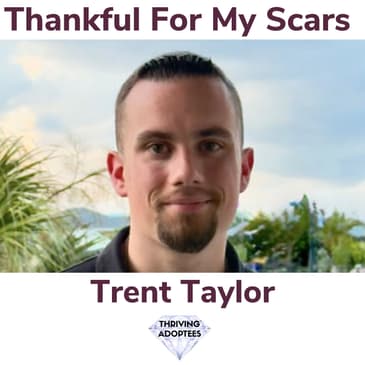
Sexual abuse and neglect leave deep scars. How can anyone become grateful for these? In one of our most profound turnaround stories ever, Trent shares how adoptive family, faith and therapy have fuelled his healing, recovery from PTSD and more. 100% inspirational. Trent leaves me speechless and stumbling. Epic.
Trent entered foster care at the age of four due to domestic violence, extreme neglect, and sexual abuse. After traveling a painful journey through the foster care system, Trent was adopted at the age of nine and came to dramatic levels of healing from his traumatic past. Trent, who is now 24 years old, has devoted his life to helping others find healing. Trent is a mentor and public speaker and has authored and published two books. Trent graduated from Arizona State University with a 4.0 GPA with a B.S. in Family and Human Development. Trent is CEO and Co-Founder of Watch Me Rise in Wake Forest, North Carolina. Trent is a trauma consultant and serves as a TBRI Practitioner, Life Coach, Educational Therapist, mentor, and parent trainer. Trent gives all the glory to God for his healing and strives to be a light in the darkness.
https://www.watchmerise919.org/
https://www.facebook.com/WatchMeRiseLLC
https://www.instagram.com/watchmerise919/
Guests and the host are not (unless mentioned) licensed pscyho-therapists and speak from their own opinion only. Seek qualified advice if you need help.
Want to learn more about thriving for you, your kids, your families or your colleagues? Pick a time to talk here
[00:00:02] Hello everybody, welcome to another episode of the Thriving Adoptees podcast. Today I'm delighted to be joined by Trent Taylor. Looking forward to our conversation today, Trent. Yes, very much. Yeah, this guy is Starley's gentleman. We've seen, we had Wilson Munsterman on the show a couple of, few episodes back now as a young guy, 19. Trent, you're 24 now, right? Is that right?
[00:00:26] Yeah, 24. So it's great to see some new, younger adoptees coming through and me interviewing younger people rather than old guys like myself, right? We bring a fresh perspective. So Trent, you were adopted at nine, right? But you've been in foster care from the age of four, after the back of, on the back of some abuse, neglect,
[00:00:55] some direct domestic violence, and some sexual abuse as well. And you were sharing that that went, that actually went on after, after you'd moved into foster care, because it was your biological brother that was doing that. And we don't talk a lot about story, usually on this, on this podcast, but the, the pain of the
[00:01:25] of that really kind of, what would I say, precipitated hearing that story, I thought we need to dive into that a little bit more because the level of pains that you've, you've been through and how you've kind of come out the other side of that was, was huge. So can you tell, can you tell the listeners a little bit more about that? And then we'll, then we'll go into the thriving questions, right?
[00:01:59] Yes, absolutely. Yeah. So as you mentioned, I did experience for the first four years of my life, extreme neglect, extensive sexual abuse at the hands of my older brother and my biological uncle, and also witnessed a lot of domestic violence that went on between my biological mom and my biological father at the time. And as you can imagine, as such a young child, I had no idea what was going on.
[00:02:23] And I had no idea that any of it was even wrong because that had become, unfortunately, my normal, as hard as that is to say. And as you mentioned, unfortunately, just because I went into foster care doesn't mean that the sexual abuse that I experienced had stopped because my social workers, as wonderful as they were, unfortunately just weren't aware. Obviously, I was far too young and far too terrified to even begin talking about it. And obviously my older brother wasn't going to mention it because that would get him in trouble.
[00:02:53] And so, yeah, that abuse continued for many, many years up until probably the second to last foster home that I was in. It probably expanded from the age of, say, two to maybe about seven or eight. So it was a long time and it was hard. It was painful. It distorted so many things for me in my life.
[00:03:15] But thankfully, I was able to heal over many, many years and be able to kind of make sense of everything and be able to relearn it essentially. We know what all of that really was and going through the process of trying to make sense of it all and how to be able to move beyond it. Yeah. It struck my accord because one of the biggest mentors in my life, she was abused by her own father.
[00:03:45] And I just thought I remember hearing that story and thinking if people can get through that, we can get through anything.
[00:03:55] Like this, this is some kind of proof of the resilience of the human spirit or something so shocking, something so out of the norm, something as so terrifying. I mean, you use the word terrifying, right? If we can get, if you can get through that, you can get through anything.
[00:04:20] And I think that's why, why, why this, that struck accordingly. Also, I remember one of the first girls that I slept with telling me about the fact that her uncle had,
[00:04:35] had abused her and how she was SH1T scared of her uncle picking on her younger sister and how terrifying that was for her. But yeah, making sense of it, relearning. What, what, what's the relearning bit? What's, what's that for you, Trent? Yeah.
[00:05:06] Honestly, I had to learn all the way from the beginning what a healthy family relationship was, what a healthy relationship in general really meant, because it wasn't until I was about eight and a half or nine before I was in my adoptive placement. And through that, you know, it took me a long time to begin disclosing any of the abuse that I had gone through. But once I had in a few years into it, my parents did such a great job of helping me relearn what a healthy relationship between,
[00:05:32] you know, family members is what a healthy relationship between peers is and what that looks like. How helping me learn what healthy touches, what unhealthy touches, who can and cannot touch you in certain places, you know, like versus like, you know, a doctor during checkups versus, you know, a hug from a family friend. Right. Just helping me to make sense of all of that, because all of those lines had been blurred so much because my abuse was incestuous because it was through family members.
[00:05:59] And so I had to learn so many different relationship and family dynamics and really what all that meant for me. And also learning what, what sex is supposed to be, right. What, what it means, especially for me, you know, in my faith. And so it just trying to help me relearn all of that and help me walk through the, the confusion, the guilt and the shame that I had, you know, on that I've been carrying for so long.
[00:06:24] And it helped me to learn that I didn't have to carry that guilt and shame because it wasn't anything that I did. No way could I have caused it, obviously. And so helping me to let go of that and helping me put the blame on the right people, helping me give back the shame and the guilt that I'd carried wrongfully onto the people that put it there in the first place. Yeah. So do any particular turning points come to mind for you, Trent, on this, on this journey?
[00:06:53] I definitely think one of the biggest turning points was when I was 14 and I had, we were writing my autobiography. I'd been sharing my story a little bit here and there at a young age, but as we were going through this, you know, I had felt like I had gotten to a pretty good place of healing. And I told my mom, I was like, you know what, I think I might want to add just the simple fact that, you know, sexual abuse was part of my journey and part of my story in this book we were writing.
[00:07:19] And, you know, her first reaction was like, you know, if that's what you want to do, I'll support it. But maybe let's talk to, talk to someone to make sure that you're in a healthy enough place to do that. And so we went and we talked to a therapist and the therapist said, he's absolutely ready. It's your mom heart that might not be ready yet. But, you know, so that was such a big turning point for me because it had shown me that I had done so much work and was able to come to so much healing in my life to the point where I was like, this is not a secret that I want to hide.
[00:07:48] People keep telling me it's nothing that I caused, nothing that I did, nothing to be ashamed of. So to want to be able to extend that out to help people, to use that as a way of bringing hope to let people know that they're not alone. That was a huge turning point for me because it had shown me that I had been able to gain the power back. And from what I felt like I had lost it earlier in life and being able to reclaim the narrative of my story and being like, you know, this is something that happened to me. But here's all of the good that's going to come from it by sharing it.
[00:08:19] Yeah. So that was when you were 14, do you say? Yeah. Not many people write their autobiography at 14. Amazing. Amazing. And only five years after you'd been with your mom and dad, right? Yes. It was nine to 14. Wow. Are there any other turning points that come to mind? Yeah, absolutely.
[00:08:45] Some other turning points outside of, you know, overcoming the sexual abuse really was just being able to share my story in such a beautiful way and to see the reactions of people being like, man, I hear your story. And what you went through was so terrible, but it gives me so much hope with, you know, say my child who I'm fostering or adapting or my own personal journey. I've had some people who were in their 40s and 50s come up to me after a speech that I gave and said, man, I experienced early childhood sexual abuse.
[00:09:13] I'm 40 some years old and I never dealt with it. But after hearing you, you know, share it so, you know, powerfully, like you give me hope and give me inspiration to finally, you know, deal with that part of my past. So it was just so amazing to see finally the purpose that was flourishing out of all of this pain that I had gone through. Because for so long, I felt like everything that I went through was just trauma and pain, that there was just nothing that I could do. I just had to figure out how to live with it and move on from it.
[00:09:41] But instead, I learned how I could take all of that, kind of remold it, reshape it and be able to use it to help other people, to be able to use it to, you know, inspire and to bring hope and to break misconceptions. And I feel like a big piece of that really is, you know, for me personally, my relationship with God was a huge critical foundation for my healing. And through that relationship with God, that's where my perspective changed on my trauma.
[00:10:11] And that's how I found purpose in the midst of all of that pain, helping me to learn that we don't have to be defined by what has happened to us. You know, we're not designed to carry so much pain and also to let that define us for our futures. But we can break free from all of the labels that society puts on us and says, well, if you've experienced this, well, statistics likely say, you know, this, this and this is likely to happen.
[00:10:34] But instead, when we when we kind of ignore that and then focus on what we can do and what we can allow God to do in our lives is so inspirational and so transformational in my life to just show me that my past doesn't have a hold on me. It does no longer has power over my life. I can proudly share my story with no, you know, difficulty because I know that it's a story of redemption and healing. And the trauma was just a small part in the beginning. Yeah.
[00:11:05] So was was healing for you then about a change in your perspective? Yes, I definitely think so. Honestly, a big part of it was one grieving, dealing with the pain and the difficulties that came with one losing a lot of my siblings from being in foster care, being ripped away from what I had known to be family. But later, I learned that it was very toxic and very unhealthy.
[00:11:32] So just having to deal with all of that deal with the abuse and neglect and the emotions that came with it, learning that the very people that were supposed to protect me in life didn't do so. So either they were unable or they just chose not to. And so for me, that was that was hard. I had to learn how to grieve all of that and to focus on that.
[00:11:52] But really, the turning point for me was that change in my mindset and in my perspective of which, you know, I stopped solely focusing on the pain and getting and avoiding getting stuck in the midst of that grief. And instead, taking all of that grief and looking forward to the future. Right. We can't ignore the pain of the past. We have to make space to deal with that.
[00:12:15] But what we also need to do is not have our gaze solely focused on what has gone wrong in our lives, but instead focusing on what is yet to come as we are moving forward and as we are dealing with this and also focusing on the small victories. Right. You know, say, for instance, you know, I had lots of different triggers. Right. Lots of different things in my environment would remind me of painful memories in my past.
[00:12:36] So just learning that, learning these different strategies to help me kind of regain some of that power back, you know, and just seeing the small victories of like these triggers that used to have such a big influence in my life. None of them remain now. So it's just like focusing on the small things and how we can move forward and how the past is the power that the past has is slowly loosening up its grip.
[00:13:00] And that's the amazing thing. But I definitely think that that conscious change and mindset of I'm not going to let my past define me. I'm not going to become another statistic. I'm going to instead fight like crazy to focus on what is yet to come and what my life could be on the other side of this trauma. Yeah. Have you heard of a woman called Edith Eger? Have you heard of her? I haven't, no.
[00:13:25] So she's a, I think she's Austrian or maybe Czechoslovakian. So she's a Holocaust survivor, right? So she was in one of the Nazi concentration camps and she, she, she got out. She, and she got, I can't remember the exact story how she got out.
[00:13:49] I did listen to her autobiography and she, she ended up moving to the, to the States.
[00:13:59] But listening to her story, it seemed to me that the, the aftermath of what she went through was in, in some ways worse than the time in the, in Buchenwald or whichever concentration camp it, it was.
[00:14:23] And, and, and people talk about, you know, PTSD, post-traumatic stress disorder. It, it, it, it kind of, it stays with us and like, but that doesn't seem to have been, been your experience, right?
[00:14:44] So actually when I was younger, I was diagnosed with PTSD, adjustment disorder, anxiety, and I might've been a couple other things, but that was my story at first. And we also know, given the facts that those who have been in foster care, sometimes experienced PTSD at twice the rate of war veterans. That statistic, you know, that's the last time I heard that it may have changed between now and then, but that's the last time I heard that.
[00:15:08] And so, yeah, I did deal with a lot of that, but through many years of healing and in therapy and things like that, all of those different diagnoses have gone away and have been gone for numerous years. So, you know, probably well over a decade, but it took a long time. It was a hard fought battle and very being very intentional and not allowing those labels to define me.
[00:15:33] And my parents did such a great job of not putting me in this box that, you know, so many people sometimes fall into. Well, if my kid has PTSD and anxiety and some of the other things, well, what can they do? What can they accomplish? Right. But what we don't want to do is we don't want to hold them into this box based on the labels that, you know, are placed on them. Right. The labels that we get, the diagnoses that we get aren't necessarily, you know, set in stone. There's just simply, you know, some obstacles in our way.
[00:16:03] And sometimes obviously with more significant mental health, you know, if that's a much different story, but for me with the diagnoses that I had given from the trauma that I experienced, they were more just obstacles in my way and how we had to basically rechange how we approached things. And I had to be more mindful of my heightened sensitivity to loud noises and other things like that. But over time, all of those were able to finally just go away. Yeah. Yeah.
[00:16:31] So the ministry that you run is called Watch Me Rise. Yes. And clearly there's a religious part to it and you've alluded to that.
[00:16:43] So can we dive into the force that your religion, your faith has driven you on your, how has your faith accelerated your healing journey?
[00:17:31] Yeah. What I had gone through made absolutely no sense. I had no understanding of like, you know, what, what can I do? Right. When my understanding fails me, when my strength fails me, what do I have? And for me, that was my faith. That was my relationship with Jesus. And without that, I would not have been able to cross that big gap between grieving and finally growing and thriving in my life. And it has really driven so many different areas of my, pretty much every area of my life in so many different ways.
[00:18:00] And like I said, it really helped me to change my perspective of knowing that we live in a pretty broken world. But that's not, you know, for me, that's not the, that's not the end of the story. You know, I, my faith has given me so much hope and knowing that there is something greater above and that there is redemption. Redemption is possible. Restoration is possible.
[00:18:24] And so for me, I give all of the credit, all of the glory for my healing, my success and everything that I've been able to accomplish in my life to God and to my faith. Yeah. Can you give us a flavor of that? Perhaps some drilling to some detail or it's so big, right? And it's so powerful.
[00:18:55] I'm kind of like, and how or what? You know, I don't even really know the right answer to ask. Sorry, the right question to ask. I'm trying, you know, I'm stumbling over my words from it. But can you, can you kind of bring, bring that to life for us with a story or, or an insight or, or some detail?
[00:19:18] Just, just something to give us a little bit more, give me and the listeners a little bit more oomph from that.
[00:19:55] Absolutely. Obviously when I was younger, like I was just a lot of, you know, Lord, what are you doing in my life? Why did you allow all these things to happen? What is going on? You say you're going to bring healing. Where is it? So yeah, I obviously I dealt with some confusion and a little bit of anger based on what I have gone through. But through those moments, I had learned that, you know, God is so infinitely greater. His wisdom and his timing is so infinitely greater than anything I could possibly fathom.
[00:20:21] And so there was just this one day, I was probably say 10 or 12, when I was like in one of these, you know, just intense grieving periods of, you know, just going through the motions of dealing with the past traumas of my life. And hitting my knees and then saying, Lord, I've got nothing left. I need you to do something in my life. I need you to bring the healing that you said you promised to do.
[00:20:44] And for me in that moment, I felt this wave of peace come over my body as my mom, you know, came into the room and just sat with me. And we just, we cried together. We, we lamented together. And in that moment, she just told me, she's like, maybe we, we just got to trust Jesus in this moment. It's hard. I know that, but he's right here with us. And for me, I had no, nothing else, no other sense of hope or peace, you know, that could come from me in that moment other than God.
[00:21:14] And so from that moment forward, it really, really helped me to understand the power of prayer and the understanding and the power of understanding that where, when my rope ends, God's is always been there and will continue infinitely longer. And I even remember a moment in which my mom was in her closet crying because, you know, the journey was so difficult of watching us struggle so much and watching us grieve the pain. And she just wanted to help so much.
[00:21:43] So I found her in her closet crying one day. And I asked her, I was like, what's wrong? And she was telling me, she's like, she's like, it's just, it's just hard because I see how much you're hurting and I want to fix it. And I, I remember I sat down with her just like she did for me. I sat down there with her and I said, mom, we just got to trust Jesus that we're going to get through this.
[00:22:01] And she's, she's telling, told me years later, she's like, to see you in the midst of your pain, in the thick of all the trauma that you were dealing with, to see you comfort me and to watch how bold your faith was at such a young age was so inspirational to her.
[00:22:17] And then, so that was so, so moving for me to know that and to see, you know, how her nurturing the faith that I did have prior, like, you know, through foster care and leading up to my adaptive home, her helping to nurture that then helped me to lay the foundation for myself and then allowed that to really grow.
[00:22:37] But honestly, I really feel like in the hardest of moments and when we were on the floor crying with, with no answers and nothing to do other than simply pray and ask God for peace. It's a kind of peace that you can't really put into words.
[00:22:53] It's a kind of peace where you have to just trust because when we are going through something so painful and so difficult and we don't have the answers to know that there is a God who does have answers, even if we can't hear them, even if we can't see them for many years to come. It is such, such a wonderful thing for me that gave me so much peace to hold onto the hope. And now when I look back, I can see the hand of God all throughout my life.
[00:23:21] I can see so many different times in my life where if this hadn't happened or this hadn't happened exactly at this moment in this time, I wouldn't be where I am today. Right. You know, like if, for instance, if my biological family fought, you know, in the courts, you know, because they wanted to, you know, kind of keep a lot of the abuse and stuff that was going on kind of under wraps. So, for instance, like if we hadn't won that court process, I probably would have aged out of foster care and had a much different life and a much different story.
[00:23:49] And if I had possibly ended up with a different adoptive family who wasn't so invested in understanding trauma and understanding how we have to parent differently, again, I probably would have ended up back in foster care. There's so many different things that if they hadn't happened the way they did, I wouldn't be able to be here with you today and wouldn't have the kind of life that I do now.
[00:24:13] And I accredit all that to God. And really, it was the acknowledgement of I've got nothing. I can't bring about healing in my own life, but I'm going to trust that God can. And then from there, I began to see it little by little over the years. I would start to see triggers start to go away. Diagnoses start to go away. The pain getting easier and becoming easier to talk about the abuse and the trauma. And my mindset started to shift.
[00:24:42] So once I took that leap of faith, I started to see everything start to fall into place. And again, this happened over numerous years. It didn't just happen overnight, but I saw the proof over time. And that really solidified my faith. Yeah. You talked about a piece in that moment. And can you share a little bit more about that? Was that a connection? Was that a connection to God?
[00:25:10] Or what was that about, do you think? Yeah. I think for me, where that piece came from was knowing that I didn't have to figure it all out. I didn't have to have all the answers. I didn't have to know how I was going to get through the pain of everything, how I was going to get through those moments of deep grief and essentially the meltdowns that I would have as going through my past.
[00:25:37] The piece came from just knowing that I didn't have to figure it all out. I just had to trust and rely that in the right timing, God was going to reveal that to me and he was going to ease the burden, ease the pain. And he did. So again, it was just trusting, trusting in his goodness because he had been so faithful to me all throughout my life. Even when I couldn't see it, even in the hardest of moments, looking back, I can see that he was guiding me and protecting me all the way through.
[00:26:06] And obviously he didn't cause that kind of stuff to happen, but he had a plan to reshape it and remold it. And knowing that again, also gave me that peace, that connection of like, you know, I can take all of the broken pieces that were shattered on the floor by this world and by the people that were supposed to protect me. And I could lift them up to God and say, I don't know what to do with this, but I want to trust that you know what to do with it. And that's where that peace came from because it was no longer my responsibility to figure it out.
[00:26:35] It was my responsibility to just listen and go in the direction that I felt like he was calling me to. Yeah. Wow. So it's, it's kind of, is it beyond, it's beyond thought and beyond belief? I would say so. Yeah. It's, it's pretty indescribable. Honestly, it's, it's one of those things where when you experience that, when you experience
[00:27:00] the peace and the weight that is lifted, when we decide to stop trying to fix everything in our own strength, but the things that we can't just allowing God to just do what he does best. It's a feeling like feeling like no other, there is no great way to describe it other than just joy, pure joy. And it's, it's mystical, right? There's a, there's a mystery behind it.
[00:27:27] And for me, there is a mystery to healing. There's more mystery to healing. Yeah. Healing sounds like it's all about psychology, but it's more about mystery than it is about psychology. It's more about faith than it is about psychology. psychology.
[00:27:50] And there's a, there is a, an indescribable part to it, which, you know, as a, as a man of faith, you would put down on, on religion. My own experience that has an echo, has an echo of that is reading a letter from my birth mom.
[00:28:18] When I, I felt her, I felt her pain. I really felt her pain. I, I, I was, I was crying for her. I, I felt her, I felt her pain. I felt her anguish. I felt her, I felt her love for me actually on the, off the back, on the back of that, because that's what was, that was what was going on.
[00:28:47] And, and, and the, and the tears rolled down my face. And in that moment, I actually felt I was connected with her. Like I'm, I merged with, with her. And there's a mystery. There was a mystery to that as well.
[00:29:14] And if, if I was a Christian, I would say that, that was God. Right. And it was the most transformational of moment of, of, of many transformational moments. But it's, it's mysterious. Mm-hmm.
[00:29:40] And there's, and it's explicable and it's indescribable. And it's way beyond psychology. Mm-hmm. It's way beyond mindset. The mindset kind of catches up with it somehow. Yeah. Faith, maybe faith, faith leads, the mystery leads and, and the mindset follows. Yeah. Yeah. Yeah.
[00:30:05] I, I, I never, I, I never thought about it in, in that way till just now. Trent. Listeners, Trent is nodding along with me here. Right. Um, so, uh, can you, what, what's your take on that? What, how does it, how, I explained a little bit of mine. You, you've explained a lot about your stuff. I've explained a little bit of mine. What do we think this is? What, what do we think this is about?
[00:30:30] I definitely think with, with faith, it provides the stepping stones into the unknown until our mindset catches up and begins to see all the pieces forming in the puzzle. It's what allows us to keep moving forward and keep having hope when we don't have answers, when we're in the midst of the hardships and we don't see the healing on the other side, you know, right around the corner. But yet we know if we keep going in this direction, we're going to get there eventually.
[00:30:58] I like to think of it kind of like a lighthouse in the distance, right? We're all like the boats represents who we are. And we're in the midst of these storms as we're healing from our traumas. And we can do one of two things. We can either focus on the storms around us, trying everything we can in our own power and our own strength to keep from crashing and, and then falling into the depths of the pain of the past, or we can look to the lighthouse that is light. And it is, you know, a guiding path into the unknown. We have no idea how far away it is.
[00:31:26] We have no idea how we're going to get there, but we do know that if we keep looking in that direction, if we keep heading in that direction and stop focusing on the storms around us, then eventually we will get there. And once we get there, as we get there, our mindset starts to catch up with us. And for me, I really think the most powerful combination has been a hundred percent, you know, God. And then in addition to that is understanding trauma, because that helped me to kind of put
[00:31:53] some of the pieces together from my life, understanding why I behaved certain ways, why I felt certain ways, why certain things bothered me. So there was a place for the, you know, the understanding and the mental health of everything. And then also understanding attachment, right? Understanding the power of that and how when we, when that attachment cycle is disrupted early in childhood, when we don't have our needs met and we're sent into this constant state of distress and how we have to go back and repair that and how it takes a long time to repair that cycle,
[00:32:23] but it is possible. So I really think for me, it was, it was first and foremost, my faith and then understanding trauma and my parents understanding how to parent kids from trauma. And then understanding the power of attachment. So I feel like if you combine all three of those, it's the balance between mental health and psychology, but putting God at the first and the forefront of the, of the line for everything. So like God was the foundation.
[00:32:49] Everything else was just helped me to make sense of things as I was progressing along that journey. Yeah. I think, can I ask you when we spoke a few weeks ago about, was your therapist a Christian? Did I ask you about that? And you said, and you said that he or she was, or am I just making, imagining that trend? So I did have one psychologist who was super helpful in everything because her approach
[00:33:19] was, you've dealt with a lot. You've struggled a lot. You have grieved a lot. We can do one of two things. We can stay here and stay stuck, or we can pick up and move forward. Which one do you want? And I don't know what her religion was. If she had a religion, if she was a faith, I'm not sure. But that helped me because she was one of the first therapists I had gone to that actually gave me hope that, you know, we're not going to just sit here and just rehash everything I've been rehashing for years on end.
[00:33:48] But instead, you know, we can talk about it, deal with it, pack it away until it, until it needs to come back out or if it needs to come back out and deal with it again then. But she helped me to give, she helped give me some hope that I can move forward in the midst of, you know, the therapy journey and the healing journey and all that. Yeah.
[00:34:08] I was talking to an adopted dad a month or so ago, and we were talking about healing, right? And this, I have, the saying is that time is the greatest healer. And I think, well, no, because if there's no change, there's no healing, right? So I would say to use your word, right?
[00:34:35] You talked, I think you talked about a change of perspective. Is that the word you used? Yeah. So I would say that, I would use the word insight because a change of perspective is three words and insight is one, right? So I would say that changes of perspective are the greatest healers or insights are the greatest healers.
[00:34:59] And I asked Arnie about this and I didn't give him my answer. I just said, well, what do you think is the greatest healer? And he said, decisions, decisions. So I kind of thought on that for a while.
[00:35:22] And then I spoke to him a bit later in the day and I said, decisions imply choice, right? So if you, if we don't have a choice, we can't make a decision. Do you see what I mean? The choice has to, the choice comes before the decision. Choice A or B choice. And that's what your therapist counsellor gave you.
[00:35:51] She gave you a choice, right? Do you want to, do you want to stay stuck or do you want to move on? Like, yeah. And, and, and I just thought how powerful that is because the, the hopes, the hopes in box B, isn't it? Box A or, or B. If there's, if there's no options, there's no choice.
[00:36:19] If there's no choice, there's no hope. And there's no decisions to be made. We have to be, we have to get to that junction. Like we have, we have to get to that, you know, do, I'm sure that, is there a religious one? I'm, I'm getting, I'm feeling in the back of my head that there's a religious, a story here. But maybe it's not, I may be barking up the wrong tree.
[00:36:50] So that was powerful for you, that, that the council giving you the decision. And I'm, and I was thinking like, if we can't see that decision, we can't see the, the options that we're going to stay stuck until we can see the options ourself or somebody else helps, points those options out to us.
[00:37:15] And we see, and we, we believe they are the person. So what does, what the options and choices and decisions, what does this, what does this stuff mean for you? Yeah, no, definitely. I mean, we have to have the choice, right? Because when you're in the midst of it, if you don't have people around you who can basically
[00:37:45] kind of take a bird's eye view over your life and over your healing journey, it's so easy to get stuck and to have these, essentially these trauma blinders on where we're so tunnel vision on like the grief of everything. Like, how could we possibly have life outside of this? Right? So it's so important to have somebody, anybody who can step into our life and say, Hey, this doesn't have to be your whole life. You can make a choice. We can make a decision to, you know, move beyond this. It's not going to be an easy one.
[00:38:13] It's not going to be a quick one, but you have to make the decision to do so. But you also have to know that that's even an option, right? Because if we don't know that it's an option to, you know, go through all of this and someone says, you know, Hey, you just gotta, you know, figure out how to heal from this. It's such a big monumental task. It's like, how in the world could I possibly do that? So I think it's so important for someone to one, come up to you and say, Hey, I see that you're really hurting. I see that you're going through a lot. Let's try to figure out how can we, how can we change that? Right?
[00:38:43] Just speaking that life into that situation and helping them to understand that this doesn't have to be the way your life is. You don't have to constantly fight your way through every part of your life. Your trauma doesn't have to define every aspect of your life. So helping someone to first realize that, and then helping guide them to the resources that they may need to figure out, okay, what are the next steps? Right? Now here's your choices. You can stay in the midst of everything, letting it, you know, make your life harder than it
[00:39:11] needs to be, or we can figure out a way together how we move forward. And then from there, once they've made that choice, it's decisions on how that looks, whether that be therapy, whether that be, you know, however that looks for them, right? Different types of therapy, you know, whatever is going to help them in a healthy way, heal from their past and be able to move on without simply just shoving it down away and acting like it doesn't exist. Cause that's not a very good option either. Right? So we have to face it.
[00:39:39] We have to push through it, but we also don't want to stay so stuck and ruminate in it for so long that it feels like that's all there is to life. So really just having someone kind of step in and be that, you know, outside voice of saying, this isn't the end of your story. This doesn't have to be, let's figure it out together. Yeah.
[00:40:01] And if you're listening listeners and you haven't got that person, then maybe you can self coach, right? You know, what is, what is plan B? If plan A isn't working for you, what is plan B? What could be plan B?
[00:40:29] What are the options? Are we, are we, are we taking, are we staying stuck or are we taking the left, left turn or the right turn? Yeah. Yeah. You, you used the word broken earlier on and I'm wondering, did you consider yourself broken? Absolutely. I, when I was younger and even in my own healing journey, I felt so damaged, so broken, so,
[00:40:59] you know, scarred, not just physically, but like emotionally scarred. And I felt like there was nothing that I like, you know, I felt like that was just like what everybody saw from the outside. And I felt like, you know, there's how, how could, how could God ever use someone who's been through so much? There's just no way. Right. And then I learned all throughout the Bible. That's exactly who God used. Every single person that God ever called was like the last person that anybody would pick. Right.
[00:41:25] I mean, if we, if you look back at Moses, Moses had a hard, had difficulty speaking. Right. But he, he, God led him to, you know, lead the Israelites out of Egypt. If we look at the apostles, they were always adopted as well. Yes. Moses was adopted. Moses was adopted. Yes. And, you know, look at the apostles, right? They were all young fishermen, had no idea what they were doing, but Jesus chose them. And I learned that if Jesus can choose the people who felt completely worthless or broken
[00:41:51] or unworthy of doing such good things, why wouldn't, why couldn't he use me? And I learned that people who feel broken, feel unworthy, feel like they're not strong enough. That's what God uses because through them, the only explanation for the things that they've been able to accomplish is the power of God. And I think that's why he uses them. And he also uses them. So that way people who, you know, feel unworthy are brought into his calling, you know, don't
[00:42:18] then, you know, take the credit for themselves or, or people around them don't attribute credit to their great intelligence or their great strength. And I really feel like God has been able to restore again, my mindset on that from feeling broken to feeling like I've been put back together like this, you know, beautiful mosaic where, you know, there are still some cracks that remain. There's still some gaps here and there, but through that God's power, his love, his goodness,
[00:42:45] and his redemption can shine through, you know, the cracks that remain. And then through the testimony that he has allowed me to have in my life. And I feel like, you know, again, before I felt like the emotional scars that I had that remained were just something that I just needed to hide. I felt ashamed of them. I felt like, you know, nobody would ever want to know about it until again, that turning point when I began to share my story and speaking and in writing and things like that, you know, I then realized that, well, these scars are the very thing that can give people hope that
[00:43:14] people can understand that here's everything that I went through all this trauma, all this pain, here's how God met me. Here's how he got me through it. Here's how he strengthened my family throughout the whole journey. And here's where he's brought me now. And here's my renewed mindset on it. You know, it goes to show that we don't have to be ashamed of the scars that remain physical or emotional, but instead be proud of it, wear it as badges of honor and courage, because
[00:43:40] it's something that, you know, God has allowed me to do to glorify him and to share hope for other people that healing is possible and that they're not alone in it. And that for me gave me so much purpose in the midst of all of that pain that I can speak life into someone and say, Hey, I understand what it's like to be in foster care. I understand what it's like to be adapted, to have been sexually abused, to have experienced neglect, domestic violence, all these different things. I know what it's like to not be able to trust people in your life.
[00:44:08] I know what it's like to fear social workers coming and taking you and to watch their eyes light up to when they realize I truly get it, even though we may have different stories, the feelings are pretty similar sometimes. And when they realize that I'm like, this is why, you know, I wasn't like immediately rescued at the first sign of, you know, trauma or danger, because all of these different things, all of these painful moments have strengthened me, molded me and refined me into the person
[00:44:38] that I have become now and have changed my mindset so that I can then take all those painful experiences that the world probably would have discarded as, you know, just emotional trash, just leave it in the past, don't talk about it. And instead use it as a platform to be able to help other people and help show them the restoration in Jesus. Yeah. Wow. Follow that, Simon, Ben. I can't do that, mate. I can't follow it.
[00:45:07] The bit that really stuck for me, I think, was the kind of unworthiness to worthiness. So is that the most powerful, you know, you talked about, you haven't said broken to whole, actually, which is an interesting one.
[00:45:27] But the transition for me, the transformation for me that really sang was this unworthy to worthy. And, you know, I was thinking of the Christians that I've spoken to on this subject. And the worth comes from being a child of God, right?
[00:45:51] So if God is all worth, right, then and we're a child of God, then we're all worth too. We have his worth. So we don't need to worry about our self-esteem because we've got his worth. Does that ring true? Yeah, no, definitely. I feel like what really helped me to feel worthy, feel restored was my faith and was my relationship with God.
[00:46:20] Because, you know, for me, it's like we're all broken in some way, right? This world is broken. There is so much, so many different things from famine to war to trafficking to so many different, you know, disasters in this world. But through it all, God rains down his worthiness and his goodness in the lives of so many people. And I've been able to talk to many people who have, you know, a similar story of feeling
[00:46:48] like at odds with God in a sense of like, you know, if you're so good, why is all this stuff happening? But then they realized, you know, God allows things to happen because he gives us free will, right? And as humanity, you know, we have that free will to make these decisions and make these choices of what kind of life we're going to live, right? And obviously there are some circumstances that kind of guide those kinds of choices and decisions. But at the end of the day, we have choices over what we do and how we live our life and the kinds of people we want to be.
[00:47:18] But God also says, you know, I can redeem all things, you know, and I will redeem all things. So that really rang true for me and helping me understand that, you know, when I felt broken to feeling like he put me back together, right? And I feel like for me, I always say that I've come to dramatic levels of healing, never 100% healing. Because again, we live in a difficult world, right?
[00:47:46] There's always going to be some new adversity, some new challenge that we face, you know, in the future. But I truly feel like this side of heaven, we won't be 100% healed, but we can come to dramatic levels of healing. And that looks different for everybody. How that looks for some people may look different, you know, from person to person. But I truly feel like that's why I say, you know, the scars remain like a mosaic tile
[00:48:10] because, you know, God puts us all back together, but allows those bits of our stories to kind of, you know, speak, you know, life into other people. And there's a pastor called, his name is Renaud VanderWright. I believe I'm saying that right. Right. And he looked at it like, you know, one day when he gets to heaven, he imagines this like this fireplace with the apostles, with all these different people from all throughout the Bible.
[00:48:38] And he's like, I want to live a life in which when I'm sitting around this fireplace, exchanging stories with all these people, you know, I want to be able to, you know, have a story worth telling. Right. You know, if you think about Paul, he was in prison, he was shipwrecked. He was, you know, did all, had all these things happen to him, you know, and this pastor was saying, he's like, I want to be able to sit down and be like, you know, I was an adoptive parent, a foster parent of all these kids. Here's everything that I did, you know?
[00:49:03] So that's, that kind of inspired me and kind of like, again, help re-solidify, you know, that what I'm doing is what God wants me to do with my life. Cause like when I get to heaven someday, I want to be able to have that same experience where I'm sitting down to me and like, here's everything that I went through and here's how I was able to trust God and allowed him to lead and direct my life all the way through. So it's also kind of just looking at it, like having a story worth sharing in the goodness
[00:49:31] of God and what you're allowing him to do in your life. When we surrender to him and say, Lord, I need you to do what you do best in my life, because only you can turn all this pain into purpose and bring beauty from these ashes, because I have no idea how I'm going to do that. So that kind of just like had become my mindset and his analogy was so, so good in that. And so it just, yeah, it just kind of like looking at it, like, you know, yes, there's still some brokenness. Yes.
[00:50:01] You know, there is some scars that remain, but it gives me a testimony and a story that can bring so much light and so much hope to so many people. And, you know, it would feel almost selfish to keep that to myself, to keep that healing and that hope and the redemption that God has brought in my life to myself. Right. Not saying that everybody needs to go out and just, you know, immediately share all your all your traumas and your in your heartaches. Right. But that's what I felt called to do.
[00:50:27] And I felt like God really had nudged me in that direction from a very young age into what I do now. Fantastic. Fantastic. What would you like to call this episode, this interview, Trent? That's a that is a good question. Hmm. I would say. We could call this episode. Finding purpose in the pain.
[00:50:57] A story of healing and the redemption of faith, because that's what it's really been for me, you know, the road to purpose and away from pain, from trauma to triumph because of the healing that I have found in God. And that's that has been so true to me. And I've always tried to relay that same message to anyone I ever had a chance to speak to,
[00:51:22] whether that be through conferences or speeches or individual sessions that I do with a lot of the kids that I work with, just letting them know that God is capable and able to bring purpose in the midst of all this. It's not going to be quick. It's not going to be easy. It's not going to happen overnight, but it is possible. And just trying to speak that hope in that life over them and into their lives.
[00:51:47] And I feel like the more we can speak that truth into someone over and over and over again, and then they begin to experience that, that really helps that to take root in their hearts. Yeah. Fantastic. Thanks, listeners. And thanks, Trent. You've been an absolute star. I've never stumbled so much over an interview. So you really stretched me here. Well done. Fantastic, mate. Yeah.
[00:52:14] Isn't it amazing, listeners, how fluid Trent can speak compared to me? There we are. Good idea. It's a good job I'm asking the questions, right? Not stuttering over the answers. Thanks, Trent. Thanks, listeners. We'll speak to you again, Bray. So take care.