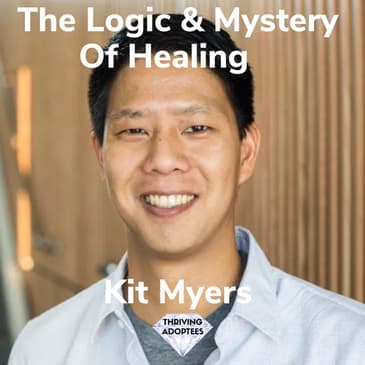
The more fellow adoptees I speak with, the more I see a broader view of healing. On one side there's the logic of getting answers to questions we've been asking ourselves forever. On the other side there's the mystery of what happens often when we are with others. Tapping into both sides help us heal. Listen in as Kit describes four of his key healing moments. They might well spark some ideas in you.
Kit Myers is an assistant professor in the Department of History & Critical Race and Ethnic Studies. He was previously a Chancellor’s Postdoctoral Fellow at UC Merced. His teaching interests include the study of race as a social, relational, and intersectional category of difference and power. His forthcoming book, The Violence of Love: Race, Adoption, and Family in the United States, with University of California Press (2024), uses interdisciplinary methods of archival, legal, and discursive analysis to argue that while adoption is imbued with love, violence is attached to adoption in complex ways. The book comparatively examines the transracial and transnational adoption of Asian, Black, and Native American children by White families to understand how race has been constructed relationally to mark certain homes, families, and nations as spaces of love, freedom, and better futures against others that not. Myers has also published journal articles in Adoption Quarterly, Critical Discourse Studies, Adoption & Culture, and Amerasia. He serves as on the executive committee for the Alliance for the Study of Adoption and Culture. He received his Ph.D. and M.A. from the University of California, San Diego in ethnic studies and his B.S. in ethnic studies and journalism from the University of Oregon.
https://www.linkedin.com/in/kit-myers-21463417/
Guests and the host are not (unless mentioned) licensed pscyho-therapists and speak from their own opinion only. Seek qualified advice if you need help.
Want to learn more about thriving for you, your kids, your families or your colleagues? Pick a time to talk here
[00:00:02] Hello everybody, welcome to another episode of Thriving Adoptees podcast. Today I'm delighted to be joined by Kit. Kit Myers looking forward to our conversation. Kit, I know we had a great chat last week, a lot about sport and a little bit about adoption. So I'm looking forward to the conversation again today.
[00:00:21] Yeah, I know. Thanks so much for having me on. It was a fun conversation last week and yeah, I really appreciate you inviting me to join you for today.
[00:00:32] So the million dollar question, healing. Does the word healing resonate with you, Kit?
[00:00:42] Yeah, yeah. I mean, and I appreciate you asking that question and kind of having me think about it a little bit more. And especially some of the other questions that
[00:00:58] you posed about healing moments. And so I mean, I think it resonates because there have been moments that I think have been healing for me. And I think that
[00:01:13] when it comes to this idea, it's certainly really important, especially when we think about the trauma that is attached to adoption. And so, you know, I do think that I have a slightly different view of healing.
[00:01:35] And part of that difference is just in this idea that, you know, typically we associate adoption. And maybe my view isn't necessarily super different, but it is maybe this instinctual reaction to the way that adoption as a whole is.
[00:02:05] Kind of itself is framed as a form of healing because of the way that the temporality of adoption works in sort of the broader adoption narrative where the trauma happens, you know, this pre-adoptive trauma happens.
[00:02:27] And whether that's an institution or
[00:02:30] a family, you know, acknowledging the separation of, you know, being separated from your birth family. But that adoption is supposed to be the actual thing that heals
[00:02:44] adoptees. And so I think, you know, there's of course some adoptees who experience trauma and healing in that way. But I think there's a lot of adoptees who sort of would push back against that and say that adoption itself didn't necessarily produce the healing that I think a lot of people
[00:03:09] presume or assume it does. And in fact, it might have produced more different forms of trauma. Right? And so and I think you know that. And listening to some of your podcasts and really seeing the range of all the people you've interviewed, it's quite clear that like you really certainly not that that's not the perspective that I think you're coming at.
[00:03:37] The topic and so but I think when we hear about that word in general, attached to adoption, it can be kind of bring up mixed emotions. And so yeah, I mean, I think healing can be good. It's good and necessary. Certainly, I think it resonates with me.
[00:03:59] It resonates with me. But I do think thinking more broadly that for you know, for some, I think it might not be a goal, or it could be a goal, but that that it's kind of this unachievable goal. And and so then, you know, what do we do with instances in which healing
[00:04:29] is difficult to come by right or that if there's like this these moments of failed healing and and when I say failed, I mean, like, you know, putting that in quotes, right.
[00:04:42] And so from from that aspect, I mean, I kind of think about healing as it could be like, how do we embrace the trauma and I used the term from Jenny Atkins, which is, you know, encircling trauma.
[00:04:57] So, which I think is a little bit different than than healing trauma, right? Is how do we hold trauma or how do we embrace these psychological scars that we we hold and and you know, I'm also kind of informed by this one book.
[00:05:20] Yeah, I haven't actually got to read it yet. But but it really piqued my interest just hearing kind of what it was about. And it's it's about disability in Korea and South Korea.
[00:05:33] And the author talks about this idea of curative time and how folks with disability are kind of pushed to find or go through this curative process.
[00:05:49] And and so and and then there's the assumption that the disability is something that needs to be fixed. And so when I think about trauma, I think about it sort of maybe along that way where I think healing is always good because it can be
[00:06:14] it can be quite painful to sit in trauma the whole time, right. But but that that may be the idea of like, sort of the idea of healing that some people are putting forth right isn't isn't is like one, it's not realistic and two, it doesn't sort of capture the
[00:06:40] the complexity and the sort of long the longevity and persistence of trauma.
[00:06:46] Yeah.
[00:06:48] Wow, there's a lot there.
[00:06:53] I'd like to, I'd like to start with the micro and then come out to the macro.
[00:06:59] If that's okay with you.
[00:07:02] About the, about the healing moments. So, could you share one of those healing moments or more than one let's let's look at the micro and then we'll, we'll come out to the macro because she makes some fascinating points there.
[00:07:21] Yeah, and, you know, yeah, and I have, I thought of four.
[00:07:27] And so the first one that comes to mind was working on a summer camp for for adoptees for trans racial and transnational adoptees.
[00:07:41] And it was a large group of us adult adoptees.
[00:07:46] And we would go to.
[00:07:52] We'd all meet up and one place and then try to do a week long training, and then we host four different summer camps across the United States.
[00:08:02] And so adoptees from that region would, you know, drive.
[00:08:06] Maybe some would be local but some, some kids were driving like 10 hours away to attend this camp for for trans racial and transnational adoptees.
[00:08:16] And, and that was my first time being around a large group of adoptees.
[00:08:23] This was the first time I did this campus in 2006. And then I again did it in 2008 and 10 and those latter two years I was on the leadership team so I was helping develop the curriculum and the schedule and whatnot.
[00:08:37] And, yeah, for me that was that was incredibly healing I think because, yeah, growing up.
[00:08:45] I knew some other adoptees.
[00:08:49] But, you know, a couple were, you know, there's this these two twins that were my neighbor but they are much younger than me.
[00:08:57] And then like my best friend, his brother, one of my best friends, his brother was adopted and one of my, my brother who's not adopted.
[00:09:08] One of his best friends was adopted but but I never was close friends with those people. And I didn't talk to them about adoption.
[00:09:19] And so this was the first time where I really had a space to really be with other adoptees, and to talk about issues that were kind of relevant to us as a community.
[00:09:34] And so that was very healing if we want to just use that word. Yeah.
[00:09:42] And, and in. I mean the word that came to my mind was validation but I don't know if it just was, was that what happened? Was that, what was it that was healing about that day?
[00:09:58] Yeah, yeah.
[00:09:59] Like, like a bothering or?
[00:10:02] Right. I mean, I think yes, I mean, validation I think is appropriate.
[00:10:08] And now that you've mentioned that another term that one of the, I interviewed one of the directors
[00:10:18] because there's two different directors during my time working there.
[00:10:21] And he's the term invisible need that it's this desire and need that a lot of adoptees have, but that they don't really know that they want or desire until they experience it.
[00:10:38] And so if you don't ever experience it and then that's, it's not something that you really express like oh I need to be around other adoptees or to meet other people who have had the same experience and to share
[00:10:53] sort of stories of sadness or happiness and, and just, or just to be with each other and not talk about adoption but kind of know that there's this common connection.
[00:11:07] So, so yeah I mean I think being in that space validates your identity and your experience.
[00:11:14] Certainly, yeah. Yeah, you're not alone anymore. There's a lot of you.
[00:11:19] Yeah, absolutely. Yeah.
[00:11:22] And then the second to picture or two, sorry, two, two moments were much more recent.
[00:11:33] I ended up taking a DNA test.
[00:11:39] 23 and me, and right away I was connected to a first cousin, a biological first cousin, and.
[00:11:48] And it took a couple years but, but I was finally able to connect with them as kind of yeah it was kind of funny that two years later after I'd reached out.
[00:11:58] He finally reached out back to me and, and we, you know, started.
[00:12:04] We zoomed a couple times and then I met a couple other first cousins through zoom and I got to meet him in person.
[00:12:13] Now probably three or four times and, and.
[00:12:18] So, you know meeting
[00:12:25] birth family has been pretty, you know, just an amazing experience right.
[00:12:34] And then also through, through that experience.
[00:12:39] You know he shared a picture of his, his parents and his grandparents, and then of course my mom was in that picture as well.
[00:12:48] And so that was the first time I'd seen a picture of her.
[00:12:52] And, and just, you know, seeing her and her siblings and her parents together in the picture was.
[00:13:05] Yeah, it felt like
[00:13:09] you know it was, it was a, I think, a special moment for sure that.
[00:13:19] And the, I mean the sort of difficult aspect of that is that is that you know she had a very bad relationship with her family. So, and I knew that beforehand from the paperwork but of course, you know as adoptees you kind of have a little distrust of paperwork.
[00:13:40] And so, but but talking with my cousins it and hearing what their parents have said about the family dynamics that kind of confirmed that that there was a, you know, a difficult very difficult challenging and estranged relationship there.
[00:14:02] Yeah.
[00:14:04] It's healing but also kind of it creates more sort of this uncertainty I guess. Yeah.
[00:14:12] Did, did you think that that the lack that the poor relationship that your birth mother had with a family was that was that that play a role in you being adopted or.
[00:14:29] Yeah, yeah, I definitely did. I mean, again from the, from the paperwork. I haven't heard this from anybody.
[00:14:38] I have not talked with my, like, uncles. I have two uncles and one aunt.
[00:14:46] And, you know, the aunt actually doesn't know about me yet. And then the one of the uncles is not really keen on sort of connecting with me but but the oldest uncle, you know expressed desires to meet me eventually.
[00:15:04] I haven't heard this from them and my cousins didn't even know that she existed until maybe six years seven years ago. So she was kind of hidden from the younger generation you know my generation, I guess.
[00:15:20] And so that kind of shows that, that this was indeed sort of an estranged relationship and and part of it was you know she was married. But then she had relationships outside of marriage which then produced me.
[00:15:38] And so, yeah, that was kind of the main driver of the my grandma sort of forcing her to relinquish me. Right. Because she went, this was in Hong Kong wasn't it so this was it was in Hong Kong and you were in a, you were in an orphanage.
[00:15:55] Yeah, yeah, I was. So yeah, I was, you know,
[00:16:01] Chinese and born in Hong Kong.
[00:16:06] And yeah right after I was born I was placed in an orphanage.
[00:16:13] And I was kind of moved around a lot has moved around probably like five, five different times.
[00:16:22] And then adapted when I was, you know, almost four, four years old.
[00:16:28] Yeah.
[00:16:30] So, it is the. You've highlighted that the connections with the both cousins as a as healing.
[00:16:39] Is that about.
[00:16:42] Is that about grounding about, you know, appreciating and understanding more about your, your roots is that is that how it's I mean, I think, I think from for me, it's more just like, like, you know, physical evidence that that I have some sort of attachment to that place.
[00:17:07] You know, I went back to have been back to Hong Kong.
[00:17:13] Twice.
[00:17:15] And both of those times, I think we're also healing healing moments.
[00:17:19] The second time more so probably because I went with a group of Hong Kong adoptees. There's a group of 30 of us.
[00:17:26] And, and we did.
[00:17:30] We know we went to a couple.
[00:17:35] An orphanage site.
[00:17:37] The orphanage was no longer there, but, but, you know, there was buildings around the orphanage that were still there that people remembered.
[00:17:47] And then, you know, the very first time I went, I went back to the last orphanage that I stayed at. And I got to meet one of the workers who cared for me while I was there and so she, they were able to, you know, find her and sort of call her back in.
[00:18:07] She brought on pictures, these pictures I hadn't seen when I was adopted.
[00:18:11] I, I, I was given an album of some pictures that a couple of the different orphanages.
[00:18:18] And so I, you know, I consider myself really lucky and I know that's like also a word that is less favored in the adoption adoptee community.
[00:18:30] But, but I do feel like relative to a lot of other adoptees. I have a lot of documentation.
[00:18:38] I have, you know, my birth certificate and I have these long social work narratives. And I have that kind of talk about my, my disposition and my, my appetite and my love for snacks and, and, and hoarding toys and, and these, these sort of personality traits, right?
[00:19:04] And, and then yeah, I had this photo album that unfortunately got stolen, you know, years ago because my, it was in my safe and my safe got stolen.
[00:19:18] But luckily I digitized them. So I, you know, I have digital copies of them.
[00:19:24] So, so anyway, this, this worker that I met in when I visited Hong Kong for the first time she'd brought extra photos that I had never seen.
[00:19:32] So, you know, that was, that was also really special.
[00:19:36] And did you mean, I've not asked you the question about reunion, but did you, is your birth mom still alive? Did you manage to see her when you went to Hong Kong or?
[00:19:48] Yeah, I mean, I, so I'd been looking, I started searching with the first time I went and my dates are always off.
[00:19:58] I think it was 2012 is when we went.
[00:20:02] My wife and I went, we did like a whole Asia tour to Beijing, Hong Kong, Thailand and Japan.
[00:20:14] And so yeah, we were, we started searching then and we're able to find more records.
[00:20:23] And then from there, you know, I tried to, I was going through the immigration department and Red Cross interestingly helps adoptees try to find birth family.
[00:20:39] And, and the adoption agency, I would sort of use them.
[00:20:44] And I have two friends or one friend in particular at the time who was trying to help me.
[00:20:49] And then since then another friend has has been helping me try to locate her.
[00:20:55] And so I'm going back to Hong Kong this in a couple weeks actually.
[00:21:02] And the goal was to try to continue searching.
[00:21:06] But essentially my two friends, they, they were doing some initial legwork before I got there and and we're pretty certain they found that she passed away in 1995.
[00:21:26] So yeah, 29 years ago that she passed away.
[00:21:32] So we're still trying to figure out if this is really my birth mom because there's a small, small chance that there's somebody out there with the same name and the same birth date.
[00:21:47] But we're pretty certain there's a, there's a picture on the grave, the headstone that my friend took a picture of.
[00:21:56] And that picture looks like an older version of the, of the person who's in the family photo that I have.
[00:22:06] So there's kind of three, three things that triangulate.
[00:22:13] Yeah, that it is an actor who passed away in 1995.
[00:22:19] So, yeah, I'm sorry to hear that.
[00:22:27] I found out that my birth mother had died.
[00:22:32] Probably 15 years before I, I started searching.
[00:22:38] And, and yet.
[00:22:42] Some stuff that happened in the meantime, I think it helped me heal to such an event, he helped me to feel at one with her.
[00:22:58] That the news of her death didn't, didn't knock me sideways.
[00:23:08] Strange one.
[00:23:10] Strange one.
[00:23:12] Perhaps a little, one that's a little bit too tricky to put into words, you know, it's a, it's a slightly mystical, mysterious feeling that doesn't, you know, like me being feeling at one with her.
[00:23:32] Sounds like some kind of mumbo jumbo, but it was my felt experience.
[00:23:38] And it was a, as I say, that felt experience meant severely lessened the blow of finding out that, the blow of finding out that she died.
[00:23:59] Yeah.
[00:24:00] I want to just go back a bit.
[00:24:05] And it was something that was kind of behind my question about the relationship, you both on the relationship with her, with her, with her family and the difficulty in that.
[00:24:21] Did, did that did finding out that that difficulty was played a pivotal role in being adopted or being put into the orphanage and then being put in them being adopted.
[00:24:37] Did that.
[00:24:40] Did that reason did that rationale.
[00:24:43] Did that have an impact on you.
[00:24:48] The, the, the answering of the why question.
[00:24:53] Yeah, I mean, so the, the social work right up that I was, that was in my file.
[00:25:04] You know, it mentions this and so I don't know that I was aware of this when I was young, but when I got older, and I looked at my file.
[00:25:16] You know, it's never something that my parents like kept for me, but something that I sort of looked at when I was when I was older and then even again like my memory so bad that I'll read stuff and then kind of forget it.
[00:25:31] And, and so after, you know, reading the file multiple times at different sort of points in my life.
[00:25:40] You know every single point that I that I read it that I can remember.
[00:25:46] It's.
[00:25:47] It never like struck me as something that made me have like big feelings.
[00:25:58] Until I found out that she passed away.
[00:26:03] Because, you know, up until that point, I felt like okay.
[00:26:10] I kind of understand like, I don't agree with that. Like I don't agree with it but.
[00:26:18] But,
[00:26:20] I kind of understand and then you know I in in college and then in graduate school. Of course, I learned more about the role that gender sort of shapes identity and experience and and and outcomes and everything and so, of course, then I started taking a more critical lens of, you know, what it meant to be structured by this perception,
[00:26:49] and you know she was perceived as being less intelligent, based on an IQ test.
[00:26:54] And she was, you know, the, the language I think that was used was, you know, sexually promiscuous or, you know, something along those lines. And so the, the, you know, the judgments that come along with that and then the sort of treatment that that is attached to it.
[00:27:19] When I was younger, that was understandable. Right? That to me that those things aligned and then when I got older, like you know I, I was like, I didn't agree with it.
[00:27:30] But I think when I found out that she passed away then I got.
[00:27:35] I was one of the things I felt was, you know, a lot of anger toward my grandma and particularly in part because she's named in the document so I have no clue.
[00:27:50] You know, if other. I assume that other family members were upset by the situation, but she seemed she was sort of named as the person who
[00:28:04] forced the situation and so.
[00:28:07] So yeah, I think there's a lot of anger there in part because like, there's this
[00:28:13] This unknown aspect of it. First of all, I mean, I still don't know if she's like I think she's dead but there's this ambiguity there.
[00:28:22] But pretty much assuming that that she did pass that to be a strange frame or family like did she like have anyone there to support her.
[00:28:37] Because it says her death record says she died of heart attack and also cervical cancer is the secondary thing.
[00:28:43] And so, you know, was she going through the these health.
[00:28:52] You know these health crises, you know by herself and she remarried.
[00:28:58] So, you know, hopefully her husband was supporting her but I don't know to be lacking family support which it seems to be the case because the oldest uncle didn't know.
[00:29:13] I don't think he knew that she passed away.
[00:29:16] Because when I first asked my cousin to ask her dad.
[00:29:22] He just said, I don't know where she is.
[00:29:25] He didn't say, oh she died in 1995 right. So I think you know the family doesn't didn't know.
[00:29:32] And both the grandparents have passed so
[00:29:35] You know there's a chance that the grandparents knew and then they didn't tell anybody but yeah I'm just not sure.
[00:29:40] And so, you know that it was a delayed to answer your question.
[00:29:46] It was a delayed sort of sort of reaction to that.
[00:29:53] Yeah, because this to me the more I have these conversations there's a logic.
[00:30:03] And then there's the rational stuff. There's a logic in the rational stuff and then there's emotional stuff.
[00:30:09] Yeah, and we're mainly in a discussion in a conversation like this.
[00:30:15] We're mainly touching on that rational stuff.
[00:30:19] And it does seem in my own experience and the experience that I've had from others.
[00:30:27] Understanding the reason for us being adopted.
[00:30:33] Takes us somewhere, you know, it is a tick along.
[00:30:39] It's a movement along the
[00:30:43] Along the healing journey.
[00:30:46] And yet it's the mysterious more emotional stuff that really
[00:30:58] Is the difference that makes
[00:31:01] Makes the makes the yeah yeah I mean I think part of it is because
[00:31:07] You know, is I know.
[00:31:12] You know, partially the reason, but I don't know
[00:31:17] How you know how my birth mother felt about it. That's not in the records like you know her her voice is not in the records right now.
[00:31:25] And so that's what's
[00:31:28] Maybe
[00:31:30] If you know if I can find that out one day and and like, you know, there's moments.
[00:31:37] It usually in reunion right where parents express like oh I've been searching for you or I didn't want to relinquish you and then those you know those are of course I think very
[00:31:51] Can be quite healing moments.
[00:31:54] And but but so far I haven't, you know, I don't have that.
[00:32:01] Piece of the puzzle.
[00:32:04] Yeah. Oh, I thought you said I thought you were talking about the piece as in P E A C E right.
[00:32:12] Yeah, but it's good. It's a it's a nice. It's a nice.
[00:32:19] It's a nice example of thing what I'm saying, you know, so we have the piece of the puzzle, which is
[00:32:26] We can have the piece. Yeah.
[00:32:30] And clearly there's
[00:32:33] This you talked about gender and judgment and power imbalance.
[00:32:39] I know one of the this one of this one, one of the
[00:32:49] One of the weird things that I got from the adoption reading my adoption file was the huge power imbalance between
[00:33:02] The the the the well mainly the bureaucracy and the social norms of being a single mom
[00:33:13] In the 60s when I when I was born, right.
[00:33:17] The power imbalance between my birth mother and her
[00:33:24] Parents is kind of and especially her mom, you know, it's a critical role, isn't it?
[00:33:29] The critical relationship between a birth mother and her mother
[00:33:36] The power imbalance between her is kind of alluded to, but the power imbalance between
[00:33:45] My birth mother and the social worker. That's really, really clear from this letter.
[00:33:52] Right.
[00:33:54] And similar to you, I think
[00:33:58] Reading stuff like that takes our minds
[00:34:03] Onto our birth mothers. It's about empathy for our birth mothers and
[00:34:10] That that is a profound shift from
[00:34:17] A focus on ourselves to focus on somebody else. Yeah, yeah.
[00:34:23] When it becomes about the we or them rather than just us. It's part of the maturing process.
[00:34:33] Like you going on summer camp is, you know, you're going you're going and having that that
[00:34:41] The profound social connections with a large group of adoptees for the first time. You're going through that training and then
[00:34:49] You know, you're shifting your shift. Your focus is not on you anymore. It's on the kids that you
[00:34:57] Mentor or coach or help through that summer camp process. Yeah, yeah.
[00:35:05] This is meaning. Yeah.
[00:35:07] Yes.
[00:35:09] Yeah. And and and I don't think it
[00:35:14] Necessarily is sequential or
[00:35:20] Right. That I think that they kind of
[00:35:24] Keep happening simultaneously that that it's kind of
[00:35:30] Like a lot of a lot of us are trying to tend to tend to ourselves while also really trying to
[00:35:38] Expand. Yeah, expand our empathy and expand our care for brothers. Yeah. Yeah.
[00:35:48] They are they are I was paid to pass I was painting to simplistic a picture and it it's
[00:35:55] It's that that was that was that was that was that was yeah. Yeah. And
[00:36:01] And yeah, does that
[00:36:06] People say put your own oxygen mask on first on it. Yeah. So we do our own. We start our own work.
[00:36:14] Yeah, somehow or
[00:36:17] The other thing comes mind is, you know, reading about emotional intelligence or a book about motion intelligence a few years ago, decades ago, as my
[00:36:24] Me and it starts. It's it starts with us. It's about our
[00:36:32] Our own regulation ourselves under self understanding and then the relationship
[00:36:40] Relations. Yeah, it starts. It starts with us. It starts with us.
[00:36:46] So you talked about four experiences. I think you've moments. I think you've covered three so far.
[00:36:59] But that might be confusing. Yeah, that's that's a great
[00:37:04] Mental record keeping.
[00:37:08] I would have I would have definitely lost track if I was on your side. Yeah, no. Yeah, there I had the fourth and the fourth one was also very recent and
[00:37:20] And it has to do with, you know, I'm
[00:37:24] I'm a professor. I'm an assistant professor at University California Merced.
[00:37:30] And I've been, you know, doing research on adoption for a long time now. That was my dissertation work and and then my continued research
[00:37:41] When I got to UC Merced. And so I've been working on a book. That's what we have to do. You know, we have to write a book to get tenure in my field.
[00:37:50] And so I've been working on this book and I've been trying to figure out a way to like talk to my parents about it because
[00:38:00] Again, I think like a lot of adoptees there's this instincts to protect our adoptive parents.
[00:38:12] Because there's this fear of like
[00:38:17] Like a second
[00:38:19] Separation and I think that fears is
[00:38:23] Is fairly
[00:38:25] It's a fairly reasonable fear to have because there there's a lot of adoptees who are estranged from their from their adoptive families.
[00:38:35] And
[00:38:37] And then, you know, there's instances in which, you know, there's other forms of separation that happened at a much earlier stage.
[00:38:49] Of like adoptive families like annulling adoptions or rehoming and those sort of things. And so I think, you know, growing up.
[00:38:59] There's this
[00:39:02] Feeling of
[00:39:04] Trying to please or
[00:39:08] Not upset. Yeah, not upset. Right.
[00:39:11] The your family
[00:39:14] So that, you know, you can't get sent back to the to the orphanage or the foundling institution. Right.
[00:39:23] And and so
[00:39:26] So anyway, but I mean, mine was more based on this, you know, just the
[00:39:33] Because because I, you know, I love my adoptive family a lot and I know that they love me. Right.
[00:39:42] The book is is a strong critique of adoption.
[00:39:47] And so I just worried how, how it would sort of sit with them and how they wouldn't interpret it and receive it.
[00:39:56] And, you know, I've tried to write it in a way that
[00:40:01] Doesn't
[00:40:04] That that people can sort of go through it. So kind of not in a step by step process, but in a sort of progressive process where they that it doesn't sort of
[00:40:19] Hit them on the side.
[00:40:21] Sort of right away.
[00:40:23] But yeah, there's this there's this long, long held fear that I had about talking
[00:40:31] To them about what I was researching. And so, you know, when I talked to them as very vague and general
[00:40:38] And
[00:40:41] But eventually I knew I needed to
[00:40:44] Tell them because the book was going to be published. And at some point I realized like this book is actually going to be published.
[00:40:51] I'm going to finish it and somebody's going to publish it and they will want to read it. So
[00:40:57] So anyway, I this last
[00:41:01] Christmas I was with family
[00:41:04] And and I finally decided with the help of my therapist
[00:41:10] Would you know I'd been talking about this for like the last two years
[00:41:15] That
[00:41:17] Yeah, I was going to tell them. And so then it came up and I mentioned it
[00:41:23] A little bit sooner during our visit than I wanted that and then I had planned and inside sort of told them what the title is and the title is called
[00:41:33] The violence of love colon
[00:41:37] Race adoption and family in the United States. And so
[00:41:43] And so, yeah, we talked about it a little bit that evening. Not too much in depth. But but it was kind of like, okay, I finally got it out there and
[00:41:57] And the couple days later, it was either the next day or I think it was a couple days later. We ended up actually going out to lunch. Just my dad, my mom and my brother
[00:42:09] And I and that was the first time the four of us had been together. Just the four of us in a really long time. Like, I can't remember the last time the four of us just ourselves like there's no kids around. There's no spouses around
[00:42:26] Just the four of us or an extended meal a drive in the car and all this and and so, you know, my mom
[00:42:38] Asked us at lunch. Both me and my brother.
[00:42:43] You know, this year, this upcoming year, you know, what are the, what are the ways that your dad and I can support you and
[00:42:53] Wow.
[00:42:54] And I and you know, my brother went first and he talked about some different stuff and then and then I went and and I said to her, I took the opportunity to to sort of bring it up again because the first night, you know, is very kind of surface level just to kind of break
[00:43:13] Break the barrier or the ice, so to speak. But this time, you know, I kind of
[00:43:21] Was more. I went deeper and just kind of told them told them the reasoning and that and that's sort of the challenges of talking about this and and what I was hoping for them.
[00:43:33] What I was hoping how I was hoping that they would receive the work right
[00:43:40] And and what the work was really about. So,
[00:43:45] Yeah, I feel like that was a big, you know, that was a big relief off my shoulders.
[00:43:52] And how did they respond.
[00:43:55] Yeah, they responded.
[00:43:58] Really
[00:44:01] In the way that I'd, I'd hoped right, which is
[00:44:07] To just be super supportive.
[00:44:13] And, you know, they they express their love to me and they're sort of
[00:44:19] Yeah, they're unconditional support, you know,
[00:44:23] My dad joked that the only thing he was upset about is that it took me so long to tell them.
[00:44:29] But, but yeah, I mean, I think there's still some more conversations to be had. I think there's still
[00:44:37] You know, there's a lot of details in the book right that are
[00:44:41] That kind of can hit hard and
[00:44:45] And so, you know, we'll probably have more conversations about it. But it was a really
[00:44:54] Important moment and and I felt it was as healing in that it
[00:44:59] It finally allowed me to talk about something that
[00:45:04] That I hadn't really been able to
[00:45:07] And a lot of that was on myself. Right. I think I put a lot of that on myself.
[00:45:12] But yeah, that was
[00:45:16] That was the fourth thing. Yeah. Well, so yeah, I think we can
[00:45:27] See troubles lying ahead when there is no trouble there. I think we can. I've definitely done that
[00:45:33] In relation with similar sorts of stuff, you know, me talk me podcasting and talking about my stuff.
[00:45:40] Yeah, yeah. I mean, podcasting and talking to fellow adoptees
[00:45:46] And I think about three months ago my mum said you are okay, aren't you?
[00:45:52] You are okay. I said, yeah.
[00:45:56] But one of the
[00:46:01] One of the things that surprised me slightly has been about my
[00:46:11] That my mum's attitude to this adoption stuff has changed
[00:46:17] At a relatively late age. You know, she's 86 now.
[00:46:23] I got that wrong. She'll be 86 in a couple of weeks.
[00:46:31] 38. Yes, that's right.
[00:46:35] This is real life.
[00:46:45] That's the first time that's ever happened. The front door.
[00:46:50] We have a bell on our front door and it links to two bing bongs.
[00:46:55] One of them is in my office because sometimes I don't hear the links.
[00:47:00] So who's delivering at 10 past six on a Tuesday night? It's probably Amazon, right?
[00:47:06] So, yeah, my so my mum's coming up 86 and her
[00:47:15] Attitude to something to do with adoption and reunion and search actually has changed quite significantly just between
[00:47:24] The ages of 81 and 85 that she is. So the reason that I'm
[00:47:32] Saying that is perhaps more for the listeners than yourself, Kit.
[00:47:40] But I thought that the older we got, the more set in the ways we are.
[00:47:48] Right. And setting our beliefs and our thoughts and actions and all that sort of stuff.
[00:47:55] So this was quite a surprise to me. So I'm saying it for the listeners.
[00:48:01] Just in case, you know, your parents
[00:48:07] Attitudes might have changed since last time you looked into a certain area.
[00:48:13] So don't be like I assumed that she wouldn't have changed.
[00:48:19] And in my assumption that she wouldn't have changed,
[00:48:25] I became agitated about bringing up having the conversation with her when I when it got to that conversation.
[00:48:34] There was no agitation because she had changed.
[00:48:39] So, yeah, yeah, I mean, I do think it's I think it's like a two way sort of anxiety.
[00:48:45] Right. I think that there's adoptees who are worried about
[00:48:51] Sort of rocking the boat or hurting or hurting their parents.
[00:48:57] And, you know, there's this quote by Angela Tucker who just wrote this, you know, her book just came out recently.
[00:49:07] And and I'm going to butcher the quote, but it's something along, you know, to be honest is or to be truthful or honest is to hurt someone I love or something like that.
[00:49:20] And so and and I think that can and does happen quite a bit.
[00:49:30] But but I think you're right in that.
[00:49:35] That people, you know, can have the capacity to to be hurt, but also provide
[00:49:43] Try to provide love and support and maybe sometimes the the love and support that they sort of put forth or deliver is imperfect.
[00:49:54] And so maybe that can sort of become hurtful to the adoptee again as they're trying to open up and express themselves.
[00:50:06] And and sometimes our communication can be imperfect.
[00:50:11] And that's maybe one reason why it becomes hurtful for the adoptive parents.
[00:50:15] And then the same thing with adoptive parents, you know, I think a lot of times when they keep like these big secrets, right?
[00:50:23] I mean, we know of this, you know, how late discovery adoptees or or or sort of making up stories or not disclosing about certain records or historical
[00:50:39] pieces of their child's history and identity that, you know, some of it is sort of this idea of
[00:50:54] I think from our perspective, sometimes we feel like, oh, that was selfish for them to do.
[00:50:58] But I do think like a lot of times it's coming from an idea of love.
[00:51:04] And again, I don't I'm not going to claim that it's a perfect form of love, right?
[00:51:08] It's a very imperfect form of love.
[00:51:11] But I think that it that a lot of what is done in adoption is rooted in love.
[00:51:19] But again, this is what my book is about when I say the violence of love.
[00:51:24] I'm talking about the complexity of love like that we have we imagine and practice love and these different ways and we attach it to adoption.
[00:51:32] And and that but that that there is this violence that is attached to love or there's this violence that produces the possibility for love to exist.
[00:51:48] All of these things, all of these relationships between the two.
[00:51:52] And and so, you know, I talk a lot about it in terms of especially in the conclusion, you know, when we talk about love, I kind of return to love and say, what do we mean by this idea?
[00:52:08] And, you know, what would what would love and care look like if we if we sort of imagined adoption as as a form of care rather than the epitome of care?
[00:52:25] And so it's it's just to, you know, the goal of the book is to try to help us think about these ideas and sort of the complexity of them a bit more.
[00:52:42] And if I remember rightly, the books out next year, is it?
[00:52:48] Yeah, January 2025. Yep, it'll be it'll be open access with University of California Press.
[00:52:58] So you can you be able to purchase it in a traditional sort of book form.
[00:53:05] But but you could also just go to the University of California Press website and access it for free online.
[00:53:14] So I'm conscious of time and we haven't got into the macro stuff yet.
[00:53:19] So what I'd like to do, Kit, is to extend an invitation when the when the books out.
[00:53:25] Do you want to come back on and talk about the macro stuff that we didn't really get into?
[00:53:30] You like to do that? Yeah, yeah, that's yeah, that sounds like a great a great idea.
[00:53:36] I'd love to. Okay, cool.
[00:53:38] And I'm thinking, you know, like also like we can get some Amazon pre-order.
[00:53:44] You can you can usually pre-order books on Amazon.
[00:53:48] I love the title. I love the juxtaposition.
[00:53:51] And I don't use the word juxtaposition very often.
[00:53:55] So I'm pleased with myself that I could remember that one right.
[00:53:59] But the contrast, right?
[00:54:01] And the fact that you're supporting together of two different ideas, you know, violence and love.
[00:54:07] That's that was a great, a great that's that's a great idea.
[00:54:14] Was that was that your idea? Did you come up with that?
[00:54:17] Yeah, yeah, there's there's, you know, I had my master's thesis.
[00:54:25] And then I felt like that didn't quite capture what I was trying to say.
[00:54:31] And so I thought up of this term, the violence of love.
[00:54:36] It does turn out that there's there's a I think I don't know if it's a Catholic bishop Oscar Romero, who's written on this phrase.
[00:54:47] And I took a look at that text and it's talking about it in a very different context.
[00:54:56] And so he also uses the phrase as well.
[00:55:00] But but other than the two of us, yeah, it's just that's cool.
[00:55:04] The two of us. It's cool. Yeah.
[00:55:06] And what came to mind as you were kind of wrapping that up to me was you use the word judgment a bit.
[00:55:16] Maybe 10 minutes or so ago.
[00:55:18] And I was thinking, I was thinking, am I judging my parents love?
[00:55:28] And that as I thought about that question, I thought that's a pretty cool question.
[00:55:36] And then immediately the idea popped into my head.
[00:55:40] That's the sort of question that Harry Bradshaw would ask on sex in the city.
[00:55:48] When she's signing off her when she's signing off her diary piece in the whatever in the newspaper that she writes for in New York.
[00:55:58] And she said, and it struck me, she my love.
[00:56:03] So yeah, that was a double.
[00:56:05] So that was judging of judging my own thought of judging our love.
[00:56:09] I think it's a great, you know, the violence of love and it goes to the complexity of this stuff, which we're trying to unravel.
[00:56:23] I mean, that's what yeah. Yeah.
[00:56:26] Yeah. I mean, I hope it helps readers.
[00:56:31] Readers, you know, I mean, I think we all kind of know it inherently, but then it's hard to put in words.
[00:56:38] Right. It's hard to find the language to talk about it.
[00:56:42] And so, yeah, I'm hoping it'll be useful for people.
[00:56:47] And if we don't, if we don't judge, I mean, judgment and peace are quite intrinsically linked, aren't they?
[00:56:55] Yeah, I mean, certainly they can.
[00:57:00] Yeah, they can be very linked and and I think, you know, when we talk about.
[00:57:10] So, you know, I'm this is kind of off tangent, right?
[00:57:13] But but like I'm an abolitionist, which is to say, like, you know, for me, you know, I don't think police and prisons and and are the solution.
[00:57:27] Right. And and and of course, there are other people who are, I think, who are abolitionists.
[00:57:32] But then, you know, there's some people who are abolitionists who then say like who then when a police officer is indicted or convicted, right.
[00:57:42] Who is convicted and they're going to go to jail.
[00:57:45] Then there's this sort of celebration of that justice has been served.
[00:57:50] And and for me, you know, I feel like like I don't actually want that person to go to jail either.
[00:58:00] Like, I mean, I realize that person, the police officer killed this other person who shouldn't have been killed.
[00:58:07] But I don't want that person to go to jail either.
[00:58:09] And so it is for me like when I talk about love, I mean, I want it to be.
[00:58:17] I do want it to be more expansive.
[00:58:19] Right. I want it to be expansive and to hold all of the.
[00:58:26] The sort of the challenges and the difficulties and the complexity that that it tries to grapple with.
[00:58:38] But but oftentimes, it's it's presented in a very narrow way.
[00:58:44] Yeah, that might be the perfect place to start on next time, but you might be going over my head.
[00:58:52] So we'll see what are we going in six months or so time.
[00:58:56] Thanks, Kit. Really enjoyed the conversation.
[00:58:59] And thank you for putting that, you know, you obviously put the time into thinking about those healing moments and led for a great and a great and fruitful conversation.
[00:59:09] So I hope you've enjoyed it as much as I have.
[00:59:14] Yeah.
[00:59:15] And you two listeners, right? You still here.
[00:59:18] You haven't switched this off, so you must be enjoying it or you couldn't find the off button on your podcast.
[00:59:25] Thanks so much for having me on.
[00:59:28] Loved it. Thank you listeners.
[00:59:30] We'll speak to you again very soon.