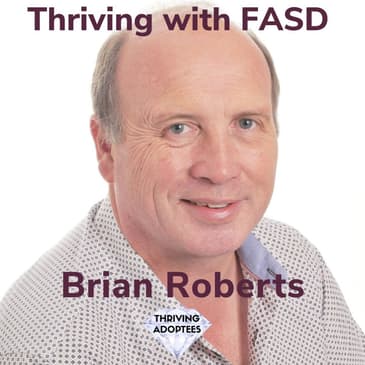
FASD is caused by exposure to alcohol in utero. Fetal Alcohol Spectrum Disorder is a neurodevelopmental condition with lifelong cognitive, emotional and behavioural challenges. Listen in as Brian shares his learnings on how families thrive with FASD.
Brian Is Director of Education & Well-being for the National Organisation for FASD and has been the lead author and co-ordinator for the Me & My FASD project and leads our training team. Brian has been a Local Authority foster carer for over 30 years. Along with his wife they have provided long term foster care for large sibling groups. They have been the Special Guardians of children that they previously looked after and currently can provide a home for three young people with FASD.
Brian has been Virtual School Head in two English Local Authorities and was one of the Virtual Heads who was on the Department for Children, Schools and Families national pilot. He was also closely involved in national pilots on One to One Tuition, Multi-Therapeutic Treatment Foster Care and the Assisted Boarding School Pathfinder.
He trained and practiced as a teacher for over 25 years His experience covers Humanities Education, Careers Education and Guidance, Young People’s Voice and Leadership and he was England’s only Advanced Skills Teacher for Enterprise Education.
https://www.linkedin.com/in/brian-roberts-b082a361
https://www.facebook.com/NationalFASD
Guests and the host are not (unless mentioned) licensed pscyho-therapists and speak from their own opinion only. Seek qualified advice if you need help.
Want to learn more about thriving for you, your kids, your families or your colleagues? Pick a time to talk here
[00:00:02] Hello everybody, welcome to another episode of Thriving with Doctor Who's podcast. Today I'm delighted to be joined by Brian Roberts. Looking forward to our conversation today Brian. Yes lovely, thank you Simon, I'm looking forward to it too. Great. So listeners, Brian is the Training and Education Director for the UK's National Association of FASD and he also, him and his wife provide a home for three young people with FASD.
[00:00:30] So we're going to be looking at, well that's going to be the context to our conversation. Another part of Brian's background is he was a virtual school head. So here in the UK we have these things called virtual schools for kids that can't go to a regular school right and as Brian was running that responsible for one of those,
[00:00:58] you found out some amazing stats in terms of FASD and adopted kids, didn't you? Yes I did. I was based in Dudley in the West Midlands and then in Peterborough which is in the east of England. And my responsibility was for all the children in care. Some were in mainstream schools, lots were in special schools, some couldn't access a traditional learning pattern as well.
[00:01:25] And I was in charge of the outcomes for adopted children as well. And during that while I was there and I'm no longer there now, we did some research into the numbers of children who were affected by FASD. Now FASD is caused before a child was ever born. It's caused by alcohol that was in the environment in the womb when they were growing in their birth mum's womb.
[00:01:53] And it can affect anything that happens. So in terms of the children who were then moved on to adoptive placements, we did some research and we found that 75%, so three quarters, had been exposed to alcohol while they were in the womb. That doesn't mean it will always turn to FASD.
[00:02:13] But it's a big proportion. And of those children who were still within the care system, so they hadn't moved on to an adoptive placement, we knew that 27% of the children in my local authority who were looked after had FASD. So they're really big figures. And you can see why you can see why it's such an issue within care experienced young people and adults and adults.
[00:02:42] Indeed. We've had a couple of adoptive mums on the past who have kids with FASD. And it's an issue that I really think that we need to bring to life. From a personal perspective, I was chatting to somebody, an adoptive mum, a couple of years ago. And she didn't actually end up coming on the podcast, but during the conversation, she was alluding to some challenges that her daughter was having.
[00:03:11] And I said, I'm not an expert, but I've spoken to a couple of mums with kids at FASD. And they described to me something that was described similar to you. Have you had that diagnosis? And the lady said, no, I haven't, but I'm going to take a look at it.
[00:03:34] About a year and a half later, I got an email out of the blue from her saying, thanks for pointing that possibility out because I did get the diagnosis. And so we're now on a better path to thriving, I guess, because we've got that diagnosis.
[00:03:58] I think for me, one of the challenges is it is not it is it is diagnosed late. It is. Well, I mean, you know this stuff better than me. How would you set it up, Brian? Well, for us, I mean, I'm going to go back to 2003. So I'm going back a long time. My wife and I were foster carers and a family of three girls came into the care system and they were placed with us.
[00:04:21] And we did the good enough parenting that you would expect to make a difference, to turn some of their lives around. And we just weren't making the progress that either we expected or social care expected, if I'm honest. And at that point, they were going to go on to be adopted. And the person undertaking the medical just said, find out what mum was drinking when she was pregnant and left it at that.
[00:04:49] That was the open thing. It was around about 2007 after we'd done nearly four years of that parenting. And that's where we started our journey. Now, my wife had been in residential care before she became a foster carer. And I'm a teacher. And we'd never heard of anything to do with alcohol and its impact when women are pregnant. And that's where we started our journey. We were quite fortunate. And the most fortunate thing that happened to us was we moved house.
[00:05:19] And we moved into, we're in North Cambridgeshire now, and we moved into a small market town where one of the GPs is an adopter whose son has FASD. And at that time, the primary head teacher was an adopter and her daughter had FASD. So the pressures that you had of trying to explain what you were talking about all lifted from our shoulders.
[00:05:45] And we could actually spend more time chasing the threads to get the children recognised and putting supports in place. And I'm not going to say it's easy because it's not, but we got those in place. I would say, you know, with all these things, the really important thing is it's far easier for me than it is for people with FASD who just hit those brick walls time after time with people who don't understand what makes them tick.
[00:06:12] Yeah. Is there, I'm just thinking about adult adoptees here now, you know, that may be listening. If it's not diagnosed, it could be there in a 40-year-old or a 50-year-old and they have no clue what's going on. Oh, absolutely. You know, we meet people quite regularly who are professionals, who we're talking about FASD to them for whatever they, the people they're working for.
[00:06:42] And then suddenly it will dawn on them. In some cases, we've just explained the challenges they face through their lives. And I'm talking to someone at the moment where that's the case, who suddenly it's been like a light bulb going on. In others, and I'll give an example, somewhere else we're working, there was a professional who I did three hours of training and described her daughter's life.
[00:07:08] And she'd been a club rep 23 years ago in the Mediterranean, got unfortunately got pregnant or fortunately got pregnant, I guess it is. And no one had said anything about alcohol. And obviously she was in that environment and she didn't know till she sat in that room down in a borough in London that that was anything that could have impacted her own daughter. And that's the trouble. If you know early enough, you can get the supports in place and it doesn't make it easy,
[00:07:37] but it makes things easier in terms of being able to tell that story. Yeah. So as you know, the focus of the podcast is thriving and we try to focus on the understanding and exploring the guest's own interpretation of thriving, a definition of thriving and what's helped them thrive.
[00:08:06] So what does thriving mean to you and how does the FASD impact that for you from your experience in terms of challenges? Okay. In terms of thriving, it's trying to, you know, and I'm a teacher, so it's going to surprise people, I think, but it's not about academic achievement. That's just a stepping stone that may or may not help you achieve something.
[00:08:34] It's really about being content in your life, feeling in control, feeling that you've got the resilience to be able to control your life and make the choices that are going to influence you in whatever pathway you want to follow. And I think that understanding of resilience is really important for me in terms of thriving. It's about being in control of your life, not having to put up with just everything that's chucked at you,
[00:09:01] because that's not resilience, that's just survival and that's not thriving. But it's that ability to do that. So if we take FASD and in every case there is a profound and severe neurodevelopmental disorder, you have to be able to understand your own condition and work within what or how you perceive the world. Now, my daughter, Georgia, who's 23, would tell you, and she's absolutely right.
[00:09:30] I don't know what it's like to have FASD, and I don't. I can see her struggle and I can see her sometimes fail. But, you know, for all my children, they have achieved well. Jodie is, well, she came to us at four and she wanted to be Clifford the Big Red Dog, which is OK for a four-year-old, you're going to tell us, right? When you still want to do that when you're a secondary, you know, going into secondary school, that becomes a little more difficult.
[00:10:00] But we didn't crush those dreams. We didn't particularly believe that she would be Clifford the Big Red Dog. But she's now a dog walker out in the fence. She's got a client list. And provided she's supported with the accounts and with invoicing and things like that, actually collecting the dogs, taking them out for a walk and doing that works really well. Georgia, you know, she is impulsive. She says what she feels. But that makes her a really strong advocate.
[00:10:31] It scares me sometimes because you never know what she's going to say. But she's a very strong advocate for herself and for other people with FASD. And then Callum, he's still at 17 and three quarters, only understanding his FASD. But he's a really nice, caring lad who, you know, is this week he has passed his theory driving test. He's quite a good driver.
[00:10:59] We've now got the waiting to actually get the proper practical test done. But, you know, he's doing that. He's into boxing. He's very, very fit and he's doing the things that he wants to do. That doesn't mean that all three of them, all three of them couldn't live on their own independently, like you would expect, especially a 26 and a 23 year old to do. They still need our support around them. And that support means that they can thrive. Yeah. And what about you?
[00:11:28] I mean, we're here we are in 2025. You started this journey in 2003. We're talking about 22 years of learning. Right. What have been the big things that you've learned about yourself? And I guess that you continue to learn about yourself. I think it's the resilience. It's the ability to be able to, like people with FASD, pick up when you get the knockbacks. And, you know, they are still knockbacks.
[00:11:57] They are still knockbacks every week. And actually, it's to be able to pick yourself up and go, no, if I'm going to make a difference, then we're going to do this. The problem for many people who have come into parenting later in their life, the worry is that children with FASD, we're going to be too old to support them.
[00:12:17] Not into their late adulthood, because their development will change and they will become more like having an adult neurotypical brain. But it will be quite a long time down the line. But in that time, we will not be able to do what we're doing now because it's going to take longer than you would traditionally expect. And I think that's our worry. But equally, we've changed our whole life to accommodate these, which isn't a problem.
[00:12:47] And we've changed it in ways that we would never have thought that we would be able to do that just to make that accommodation. It's really hard as a parent to deal with that impulsivity till you get used to it. So as an example for that, you know, today, Callum wants to go out and get a new bag for his new boxing gear that he's just bought. And throughout, I've said, I've got this podcast on this afternoon. I'll go straight after that.
[00:13:12] And he rolled up five minutes before we went to start and goes, well, I'm ready now because he can't hold on to that short term memory. He's fine that I'm doing this, but he just didn't hold on to the idea that, you know, in an hour's time we can go. And that's the frustration. So it's the short, you've highlighted a couple of things there, right?
[00:13:34] Impulsivity, talking about your daughter's, I guess, her ability with spreadsheets and stuff like that to do the accounts and numbers and impulsivity. Are they the main kind of things that come to mind when you think about them? Numbers and abstract concepts are quite difficult. So, you know, adding and taking away, that's OK.
[00:14:01] But when you get into more complicated maths, it's more difficult. And that can be like paying with cash. I know nobody does it anymore, but, you know, paying with cash and getting change back. It can be time can be really difficult. You know, one of the examples, we always tell the time for two of hours as minutes past the hour.
[00:14:23] So, you know, I would say this is, you know, I would say it would be 55 minutes past three instead of five to four, simply because that's the only way they can conceptualize time. And the 24 hour clock is not something that they can do at all. So those kind of abstract comments is one thing.
[00:14:47] The impulsivity is another that if you live in the moment, you do that kind of thing. And it's not seeing. No, that's not fair. I'm not going to say that. It's it's seeing a job. As a factual set of things. So, you know, if you are making the cup of tea, you make a cup of tea, you drink your cup of tea and then you leave the cup there. If you're trying on some clothes and they're not right, you don't put them away because you've tried on the clothes.
[00:15:17] It's that what a new or typical mind would take to the next level is is is is difficult. So there's that short term and working memory, which I kind of alluded to with Callum is a problem that you can do that. But if you can imprint and that's a horrible word, but if you can imprint the way of behaving. So Jody has a client. She knows where they are. She goes to the same place with their dogs, walks them the same route. That's fine.
[00:15:43] If there's ever a time when there's roadworks on the way, that's going to cause her a problem. You know, so it's the ability to cope with change is difficult. And sensory issues are difficult as well. You know, and those become the kind of things. So mine can taste things that actually I can't taste.
[00:16:06] So if their favorite food has a change in the product, in the recipe, I can't taste it because it's a curry, but they can and it will will have that effect. So they can be really frustrating. Yeah. Yeah. I want to take you back to your own learnings around resilience and persistence was the kind of word that came to me in terms of not backs. You know, he talks about not backs.
[00:16:33] How do you see the relationship between resilience and persistence and associated skills? I think what you have to do, you have to keep in on mind the focus that at the heart of this, there is a young person. There is three young people. And actually, that's what I carry on to any other any other child.
[00:17:00] So with my teams within the virtual schools, it was, you know, if this was your child, what would you be doing? Then get on and do it. I don't want any excuse about a system that's going to stop you because let's face it, it's hard enough to it's hard enough to be a parent or an adopter. It's even harder without the system putting huge barriers in the way. And I think that happens all too often. Yeah.
[00:17:27] And, you know, I'm supporting a family who also know that I'm doing their grandparents who are looking after a girl who was in exactly the same year as my daughter at school, who also probably has FASD. But they only found out about FASD when their daughter, their granddaughter was 21. And they are considerably older than me. They're not in very good health. And all their time is consumed about what's going to happen when we're not here.
[00:17:57] And actually, when you're older, that shouldn't be what you should be considering on. The systems around vulnerable young people should come into place to support them. They don't very often. You know, and this is the stage where the only way we're getting any traction at all is for me, for them to talk to me and me to talk to our MP, who then goes to what is meant to be a service. And that's very frustrating. Yeah.
[00:18:26] Well, when I'm talking to adopters around bureaucracy, one of the big things that I kind of dig into is the fact that the bureaucracy is frustrating because it's set up for the masses and adopters are in a tiny minority, right, these days. Yeah, yeah. There's only 2,000 adoptees. Sorry, there's only 2,000 adoptions a year, I think, at the moment in England.
[00:18:56] I mean, there's 4,000 a year in the state of Pennsylvania, right? So it's a small thing. We are a minority and bureaucracies are not set up for handling minorities. They struggle with it. Oh, absolutely. And it always amazes me how the numbers of people adopting has crashed.
[00:19:22] I'll use that figure because when we were doing the research in Peterborough of the children who were freed for adoption, which was about 12 years ago, we had 53 across a tiny little local authority. Now, I can't even find out how many because it's so few. So it's less than five. And that because I use these figures all the time in my training all across England and Wales. And the figures have also all gone down so small. So.
[00:19:51] It is a very small number of people, but a very significant number of people. And I think that what I alluded to when I was talking about my team and I've used it before. I can remember the comment. If this was your child, what the hell would you be doing? And I've used that with the local hospital trust in our area. And actually every paragraph I ended up with, if this was your child, what would you do?
[00:20:18] And I had the chief, the head consultant to the hospital came back and said, yeah, you've made the case now. And that was what made it. And actually, yeah, you shouldn't have to, but you do have to put on that. But if it was their child, they would be doing what every adopter does for their own children to make that difference. And actually, you just got to put that case to them. If this was your child, what would you be doing?
[00:20:43] So the use of that phrase in your advocacy work makes it personal for them. Yeah, absolutely. And I make no excuse from doing that. And it's a difficult thing because, I mean, I work with lots of very senior people who are very often, they have lived experience that they are parents or grandparents of people with FASD.
[00:21:09] But very, very often they're told never to, I'm going to use the word here, admit that, because it will devalue their whatever they happen to say. And, you know, that is true. You know, although my expertise is sadly huge because I've had to get there, very often people will go, well, you're just the parent, you know, and that is very frustrating. Incredibly. Incredibly demeaning.
[00:21:39] What are the other things that you've learned in terms of, we've talked about resilience in terms of taking knockbacks? We've last five minutes or so, we've been talking a lot really about that advocacy, that advocacy part, advocating for your child. What have you been your biggest learnings in that advocacy space?
[00:22:08] To make the case, I think, and to always ground what I am saying about the young people I'm advocating for. And it's not just my own children. I advocate for others as well. It's about grounding it in the current national thinking. And what we've managed to do is bring the thinking across the Atlantic. Because when I started out, you would find a resource on the internet.
[00:22:32] And then it would be, you know, to get further advice, ring Manitoba or Minnesota or somewhere like that. And that was fine. That was really, really okay. But actually, you couldn't translate some of those things to what happens in the UK. Now, we have got British resources and we've increased the number of people who are aware of FASD. And, you know, when I started training in 2011 on FASD, you'd go into a room and say, well, who's ever met anyone with FASD?
[00:22:59] And maybe one or two people will put their hands up. Now it's the whole room. And, you know, that speaks volumes for where we are. We're nowhere near close enough. But people know and understand. Because, I mean, there's been warnings about alcohol consumption when you're pregnant. For as long as, like, as long as, I mean, I'm 57, right?
[00:23:24] I've seen those signs on the back of beer bottles and white for an awful long time. So I'm just wondering, why is it that there's these warnings? And yet, so, but there's no kind of reference to the outcomes. This is what, this FASD is the outcome. It's not being specifically warned about.
[00:23:52] It's just being a general kind of don't drink while you're pregnant. Yeah. It's not being that clear. People have been aware that alcohol has the potential to cause damage for a long, long time. But the advice has not been that clear. So if we go back to the 1970s, Guinness sponsored the British Medical Association's antenatal program and had morphed their slogan to say that Guinness is good for both of you.
[00:24:22] And in the 70s in America, in the US and in Canada, I guess, they were just learning about FASD then. The little logo, which is that logo, is tiny on bottles. And it was only in 2016 that the chief medical officers changed their advice to say that the only way to avoid the risk of FASD is not to drink when you're pregnant or trying to get pregnant.
[00:24:49] Before then, it was a little bit more hazy. It was, it's safest not to drink. But if you do choose to drink, and that's kind of like a green light. And it was try to drink just one or two units once or twice a week and don't get drunk. That was the official advice in this country, which obviously is really hard to do, you know, because I don't think many people know how to drink in units. A unit of alcohol is a tiny little amount. So therefore, it's not something that's there.
[00:25:20] And the reality is that we still know that advice isn't being, you know, what I talked about the chief medical officer's advice, and it totally wasn't given to one of my colleagues who had her baby just over a year ago. And all through her pregnancy, they made her blow into carbon monoxide testers for whether she was smoking. They asked about domestic violence. They talked about eggs and pates and all the things we would take. And throughout the whole pregnancy, no one mentioned alcohol.
[00:25:48] And she was just waiting because she works for us. But, you know, if it's happening to her, it's happening to others where that information isn't going to be shared. So there is a lot where women, if you're not told, will carry on drinking because you're told smoking's bad for you, you're told eggs are bad for you. So therefore, you know, your brain is not going to change your practice. There are a lot of women who, because of their life circumstances,
[00:26:18] they're going to end up being dependent to some extent on alcohol. And actually that easier, that advice of don't drink is quite hard for those people. And then you get the lady, like I talked about earlier on, who 23 years ago, no one knew about FASD and the effect of alcohol.
[00:26:47] So it's, I guess it's something to do with the slowness with which bureaucracies change and also the slowness with which the lack of accurate instruction. So they're being slow doing that. And it's also to do with cultural change being slow too within the human rights, I guess. Yes. And you'll always find someone or more than one person who will say,
[00:27:15] well, my mum drank and I'm OK. OK. And that is the complexity of FASD because alcohol could affect anything that's happening in the womb. And different people are affected in different ways. And some people, it will be very, very noticeable. And some people, it will just make their lives a little bit harder than it would have been had there was no alcohol there. And some people, it doesn't appear to affect at all.
[00:27:42] They always say, if you've met one person with FASD, you've met one person with FASD. As opposed to, you know, I've taught someone with FASD, so I know all about it. Yeah. What about this? What about the persistence in this advocacy space?
[00:28:02] What would you have to share with adopters who are listening and are struggling to get their voice heard, struggling to get their message across, struggling to get their, what should we say, struggling to get the support that they need. They're getting turned away. They're getting the knockbacks that you're talking about.
[00:28:30] I think it's important to pick your battles, to be honest. And I think it's incredibly hard at the moment. The local authority where I live has got, at the bottom of their adoption emails, so if you ever talk to somebody in the adoption team, we're not taking any applications for the adoption support fund at the moment. Well, actually, that shouldn't be what's there, but it still is there.
[00:28:56] They're talking about, and someone else, because we run a support group in the locality as well. Another family's been told, well, OK, your young daughter seems to be quite troubled. In nine months, you can see a social worker. That's no good. You know, if it's a safeguarding risk, they've been told that they should ring the emergency lines. And that's no help at all. And I think that's the frustration at the moment. So it's like everything.
[00:29:26] It's picking your battles and picking who you're going to pitch to. Frankly, I will try, you know, whoever is meant to be supporting me. But if I don't get that, I'll go straight up to the top of the pile and go, look, this isn't good enough. Because the truth is, and we all know, you know, I think we all know either as adopters or as people who are vulnerable, if we get the right support at the right time, it makes it so much better in all kinds of ways.
[00:29:55] And, you know, I hate this, but also financially, because it's easier to deal with. Do the people that you contact in the more senior positions right at the top of the organisations, are they being shielded from the truth by other people within their organisations? What is it that's going on? That's an interesting question. It's difficult to know. I think, yes, to a degree they are.
[00:30:23] I don't think they can get down to the one-to-one that we're talking about here now. I think there has to be that desire to make a change. And actually sort of in the middle of teams that I deal with, continually improvement seems to be staying as they are. And actually, in many cases, whether it's SEND teams, so special needs teams in education or post-adoption support,
[00:30:50] actually they are not making the changes that should be there. And equally, they're snowed under. You know, they're snowed under with a workload that must be impossible, especially when staff seem to change really, really quickly now within local authorities. Yeah. What about the advocacy within the school settings? What have you learnt about that?
[00:31:18] I think it's finding the key people, but it's the key people who either are sufficiently high in the hierarchy or can actually get sufficiently high in the hierarchy to get a critical mass within a place. So, you know, I think my experience from when we first started, and I talked about the first school I went to was in 2011, and I had to keep on going back to that school because they hadn't embedded it.
[00:31:47] And in fact, a school that I was at the end of last month was four years since I'd been there before, and there was only one member of staff that was the same. Unfortunately, they'd found the stuff about FASD and found my name, but actually it's not enough just to be in staff's minds. It's got to be in the practice. So you've got to get a critical mass of people to make sure that it's institutionalised as an approach, that it's something that's thought about.
[00:32:15] And there will always be those people that you can't throw the life belt to. You know, so I would always want, as an adopted parent, to throw it to the ones closest to me, and then hopefully they can throw the life belt to some others. But there will always be some on the edge that you'll never get to, and you've got to accept that. Yeah. Obviously, you've got that inside experience of being a teacher,
[00:32:45] being working within these virtual schools, and you bring that skill with you into advocating for the three young people that are in your home. What does that give you? What are the insights from within that help you be a better advocate now for yourself? I think I understand it better now.
[00:33:14] I think when we first started off and tried to get a diagnosis, we were in Bedford, and our GP knew nothing about it. And I wrote the letter for a consultation, and he copied it and pasted it onto his. But it was not really known very much. I think I still learn something every week about FASD. I still learn something about vulnerability. And I think it's just storing all that away.
[00:33:44] And with that in mind, there are lots of people who've helped me and helped our family. And I will always give back to people if they need that, because I needed that leg up. Other people need that leg up. But what I've tried to do within the National Organization for FASD is make it easier for people. So we have an allies booklet,
[00:34:06] which allows individuals to put their own spin on the national perception. So there's bits about this is what FASD is, and this is what thinking is nationally. And then it goes, for my young person, this is what it looks like. So it becomes personal. So it's not an adopter going in and re-educating things. It's going, well, look, this is the national thinking on it. And literally before I came on here,
[00:34:36] what I was doing was re-editing that to re-jig it into a way that someone with FASD, an adult with FASD, can do it for themselves. So I still need some more thinking about on that. But it is able to do that, because I think there's a lot of young adults with FASD who want to advocate for themselves. And I support some of them around the country. But without knowledgeable support in their communities or in their families,
[00:35:04] they find it incredibly hard, because it's hard to deal with those knockbacks who just go, well, you're just lazy. Well, no, actually, your brain's working much harder to go around the organic damage that happened before they were born. So they can't keep up the same pace that a neurotypical brain may be. This is the one girl I'm thinking about. Yeah. And that becomes a challenge. Yeah. What resources have you got on the site?
[00:35:31] There'll be a link to the site in the show notes, listeners, right? Yeah. Okay. There's two, three real sites that we would look at. There's the Me and My FASD site, which is what we developed over COVID. We've got a little bit of money from the Department of Health in England to do face-to-face meetings with people with FASD, because many people have never met anyone else knowingly with FASD. And to do training face-to-face. And that was just before COVID hit.
[00:36:01] So we then sat in, like me in the office and Sandra in a different office and just scribbled things down and put, you know, if we've got time and money, what would we want to do? And it turned into the Me and My FASD website. And that is an interactive comic. It's masses of resources. It's examples of young adults with FASD who've achieved who've done awesome things. And it's turned into the only site for people with FASD
[00:36:31] to understand their condition, to understand strategies, to empower themselves about FASD and see positive role models. And it's used all around the English speaking world now. It was not what we aimed to do, but that's what we've got. For adopters, there's a national FASD website, which is all about the most up-to-date UK information about FASD. And there's information for foster carers, for adopters, for kinship carers,
[00:37:00] for social workers, for educators, for all kinds of medics. So that's like the go-to to find the most up-to-date information there. And then equally, one that we, I tend not to talk about so much, we have a prevent website. And that prevent website is for 15 to 25-year-olds, hopefully before they're thinking of having a baby, just to communicate the risks associated with prenatal alcohol exposure. And it's all produced in a way that will appeal to 15 to 25-year-olds. Yeah.
[00:37:30] And what have I not asked you about that you want to share? I think it's the fact that with the right support and with the right understanding, people with FASD can and do achieve. You know, in every walk of life. And, you know, they are, everyone in, everyone listening to this will have met more than one person with FASD. That's the whole thing. And, you know,
[00:37:58] some of them are sports people. I can't tell you who, but I know an international sports person who has FASD. They are in drama. They're in the theatrical. They are in, well, all surrounding us, you know, you know, I know social workers who have got FASD, you know, and that puts a different spin onto what they're doing.
[00:38:25] I know a lot because they can be impulsive and zone onto one thing that are really good at one aspect of something, you know, because that becomes their specialism and they really are good. And I think that's the most important thing. If you can, if you can find the strengths early enough and use those strengths. And that's what's really important. And I think that's the thing. It's not, because if you ever,
[00:38:52] if you ever Google for FASD and don't go onto the AI, because it's even worse now, AI is there, you will always go down what can be a very dark passage. If you Google, and this is not true, and I'll make the case. This is not true. If you Google life experience, life expectancy of someone with FASD, there's been one piece of research on some very vulnerable individuals who had FASD and lots of other things. And it was a small group and their life,
[00:39:21] the average life expectancy of those five people was 34. That's not the life expectancy of five people, right? Five people, but it's the only research. So Google AI will go and find that piece of research and chuck it onto your phone. And, you know, that means that people with FASD, if they get down into that rabbit hole, will try to live their whole life before they're 30 to get it done. And actually that's not a healthy way to live. And the most important thing, you know,
[00:39:49] is also this is not just a label. This is something that will open doors to services and increasingly more of the services are becoming aware of it. But I believe most importantly for people with FASD, understanding what's driving them and what makes them tick is essential for their mental health. Because otherwise they've been told all the time that they're naughty, that they're disobedient, that they're doing something wrong,
[00:40:18] that they can't remember something. If you don't understand why that's the case, it's really damaging for mental health. Indeed. Thanks a lot, Brian. And thank you listeners. We'll speak to you every single day. Bye. Okay. Thank you. Thank you.