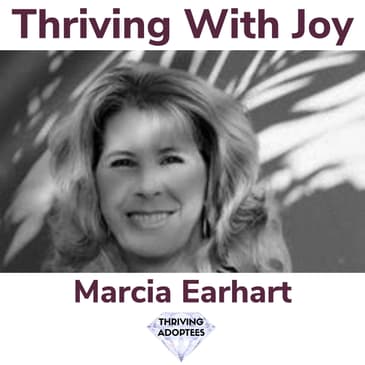
Grief touches us all. Sometimes we resist it, but what we resist persists. So what do we do? Marcia has experienced a lifetime of grief including the unbelievable loss of 2 sons. Listen in as she shares her take on embracing grief, thriving with joy and how her faith empowers her. Poignant and powerful. You're going to love this.
Here's a bit about Marcia:
Marcia has been married to her best friend, Scott, for 35 years, and together they raised five incredible children—four sons and one daughter. Their family is a beautiful reflection of love and diversity, having adopted three biracial children: a baby and a sibling group, while also welcoming two biological “bookends.” Marcia considers her daughter and youngest son among her closest friends, cherishing the unique bond they share. She treasures the privilege of investing her time and love into her family, friends, and the lives of others
A lifelong admirer of God’s artistry, Marcia finds joy in capturing His beauty through photography, from breathtaking sunsets to the intricate details of His creation. The beach holds a sacred place in her heart—a magical space where healing flows and her connection to the Trinity deepens. In those moments by the ocean, she experiences an intimacy with the Father that uplifts her spirit and renews her strength. The rhythmic waves, the vastness of the sea, and the gentle whispers of the wind create a sacred sanctuary where she is filled with the Lord’s peace, love, and purpose.
Professionally, Marcia is a trained educator and is a certified Life, Grief, Trauma, Brain, and Mental Health counselor/coach. She is also a Mediator and a HeartSync Minister. With these tools, she walks alongside individuals facing life’s most painful and complex moments. Whether speaking or writing, she creates compassionate spaces where those who are grieving can find hope and healing. Her own life has been shaped by profound loss, yet she continues to testify to God’s faithfulness and redeeming love.
Marcia is the founder of The Sterling Rose Sanctuary, a 501(c)(3) nonprofit dedicated to helping others find freedom from grief and trauma. Through her ministry, she equips people to breathe again, move again, and live again—empowering them to embrace the life God has designed for them with purpose, healing, and hope.
Check her out here:
https://www.facebook.com/TSRS21/
https://www.instagram.com/thesterlingrosesanctuary/?hl=en
https://www.thesterlingrosesanctuary.us/
Guests and the host are not (unless mentioned) licensed pscyho-therapists and speak from their own opinion only. Seek qualified advice if you need help.
Want to learn more about thriving for you, your kids, your families or your colleagues? Pick a time to talk here
[00:00:02] Hello everybody, welcome to another episode of Thriving Adoptees podcast. Today I'm delighted to be joined by Marcia, Marcia Earhart. Looking forward to our conversation today Marcia. I am too. I'm excited about it Simon. Yeah, fantastic. Why? What's the excitement? I love it.
[00:00:20] You! I enjoyed meeting you and I just, yes, I really valued our time together before when we met and I just think there's a lot that we can dialogue and unpack together. Yeah, yeah. So let's do that then. Let's unpack thriving. What does thriving mean to you Marcia?
[00:00:41] Oh, living in the fullness of everything we were created to be. Not leaving anything out. And doing it with excitement and with joy. Yeah. That's pretty big. Oh, but that's thriving to me. Yeah. It is big. It is big.
[00:01:02] Yeah. Surviving is so the opposite. I mean, and so when I think of thriving, I just think of overcoming, of warring forward and just having exuberance of life. Yeah. So where does that come from for you? Where does your exuberance come from?
[00:01:20] Mine comes from my relationship with the Lord Jesus. I have a very strong faith and I just, oh my goodness. I mean, the things that I have been able to do in my own life, not enough my own strength, but because of him.
[00:01:35] And so I value thriving. I understand it from where having, you know, situations that you could just survive, but I'm not one that am willing to accept just surviving based on my faith. I know I know I get to thrive. I know I get to thrive. I know I get to live in the fullness. Yeah. I don't want to leave anything out. No.
[00:01:59] When I go, I want the Lord to go, you used it all, you know, and you did it well. Yeah. I was chatting to somebody a couple of weeks ago and asked them how they were and they said, terrific. You know, and it's pretty rare that people say that sort of stuff. Maybe, maybe in my world, maybe not in everybody's world. I don't know. Here in the north of England, a lot of people are not bad, not bad.
[00:02:29] And I'm like, I'm thinking inside, is that the best? And so is that the best you can manage today? And that's, that's tricky. Like, you know. Well, that's, it's interesting because you said, is that the best? We raised our kid, there's good, better, best. And we actually gave them examples of what it is to be good, what it is to be better, what it is to be best.
[00:02:52] So if, you know, if I came up to you and let's say as a child and I go, Hey, Hey, Mr. Simon. Okay. That's good. Hey, Mr. Simon. How's your day? That's better. Hey, Mr. Simon. How is your day going? It is so good to see you. I'm excited to have this time with you. That's the best. Yeah.
[00:03:16] Because you've really focused on that person, not on you. And I think our culture has lost a sense of best. I think there's a complacency. There's a comfortableness. It's, it's just okay to be good. I don't want to just be in good. I want to be in best.
[00:03:38] But these guys are way behind that. They're not bad. They're not bad. And I will often make a joke about this because it's, it's my, this is the, what the response I get from guys at the swimming pool. Right. So I go swimming most lunch times and they will say not bad. And I will say something like, it's catching, isn't it? And they go, what? What? I said this, not, not baditis. It's catching.
[00:04:08] So I'm, instead of telling them all, is that the best you can do or anything. I was, I'm drawing their attention because I think it can be a cultural thing, can't it? It can be a cultural thing where, well, the, the, the culture can be good, better, best, or it can be not bad.
[00:04:34] It's to do with a particular, a particular space, a particular culture. And you were, you've tried to, or you, you create a culture of good, better, best. And the guys at the swimming pool have got a culture of not bad. Yeah. But I mean, I think, again, I think that is reflective of where we are culturally.
[00:04:57] I mean, we have to, I think we, we first, we know that we were created for best, not just good. I feel like I was created for best. So I want to be best. And that's a, that's every day, you know, living in that space and expecting, I live, expect it, Simon.
[00:05:22] And, and then I have my part that I need to do. I think, again, we're in a culture where most people don't want to do things that, and especially hard things. Because if we're really honest, if I'm not thriving, I may need to look at why I'm not. Right? Yeah. And then we're going to blame something, are we? Oh, we could. Because unless we're really honest and introspectively, we're willing to ask ourselves the hard question.
[00:05:52] Why am I just at this point? And what is it within me that's not allowing me to go into that next place of expectance and living above and beyond? Just, it's not bad. Yeah. I'm one of, one of my favorite mentors. I haven't seen him for a while, actually.
[00:06:22] A guy called Richard. He runs the Ministry of Inspiration. That's pretty good. That's a pretty good gig, right? Ministry of Inspiration. And you ask him how, you know, how you do it. He says, he says, I'm amazing. And then he says, but I'm having an SH1T day.
[00:06:40] Right? So he's distinguishing, he's discriminating between who he is and what's going on in his world. So he's kind of, you use the word soaring, you know, he's soaring despite the culture. Amen. Or despite the sort of day that he's having. Yes. I don't want someone to keep me from soaring. I'm not going to let you keep me from soaring. No. No. No.
[00:07:09] No. No. And yet there's been some dips along your way, right? Many dips. Absolutely. We've, we've dipped into the valley many times. We've walked through the shadow of death multiple times in our life. Yes, sir. We've had, you know, I've had, I would say grief is a friend to me. Grief is a friend to me. I had 17 losses by the time I was 18. And then in the last 11 years, we've lost two of our oldest children, tragically.
[00:07:41] So how, how did grief become a friend to you? Well, it started when I was three and it just kind of continued throughout my elementary, middle school and high school years. And my parents really taught me how to grieve well. They set an example of how to grieve.
[00:08:03] And so I, I learned how to embrace it and how to incorporate it in my life. And I think that's why people struggle so much with grief because grief evokes a lot of pain and we don't want to feel pain.
[00:08:26] We don't want to feel, uh, that rawness, that, that excruciating ripping off of the skin. And it can be, and it is.
[00:08:40] And, but I believe that if we can become friends with it, understanding that in that place is where I actually can come to terms, learn how to express my pain, uh, and be healed in my pain. Because we're going to grieve, they're going to be multitude.
[00:09:09] And I'm not just talking about a loss of a person. I'm talking about there's losses, all losses produce grief, loss of job, loss of dreams, loss of friends, loss of what we really thought we'd be at a certain age here, there, whatever, um, loss of even our health. So it produces grief.
[00:09:33] So if we understand that grief is not our enemy, grief is something that we can incorporate into our life positively, healthily, then I believe we can manage it in the sense where it actually evokes the healing. And we can continue to live in the vibrance of who we were created to.
[00:10:03] So I want to kind of touch on, I believe there's a spirit of grief that one can become consumed in that defines them, or one can grieve with hope. I grieve with hope, Simon. And people who have a spirit of grief, it defines them and they don't have healing in that grief space.
[00:10:24] And you, they can be triggered very quickly back to that scenario, back to that pain, that loss that they've experienced. And you may feel it just happened to them yesterday when in essence, it could have been 10, 15, 20 years ago.
[00:10:45] But for me and my faith, I believe that Christ came so that he could bear that raw, vulnerable, visceral pain that rips our heart open, that feels like we've been shredded into pieces. And for me, I come into his presence and give it to him.
[00:11:15] And in that place, and I feel like what happens with grief is if we really are honest and we allow ourselves to make friends with this in the way of incorporating whatever that is into our life, then grief and sorrow become intermingled.
[00:11:41] And there's, there's value to both where you're never going to have, I believe, a life experience after certain situations where there's not going to be a commingling of that. And it's okay. So that I may feel some sense of sorrow, but I can also experience abundant joy. And so, yes, I can give myself permission. Yeah, I'm feeling this way.
[00:12:09] And I'm going to pause right now and I'm going to give myself permission to go on and express and experience this. But I'm also going to allow myself the joy of this moment. And I'll give an example because I think it's important for an audience to understand concretely what we're talking about. So my son passed. And so the first wedding we went to was one of my son's good friends.
[00:12:37] And there was sorrow at the fact, one, he wasn't present. He would have been there. He wasn't there. He wouldn't be having his own wedding. He wouldn't be having those things. And so acknowledging that's not going to be a reality.
[00:12:58] But I'm here to celebrate the marriage of dear friends, their son and his wife-to-be, and to celebrate all that is for them. So there's that duality. And it was a joyful time. It was a celebratory time. But it also was one that was marked with sorrow. Does that make sense? Yeah.
[00:13:28] I want to take you back a bit to, to me, it seems like it's embracing grief rather than trying to push it away, which seems like it's a Buddhist thing. To me, that I've heard of, you know, that did the Buddha say that all something about suffering or suffering is resistance. Something like that.
[00:13:58] And what, what, what's a Christian take on that? Well, I think, I think for a Christian grief is, we grieve with hope. We don't, we don't, I think that's why it's not to be resisted. If we, you know, there's a book called Lamentations in the Old Testament. Lamenting is that we are, we are longing for restoration of what was.
[00:14:24] And there's a lamenting that's very different than grieving because we want things to be restored. We want things in its fullness. But to grieve is to release, to acknowledge there's pain, but then to release that and to come to terms that I have hope. I have hope.
[00:14:47] My, even though, you know, in those moments, there are aspects and, and we may die. And I do mean we personally may die of who we are in that moment. How we are, we won't return to that person again. But here's the beauty. That's okay. That's part, I think, of the embracing is that's okay.
[00:15:11] But just like the caterpillar that goes in the cocoon, I can emerge into a newness of being a new version of me. It goes back to good, better, best. So I'm going to be a different version, a new version. And in that moment, that will become my new, better, best version. Yeah. What, what, what can you bring?
[00:15:39] What does it mean to you in terms of, you know, you're talking about, so far we've been talking about, and we haven't said this, we haven't asked you about this, I haven't said this to the listeners, right? So, but you've been talking about your adoptive son, the death of your adoptive son, right? One was not adopted and one was. I lost one in 2014 and I lost one in 2019. Yes, I had an adoptive son. And we have three adopted children out of five of our children. Yeah. Yeah.
[00:16:09] How does, how does grief, what does grief mean for you from a, or from a perspective of an adoptee's loss of his or her birth mom? Oh, it's so real. I mean, we, we, we talked through those losses, especially for our older sons. They were six and four when they came in.
[00:16:37] Actually, their mother had kept them and she walked in and put them into an adoption agency. So they knew her fully. And so the sense of rejection, the sense of abandonment, the grief, and I sat with them and we talked. I let them cry. They were angry. I, you know, we, we walked through those emotions with them.
[00:17:06] There's, I think when we feel the sense of rejection of someone, especially as a child, they don't have the ability to understand that it's really not anything you did. It's not because of who you are.
[00:17:27] And so we have to, I think for that situation, we have to really come in and talk in, in terms of what is true. There were situations your mom obviously felt she could not raise you any longer. So what you knew all of a sudden was abandoned.
[00:17:55] And to acknowledge and for them to have words and for us, and we didn't hide it. We talked about this. This was an ongoing, it wasn't like we talked about it once and it was shoved and piled away. This is an ongoing processing as they're growing up. As, as life is happening. And as, and you know, and for us, Simon, we talked about the beauty of being adopted into God's family that I'm adopted.
[00:18:25] I'm adopted into because I accepted Jesus that I'm adopted because the blood of Jesus. So I explained what that adoption looks like as a believer and the beauty and that our son, they were chosen. They were chosen to be adopted.
[00:18:48] And so, you know, we, we did core correlations and we would use scripture and we would use analogies and, you know, we, they ask questions and, and my oldest really had a harder time processing this because he really was the one responsible for his siblings.
[00:19:09] So the sense of abandonment and rejection took a different side for him because she didn't give up the baby sister. And so the question is why not her, but me? And isn't that the question so many of us ask? Why that? Why not them? Why me? Why? Why?
[00:19:34] And so there was never a time where it wasn't okay to have these conversations and to process because healing is essential in all of us. And we wanted healing in those very wounded places where he didn't know where he belonged anymore.
[00:20:02] And even though with his biological mother, he did not feel safe. I mean, he shared that. He was exposed to a lot of things. That's what he knew. It's what he knew. So we go based on, even though it's what we know, it is important to be safe.
[00:20:25] It's important to be an environment where you're loved, where you can be loved on, where you can be affirmed and validated in who you are. And I have to share at 26. It would have been our last Christmas with him before he got murdered. He was with our family.
[00:20:52] And it was a very tender, very sweet time together because Mark ran a lot in his life in the sense of he didn't want to face a lot of the pain, even though he was feeling it.
[00:21:13] And so he put himself in some very dangerous situations because when we run, we're trying to find a place of belonging and we don't always run to the right places. And that's what he was doing. And so there was more pain that came in his life. But he sat with us this particular Christmas Eve. And he said, and he was getting ready to have his own son.
[00:21:45] They were expecting their first child. And he said, I want to thank you for unconditionally loving me. I don't know how you could have done that. Because I really made life very hurtful and painful for y'all. And yet you never gave up. And there were a lot of things that he shared throughout his journey. We listened, a lot of tears.
[00:22:16] And of course, you know, he wanted to ask for forgiveness. And we said, honey, you've already been forgiven. We know the pain. And we prayed for you to have healing. Because you've experienced things that most adults would not understand.
[00:22:47] And that you've allowed yourself to come to a place in your journey where you've introspectively looked in, looked at your choices, looked at where it led you. You're taking responsibility. And you're choosing to walk into a place where healing is allowed now. And to embrace that you are fully loved. You always were loved.
[00:23:17] You've always been valued. But there had been a cathartic shift for him, Simon. And we did talk. And we did. We were always. Now, I want to make it clear. We were not enablers. We were not. And there's a difference in being present with someone versus enabling them. So we were present. But we did not enable wrong decisions, poor behaviors.
[00:23:45] We didn't bail anybody out of poor decisions. There are consequences when we choose certain things. And he really valued that. I mean, that's one of the things he talked about. That, you know, his appreciation. Because if we had bailed him out, he would not have come to the place at that crossroads for himself. And we have to let people do their journey. We can be supportive.
[00:24:15] It doesn't mean we give a license to it. But we can be supportive and love them well. So I want to take you back to the start of that segment. I got a feeling that he was pushing away. Always. Rather than embracing. Embracing. Always. He wasn't embracing grief, yeah. No, he did not.
[00:24:44] He was angry that he was forsaken by his mom. Rightfully so. He was six. He was actually five. He turned six in the process after she had given him up. He wanted the love but would not allow himself to receive our love.
[00:25:11] Because there was an internal argument going on. Why would you, these strange people, honestly, I mean this would be, we've talked about this, love me when my own biological mother, because he felt she didn't love him at this point. Why would you love me? Why would you take me in? Why would you? What makes this different? Because she turned on me, how do I know you're not going to do that too?
[00:25:40] They're real questions. They're real feelings. And they're valid. And all we can say is, we love you. You're our son. You're always going to be our son. No matter what you do, it's not going to change how we love you. However, you know, there's a standard and we want to encourage you. We want you to be healed. But yes, he pushed. And he was angry.
[00:26:08] And he caused dissension, great dissension within our home. Because he wanted division. And he created division as much as he could. Now, he was not successful like in, in with separating my husband and I. But he did everything he could to cause that division. And he even said, there was a time in my life I really wanted to hurt everyone. And I wanted everyone hurting.
[00:26:34] Well, when you're hurting, you want other people to feel the hurt that you're feeling. And that's what he wanted. And a lot of his anger came out on me as his mom. Because where, who was he really angry with? His biological mother. So he deflected all that hatred and anger. And to me, because my husband's like, I don't, what in the world? And I said, because his own biological mother has failed him.
[00:27:04] And he sees me as the same woman that's going to fail him over and over and over again. So he's deflecting all that to me. I get it. Yeah. I mean, he was trying to get, he was trying to, he was testing his barriers. What, what wouldn't you accept? I mean, that's what I'm getting. Correct. Absolutely. Absolutely.
[00:27:29] And, and, and that lasted, that lasted two decades, right? Until he had the. We adopted them. He was, he just turned six. And yeah, yeah, yeah. So it, it lasted, you know, really until his twenties. Things started changing in his twenties for him, probably around 2021. We started seeing changes around that time.
[00:27:55] And, and, and when my son passed in 2014, my first son, that was a real painful, painful place for Mark. Mark. Because Mark had really pushed his siblings away. And Sterling, my oldest was one who loved well.
[00:28:23] And they had finally come to a place because Sterling confronted him and said, you've got to take ownership. You got to take ownership. If you want a relationship, you're going to have to own your stuff. and uh you know we were told about their heated discussion and mark did take ownership and he and sterling had really become close and so when sterling passed mark's regret was i wasted all
[00:28:52] those years i wasted all those years mom and i said whoa whoa wait a minute honey we don't look him as wasted you were hurting you and sterling were stored so let's you you know at this point you don't look back and go they were wasted redemption happens redemption had happened had it not and he said yes mom it did i said to receive the redemption and the restoration that
[00:29:14] you and sterling had he died when you were in a great place not in the other place which i could see where that would have really been an ongoing nightmare for him so again it's going from taking that perspective and looking at it from the lens of where we are not where we used to be
[00:29:39] because where mark was at 20 21 22 and through 27 that's not who he was at 6 7 8 9 10 12 15 18 so you know putting it all in perspective and that's what we tried to help him do i'm getting the feeling that he didn't that mark didn't lament sterling he didn't what oh he didn't
[00:30:07] lament he did he did he did he did he did um actually uh sterling's passing was a catalyst for great change for mark's life a major capitalist for mark's life mark was a very smart young man but like i said he had made some very poor choices and one of those poor choices is mark started being it was a drug dealer so sterling had said man you're smart uh you're wasting your
[00:30:36] talents and your gifts you're doing something stupid you're you know going to get caught you need to stop and after sterling passed mark said mom you know why would god take sterling and not me and i said well first of all let's rephrase that um god didn't take um he did receive sterling unto himself but this was a you know god did not you know cause that that was allowed and i said and sweetie you
[00:31:04] have god doesn't look at his children and go one has more value than the other you're as valuable as sterling honey so you have value he goes but i'm dealing drugs i'm doing this why would you know god allow for me and i said but mark if you died where would you be right now and he said i'd be in hell based on my choices based on how i've lived and i said well what if this is the catalyst for change
[00:31:32] for your life and you come to know the lord and you have a personal relationship well simon that's exactly what happened two years then within two years down the road he really did transform into a relationship but he was angry with god he was angry and he had to work through it and he would say i'm working through this anger with god and i said and good because he can handle it he's big enough and powerful enough like let him have it it's all good let him have it and he said i am mom i am a
[00:32:02] good keep on doing that honey because he's hearing you he's with you he's fighting for you and over you just know that so we had these very real conversations that i think a lot of families would shy away from to be honest with you simon we don't we're not we're not shires we don't we don't shy away we we really
[00:32:24] enter the deep the hard places so did your did your early training make you the perfect mom for mark oh i don't think anybody's perfect for anybody perfect mom for i i i think god did
[00:32:52] equip me to be the mom mark needed yes and but even greater mark was the son that i needed to break me open from a spirit of um controlling spirit and
[00:33:21] thinking that because we do a b c d we get e f g h and really put me on my knees before the lord in great humility to seek my lord and to seek him to know how to love and parent mark in those broken open places where the wounds were
[00:33:45] festering and the poison was so heavy and i'll be very honest i had a conversation with the lord there was a period that i just did not like mark because he was making life very painful for my other
[00:34:09] children very painful for the whole household and he was just he was mean he was doing everything to destroy their property our children each of our children if they had stuff he would do things that were he lied he would steal it was just he would do these things and then he would deny it and so i just went before the lord and said lord i have never felt this way about a person and i just oh i felt so
[00:34:35] wretched and um just was crying and said i don't like him and the lord said i never asked you to like anybody i called you to love them and i mean i was flat on my face at the time i'm like well could you give me one thing to like about him because right now he's not likable and the lord
[00:35:00] said you know what sometimes that's how you are to me so it just it's putting it right there i'm like lord thank you for for showing me my own depth of where i fall short and that it's only through you that i
[00:35:20] don't and it was a game changer for me in that moment and um and i i would tell mark i praise the lord that he blessed me for you to be my son because you have raised me into a place with the relationship with the lord i don't think i would have ever had and i love you for that and i love you for
[00:35:51] allowing me to speak into these places that are so deeply wounded in your life so yeah i mean that's just keeping it real that's the reality everything's not this beautiful it's there's real life going on in in behind the scenes of trauma and uh you know mark
[00:36:20] ended up you know really being a very supportive person to adopting really saw the great sense of value in adopting um and just really shared some things that were so precious uh about his own perspective and how he really saw that god had provided our family as his family and he was grieved that he had not accepted it
[00:36:50] sooner but again we came back but you've accepted it now and even though you didn't accept it honey you were accepted see i think there's a difference even though we don't accept things sometimes and
[00:37:06] people have the ability to reject us but mark was never rejected by us he was loved so you but you both learn to put it in very simple language you both learn from one another we did we did and i i mean i
[00:37:32] believe to this day i still even though you know he's not with me i still learn things because uh broke him uh because you know there's a deposit that he's made within my life i can think through the lens of mark which is really cool i know i think we can you know when we get to have that kind of intimacy with someone
[00:37:52] we kind of can think through their lens and i love that um i treasure it deeply i do how well what do you mean that that kind of impact that you know when someone passes that doesn't mean the what has impacted our lives passes that still stays with us simon
[00:38:20] and so there's situations you know people and uh that i'll be around and there are certain things that conversations will happen and i'll think of mark i'll think contextually of certain conversations certain things and it kind of i think from that lens if that makes sense i'll think from that lens
[00:38:40] because it's just what has been deposited in me it's part of who i am now his perspective you can take you can take his perspective yes absolutely yes so you've got more flexibility absolutely yes well i had to become more flexible or i probably and i'm not saying this uh flippantly
[00:39:05] uh you know when the lord spoke over me there was necessary change that needed to happen with me or i may have had to be medicated and maybe you know because it wasn't working that way so i needed to be realistic with who i was how i was um because it was a lot of stress uh that they brought in and
[00:39:33] you know if you've you know not all adoptions are the same but there are some aspects aspects and the aspect of rejection and abandonment is a very real component of many who are adopted and it can bleed out into the family it bleeds in them but it also bleeds in and around the others
[00:39:56] within the family and so it was you know five children you know varying uh aspects of life different personalities managing all that but mark and john really were full-time needing hands-on emotions involved uh because living in our house was like living in a therapeutic center
[00:40:25] i was trained i mean i had to learn more things because they were abused they were sexually abused there were all sorts of things that came with that so i had to learn other aspects i had to learn how to you know um equip them with tools while still being their mother so you know there were a lot of hats and i actually went in the lord's presence said lord this is a lot of hats i just want to be as mom
[00:40:54] i just want to be as mom because there was a point in time where i felt like i was all this other and really wasn't able just to be as mom i know that may sound odd but i mean it was a full-time job really being a counselor therapist uh coach to him and to john to help them manage life because they
[00:41:16] really could not manage life they were so traumatized and and had so much grief yeah i've been telling you a few people recently that i've been telling a few adopted moms recently right this is about you right so you don't need to go into your son's stuff or your daughter's stuff it's their story
[00:41:45] etc etc um so it's really interesting that after saying that for a couple last couple of conversations i've had with adopted moms we're going right in right to but um well i think it's not mark's not here to to to no and i think it's important for people to understand trauma i think it's important for them
[00:42:08] to understand that it can be years if because for a child and i want to make this clear because of what i do professionally for a child who has been traumatized contextually they don't have context context to be able to work through a lot of that until they get to a point where they have
[00:42:31] definition other experiences where they can actually unpack those things and it could be two decades it can be three decades simon it can be four it may never be because one has to choose to walk through that journey and in order to have healing if i want healing i have to make the
[00:43:00] decision i want to heal be healed and then i have to do the things that bring healing yeah and that's what i do i bring healing i help people breathe again move again live again in their created design that's what my job entails to have a choice though they have to see a different option
[00:43:21] yep this this landed for me um on a i was in florida at an adoption conference and i was chatting to a an adopted dad that works runs uh runs a membership organization and for foster and adopted parents
[00:43:45] and we were talking about healing and i was saying you know people say that time is the greatest healer and and i think well no it's not the time it's not the time if there's no change there's no healing that's right and so for me it it would be time isn't the greatest healer when i've thought about this
[00:44:11] deeply i've i would say that insights are the greatest healer and i'm more and a more profound insight so using a religious word an epiphany you know an epiphany is far deeper for me than an insight is so and and i said to the guy arnie he said did i tell him what i thought i don't think i did i think
[00:44:40] i asked him what he thought first he said i think it's um i think it's a decision i think it's a decision and so i thought about that and then when i saw him the following day i thought yeah you know i think you're right arnie it's another way of looking at it healing is a decision and for for there to be a decision you need a choice
[00:45:10] and and most of well not most it takes a while for us to have that choice the choice if there is if there's no choice if we can't if we're not at a junction then we just if we don't see a junction when we're just going to keep going down the road that we've been going down um and until we're faced with a junction and we can have a like we can go left or
[00:45:39] right uh and um that's so this is kind of fresh for me and the big one was that arnie said it was a decision and before the decision there's got to be a choice and most of the time we can't see the
[00:46:02] choice the child can't see the choice and and many adults too can't see right and you can't you can't make that happen either you can't create that for someone it's their journey and it has to be in their timing i mean so you know the desire and again is for healing to walk in the healing
[00:46:33] and interestingly enough just to kind of give you some context when our first son passed mark wanted me to actually counsel and coach him through his grieving and i said no i said you need to go to someone else and he said but mom i like how you do things and i said honey i'm grieving too and here's the reality i don't want to miss things i don't want to overlook things because of the
[00:46:59] familiarity of our relationship there are things i can speak into i will be glad to do that but you need to see someone else and i think that you know it's important for each of us on our journey to realize that we do have to choose and we have to do the work and again we go back kind of to the beginning of the conversation i don't think most people want to do the work
[00:47:30] to live in thriving because it's kind of like the old pair of jeans simon that feel really good they're worn you've had them they may have a few holes here and there they're comfortable you love them you don't want to give them up for a new pair that may be you know more rigid you got to you know break them in you've got to you know and and they can become just as comfortable
[00:47:57] but you got to give it some time and i just as in the society we're in everybody's used to instant they want it quick they want it easy they don't want it with any pain and the reality is in order for us to be healed we have to acknowledge the pain that's going on in our head and our heart
[00:48:21] and we need to give it a voice and we need to release it and we need to embrace and receive the new that all that all sounds beautiful um and it sounds eminently logical and and to me
[00:48:44] there is a slight a mismatch so hopefully um if i come if i get around to asking the question you can help me see what the mismatch was right when when you were you know on your knees i think is the word that you used right you that that wasn't that that was a there was no choice you have no you had
[00:49:09] no choice in that moment well in my opinion the choice would have been to be a freak of a mom that is like i mean literally a control freak going i mean rampantly crazy because i'm you know going out of control or to humble myself and get before the lord and let the lord do what needed to be done and speak to me and honestly it goes i want to be the best i can be simon and i realize it's going to
[00:49:35] take work but i'm willing to do the work and i just you know the father was so gracious to point out to me my error and i had to deal with me first i i mean i feel we all have to deal with ourselves first you know i can't come to you and have you start doing something if i'm not willing to take on
[00:49:53] my stuff so my only choice was to humble myself and to cry out to the lord and to let him speak to me and i praise god for that moment because it was a game changer because he loves my children so much more than me i mean they were gifts from him to me and i wanted to be a really good steward
[00:50:23] of these precious gifts that he gave me so can i take another go at that um take another go so i i think that was a game changer i i don't think you change the game no i think the lord changed the game because yeah okay all right
[00:50:53] yeah yeah okay not me no no the lord changed the game and so many of us are trying to white knuckle change yes we're trying to make change happen yes and and we've got this big separate self ego
[00:51:21] pride whatever we think that that that can change that can change the game but it it does and it doesn't no and it doesn't that's why no and that's why i said i mean i i had to humble myself and and honestly i knew i mean if we're real like i was very honest with myself i didn't like who i was
[00:51:47] that's i i knew that wasn't the way it needed to be okay but i really did not realize the aspect of control that had such a hold on me but i was willing to let it go i wanted i and i did i let it go and i i just never ever after that had a desire to control because i wanted to be the mom that god called me to be
[00:52:18] and the daughter that he called me to be the wife he called i wanted to be that version and not fight for my own version of what i thought i needed to be yeah so he he changed the game not me but i i did i i had a choice of whether i responded in obedience or disobedience
[00:52:42] and i responded in obedience and so it required something of me simon and that i chose to do yeah okay yeah it did require thank you i was going all or nothing um and you've helped me see
[00:52:59] that broader yeah yeah okay we sometimes talk on the podcast about um hanging out at the bus stop for insights right so we we choose where we hang out um but we we don't we don't we don't we can't decide
[00:53:24] the timetable of the bus we can't make the bus come around the corner and we and we and in this in this instance that the there is no timetable and what you're saying there's also the choice of whether we get on the bus or not absolutely every day every day there's a bus and we get to choose and you know in my book i actually have
[00:53:54] you know you choose the tree of life or the tree of death every day you're choosing it all day long i want to choose the tree of life that's my bus i want to be on every day all day i do not want to choose the tree of death death produces death life produces life so what's a negative thought death i don't want to have a conversation with negativity because it
[00:54:20] produces death i want to have a conversation that produces life that doesn't mean we can't talk realistically about situations and issues but we need to have the resolution to that not just sitting and talking about it yeah would you like to choose the name of this episode of the thriving adoptees podcast i would not even know where let's see uh oh thriving with joy instead of striving
[00:54:49] uh in uh not bad okay thriving with joy it is thanks marcia yes thank you appreciate it lots of love listeners we'll speak to you again very soon take care okay god bless you simon you you you you you you you