Unlimited potential. A tantalising idea isn't it? One that seems a long way from our experience. So what brings it closer? What takes it further away. Listen in as we explore realising that unlimited potential, getting out of our own way and more.
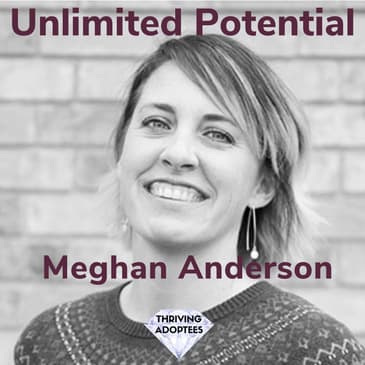
Meghan Anderson has been the director of Connecting Hearts (now Adoption Life), since 2018 and has worked in adoptions in various roles for over 12 years. She has a Bachelor of Social Work degree from Brigham Young University and a Master of Social Work degree from Columbia University and thoroughly enjoyed her experiences at both schools. Meghan has loved working in social work in different settings, including mental health counseling, school social work and social work teaching over the course of her career but has been particularly drawn to working in adoption. She loves the connections she is able to make with all the people involved in adoption and appreciates the opportunity and responsibility of being with people in some of their most vulnerable experiences. She is motivated to take great care with all members of the adoption triad and create a more ethical and compassionate adoption experience for all. Meghan enjoys spending time with her family, including her three kids and husband and chasing them to every kind of sporting event imaginable.
https://adoptionlifeagency.org/
https://www.instagram.com/adoptionlifeagencies/
https://www.linkedin.com/in/meghanwoolleyanderson/
Guests and the host are not (unless mentioned) licensed pscyho-therapists and speak from their own opinion only. Seek qualified advice if you need help.
Want to learn more about thriving for you, your kids, your families or your colleagues? Pick a time to talk here
[00:00:02] Hello everybody, welcome to another episode of the Thriving Adoptees podcast. Today I'm delighted to be joined by Meghan, Meghan Anderson from Adopted Life. Looking forward to our conversation. Perfect, yeah I'm excited to be here. Thanks for having me. You're very welcome. So, thriving. What does thriving mean to you, Meghan?
[00:00:23] Yeah, I've been thinking about that the last couple weeks. I think really it is giving people the opportunity to really meet their potential, you know, and really experience the things that they need to and have the confidence to really just like go forward and do great things with their life, whatever that looks like, you know.
[00:00:47] But I just think really everybody has such truly unlimited potential and we want to give people the tools to really meet that. And I keep wanting to say the word thrive, but that doesn't work when that's what we're defining. Yeah. No. So yeah, unlimited potential. It's such a big thing, right?
[00:01:17] Unlimited. What gets in the way of us seeing that? Because don't we all yearn for that, right? Yeah, I think sometimes, I think it's sometimes the framework we build for ourselves or we allow other people to build for us, you know, that maybe sells ourselves short. I think that's a huge barrier that a lot of us face and I think that's very true in adoption, you know, just sometimes the framework that gets built.
[00:01:46] And I think too, you know, we all have an individual path and sometimes those paths are bumpy and they have some experiences that, you know, maybe not everybody has. And so I think when I think about thriving, it's like, how do we help everybody navigate that path?
[00:02:05] You know, whatever it looks like for them. And so, yeah, I think, you know, there's a lot of things that can get in the way, but also a lot of things we can do to help navigate that for everybody. Yeah. Especially in the adoption world. Yeah. Yeah. When you say framework, what do you mean, Megan? Yeah, that's a total therapy term, you know, and I use all the time in my therapy practice.
[00:02:32] But I think just sort of the beliefs we allow ourselves to hold on to, the thought patterns that we gravitate toward, or maybe another really big therapy word for that would be the schema that we assign ourselves or we allow ourselves to be assigned to. It just sort of, I mean, one way I think about it is a lens, you know, that we're looking through. And some of those lenses are really distorted and not helpful.
[00:02:59] And so, and then when we do some work and we can see them and we can acknowledge them, then we have some power to change them and to find some that are maybe a little bit more helpful and probably more truthful as well. Yeah. I can see the words on the whiteboard behind you. I know. Yeah. True helpful. So you've obviously been looking at that. Yeah.
[00:03:27] So is it, is another word for framework then paradigm, the way that we see the world? Is that kind of what you mean? Yeah, I think so. Yeah, I think that's definitely a good way to look at it as well. It's just like, it's just a system we build around ourselves and how we, in our world we create. Yeah. Yeah.
[00:03:49] So you're talking about, you mentioned that we, that we take on the framework, the framework that we get from other people, as well as what we create ourselves, our view of the world. Yeah, for sure. Yeah. I think, you know, for all of us, there's a lot of, you know, our parents very much help us build that framework from an early stage.
[00:04:14] Our experiences, you know, we know a lot of things from, you know, things like the ACEs study about, you know, how those adverse early childhood experiences impact us later on. And it's all ingredients that go into building this framework. And it can even be, you know, even on a more positive end, you know, there's a lot of really great research about kids who have healthy non-related adults in their lives, how that can be a really strong protective factor in their future.
[00:04:42] And that's a piece of their framework, you know, how they, how these healthy adults help them build a view of themselves. And then we carry that forward. And a lot of times, you know, through adolescence, we're, we're growing in a lot of really fun and exciting and sometimes challenging ways for our parents. And, and then we, you know, hopefully we, we land in some places that allows for continued growth and development of that.
[00:05:10] And sometimes we have to let go of some of the framework that we've carried on or we've built. Yeah. There's so many places I could dive in that. I'm going to go with the, I'm going to go with the lens one, right? So you talked about a distorted lens. What, what helps us see our distortions? Yeah.
[00:05:38] I think we usually don't see them until we start applying them in situations where it creates problems for us. You know, often those lenses are created out of a need and they're functional at some point in our lives. You know, that's certainly true with some of our trauma responses.
[00:06:01] And, you know, some of the things we carry forward, those things start from a place as they're protective and they are, they serve a function and they may be functional for a time. And then we often don't see them until we start applying them in areas where they're not so functional. They're not so protective. And they start, while they may be solving one problem, they're usually creating others for us.
[00:06:28] And that's really when I think most people start to notice like, okay, what is this lens? And sometimes that does take some professional help to kind of explore that. And sometimes not. But that's kind of what I see is like when the application no longer is working, that's when we become more aware of what those lenses are. Okay. Okay. So we were talking about Greece before we hit record.
[00:06:55] I remember reading a book on emotional intelligence. Most people wouldn't read that sort of a book on holiday. But, you know, I was sitting on a beach in Greece reading a book on emotional intelligence. And is emotional intelligence, well, it seems to me that emotional intelligence is one way that kind of helps us see our distortions.
[00:07:23] Or is it a way of seeing our distortions? Is it, how do those two things, how do you fit those two things? Because you're a therapist, so you're probably better at expressing it than me. So how do distortions and emotional intelligence, how do they kind of tie together? What's their relationship? Yeah. I mean, I'm thinking emotional intelligence is, one, it's a skill set. But two, it is a framework, I think, of sorts.
[00:07:51] But I think when you have emotional intelligence or when you're developing it or utilizing it, I guess, I think some of the most important aspects of that are an ability and a willingness to self-reflect. You know, and self-reflection is really critical to seeing our lenses. If we're not ever looking, you know, inward, we're certainly not going to notice what those are.
[00:08:16] And when we, I think, you know, people who tend to be higher on the, you know, whatever, the scale of emotional intelligence, they have a lot of self-reflection and a lot of critical thinking that they can acknowledge, you know, some faults or some weaknesses in themselves without it being threatening. And then people may be on the lower end of that spectrum at whatever point in their life, you know,
[00:08:43] they spend a lot of their energy protecting from those things because they perceive all that as potentially threatening. And so they're less likely to engage in that self-reflection where you see those things. You see, oh, gosh, I've been doing this and it's really not working. You know, it's really like maybe I'm, I have some power here to change this.
[00:09:04] A lot of times I think people who aren't, haven't really built their emotional intelligence muscle or whatever it is, you know, they perceive more of that as threatening. And so they try to protect themselves from it instead of stepping into it. That's a big difference. It seems to me it's one of those things that's kind of out of fashion now.
[00:09:28] It's kind of, I don't know, I read that book 20 years ago. I don't, I don't hear so much. I don't hear so much of it. And I don't, I don't hear a lot of it in the adoption space. Right. I don't hear, not many people mention that to me. You know, is that, am I just not hearing that? Or is it kind of passé?
[00:09:57] Is it, is it, is it, it's not part of the trauma conversation? Um, yeah, that's a good question. Cause I'm thinking, yeah, like the first conference I went to where I really, um, was exposed to this idea of like emotional intelligence and EQ, you know, like as opposed to IQ. It was probably 20 years ago. And, um, and I'm thinking like, oh, that was just barely, but yeah, it probably was 20 years ago.
[00:10:27] And, um, I don't, I don't know. I mean, I think, I think about it all the time, but I'm immersed in the world of therapy and adoption. And I just returned from, uh, um, the NCFA conference, which is a really big adoption conference in the United States. And, um, and a lot of that is geared at, you know, like looking at best practices, look questioning is what we're doing, working it, can we do better?
[00:10:51] And so I don't know if it's just that I'm kind of immersed in that world that I, I don't think it's passe. Although, you know, we have like a kind of a crazy culture situation, particularly in the United States right now, where there's a lot of divide and, um, and a lot of pushback against some of the, you know, like, um, some of that growth is like maybe being, you know, labeled as wokeness or whatever that can be good or bad, depending on what part of that divide you fall on.
[00:11:20] But, um, I, I, I do think in terms of adoption, I don't know if we're using the term emotional intelligence, but I do think we are trying to put a lot of intention into the way we're doing adoption and, um, and trying to be self-critical about, you know, it, does this actually work for all the parties, um, particularly the most vulnerable ones, or is it just convenient?
[00:11:50] convenient for, you know, on an administrative side, which has been an element of adoption for a long time. Yeah. Because it, it strikes me for, for all of us, usually with self-reflection and, uh, emotional intelligence. And from what I can remember is the, there's four quadrants, isn't there? The first one is, is us, us reflecting on us.
[00:12:12] And that when I'm, when I'm doing a training for adoptive parents, I tend to share what I've learned from other adoptive parents. And we all start with the, the, the, the cliche of putting our own, you know, oxygen mask on first. Right. So it's about our growth and, and we, we, we, we've got to get past that idea.
[00:12:42] You know, we have to shift the idea from fixing our kid to growing our, to, to growing our own capacity. Yeah. And growing our capacity starts with our growth and our growth starts with our ability to, to, to cope, our ability to understand, our ability to self-reflect. Which to me seems like emotional intelligence, right? Yeah. Yeah.
[00:13:10] So I'd be like, you know, if, if people say, well, what can I do on my own? I can't afford therapy or da, da, da, da, da, da, da, da, da, da, da, da, da, whatever that is. Well, listen to some podcasts on emotional intelligence. Yeah. Buy, buy an audio book on intelligence, you know, for, but for whatever that, for whatever that, that costs you or, or a book and immerse yourself in that. It would seem to me to be a, a no brainer of, of a step.
[00:13:39] And then people say, well, I haven't got time. Well, audio books you can do when you do something else. You know, stop making excuses and just kind of get on with it. You know, like, to what extent are you prioritizing? Well, I haven't got time. You know, well, okay. There's never enough time, right? But yeah. There's never enough time. You have to pick what, what goes in there for sure. I mean, kids are just like such a mirror to the parents and the adults in their life. Right.
[00:14:07] And so when, and there's a lot of really incredible work on co-regulation and how, you know, if you, you can help your children regulate when as adults, you're just regulated and you don't have good regulation skills. I mean, that's just, there's just like so much evidence and, and, uh, um, research around that.
[00:14:29] And so helping parents know that, yes, like often the most important thing you can do for your kids is work on yourself is, you know, grow that ability to, um, to self-reflect and to, um, accept and, and, and utilize your emotions for, you know, for like your own growth. And that is going to be reflected in your kids as well. Yeah.
[00:14:54] Uh, the other thing that pops into my head is because, you know, I, I was, I was looking at it from me as a, a leader of a small team. I had five or six staff, right? So it was looking to improve my own emotional intelligence in terms of my staff and terms from the clients and all that stuff that we're doing. And the other thing that pops into my head is like, I asked that question about how do we see, how do we see the distortion on our lenses?
[00:15:23] And that, that is a question in itself. Right. However, there are emotional intelligence questionnaires that you can do. Sure. Yeah. So that can, that can help you to, to get, that can be a tool to aid your own self, self-reflection by getting the reflections of how, how the, how the scores on the doors are right from your emotions.
[00:15:53] Yeah. Yeah. Yeah. There's some great inventories out there that are free and, and easy to use and some great resources in books and, um, reading them on the beach at, in green. Reese is a great way or listening to them as you're traveling there or wherever I'm listening to them while you're vacuuming, whatever it is. Like that's, you know, there's a lot of ability to learn about yourself and, uh, do some of those inventories.
[00:16:41] So, yeah. Yeah. Um, so yeah. So that self-awareness piece, it can, you said how, how, uh, you know, a third party view, the view of a therapist can help us do that. But then we can do this stuff on our, on our own with the trees. Yeah.
[00:16:58] And the other big, but I think the other thing, just before we move off the subject of emotional intelligence, have you seen the research out of, I think it was an organization in Canada saying that EQ is a far greater predictor of, um, success in life. Whatever that success means to, then IQ is actually more important. Yeah. Yeah.
[00:17:26] But the world's, the world of education doesn't really seem to have caught onto that. Right. Yeah. Yeah. And I, I don't know the exact statistics, but that's what I'm remembering from that conference I went to ages ago as well. And definitely something I see, and, you know, you mentioned education. It's just interesting because I've, my husband works in education and I have been a social worker in some educational settings before.
[00:17:50] And it's like, it's just interesting, the, the administrators and the teachers that really are the most impactful on their staff and their students are the ones they may not be, um, you know, have all the latest and greatest curriculum that they want to implement. But they're the ones that, um, understand people and understand themselves and are comfortable supporting people. And that to me is emotional intelligence and that EQ factor.
[00:18:16] And those are, they have great results, you know, in the field of education. So yeah, it's a, it's, there's definitely room to grow there. Have you heard of a TV program called University Challenge? Have you heard of that? No. Okay. So, um, it's, it's a quiz show with very, very, uh, with, with people with very high IQ, right? But sometimes not the EQ.
[00:18:46] So these people, you know, if I, it's a, it lasts a half an hour, right? And I don't know how many questions they ask in that half an hour. Let's say they ask 50, right? Or let's say they ask 80. I usually get one or two questions, right? Yeah. So these are, you know, I've done my school, done my university and stuff like that. Yeah.
[00:19:16] So I would get one out of 80, correct? So these, but these, these guys and, and girls are very, you know, they'll get run away, run away with the score. Like, you know, you, I don't know what they get, how many they get, right? So you might have a, you might get scoring, they get four, you get five points for each answer. So you might, you might have somebody gets 150 points and another, the other team gets
[00:19:45] 80, right? But these, so these, these people, it's a, it's a competition between two colleges, two universities, and there's three people in each college. So there's six, six contestants, contestants in and all. These people are incredibly bright, but would you want to sit next to them on a plane to Greece? Would they be great? Would they be great conversationalists? Right.
[00:20:15] Maybe, but yeah, there's a different skill set. Would they make a great boss? Would they make a great thing? Anyway, because that IQ is through the roof, but that IQ is kind of less developed, shall we, shall we say? Because they've gone through, they've, you know, he talks about schema, and we talked about schema and framework. So they have gone down their kind of IQ is all that matters. Right. That's the way that we've been, we're all raised. Right.
[00:20:44] There's no, there's, there's no exams for EQ in elementary schools in the U S or primary schools in the U S or primary schools in the UK or secondary or college, you know, it doesn't exist. Yeah. So everybody's barking up the wrong tree really. Right. Yeah. And I, I'm definitely an advocate for balancing, you know, like it, things work better in balance and, you know, facts matter, but, um, emotional intelligence does as well. And I apologize.
[00:21:13] I don't know if you can hear that dinging, but my son has texted me. Okay. I can't hear it. That's cool. Okay, good. So, uh, emotional intelligence, basically get, if, if, if this stuff sounds like it's important to your listeners, maybe have a skip the thriving adoptees podcast. Well, find, find one talking about emotional intelligence. Yeah.
[00:21:35] The, the, the other thing that you talked about in terms of our unlimited potential, you, you talked about our beliefs and that's not an area that's talked about, you know, people talk about self-limiting beliefs, don't they? Or limiting beliefs or those sorts of things, uh, false beliefs, all these things. That, that's not an area that we talk about a lot in, in adoption.
[00:22:05] Yeah. Either. Right. Right. I think, I think a lot of times they just are, they're kind of more automatic. They're a little bit more, you know, they're not always obvious, but, um, I, you know, I've been a fan of doing kind of a belief audit on yourself, you know, and, and really making some of those things that are a little bit intrinsic, a little more explicit and, and,
[00:22:30] and challenging some of those and, and particularly around adoption, you know, um, what, what is, what is your belief set that you're carrying forward into whatever part you play in the process or whatever, um, role you're taking in the process? You know, what are those beliefs really serving you or are they limiting you, um, or others? Or others.
[00:22:55] And I'm guessing with a, with a blank piece of paper, that that's probably a challenging, uh, task, um, I'm, I'm guessing that there are some tools there online that you can find in terms of inventories. Yes. I'm trying to think, honestly, I, I'm not going to be able to remember, um, where my favorite one is, but I'll try to find it and get it to you.
[00:23:21] Cause, um, there are a couple of really good tools and it can be a blank piece of paper, but yeah, sometimes that can be overwhelming, but just, you know, just essentially like identifying around a particular issue. What are my beliefs here? And really spending some energy on that. And then like some acknowledgement, like number one, is this even true or potentially untrue?
[00:23:44] And, um, is it serving me, you know, or do I need to let this go and find something that is going to serve myself, my family, my situation more fully. And it still has to be true. You know, like you can't shift to like a Pollyanna kind of viewpoint that everything's always wonderful and great and fine. Um, but just, you know, it always has to be true, but it also needs to be serving us and helpful. Yeah.
[00:24:14] The other tool that's popping into my head, um, and I don't know if you played around with chat GPT. Okay. Okay. Well, I've tried and I'm, I, I've got to, but I'm not great at it. Yeah. Okay. Well, if, if you're into that listeners, then, um, you could play around with it. Like, uh, so one of the prompts could be something like this.
[00:24:40] I, I'd, I'd like to see my, I'd like to explore any limiting beliefs that I have around my adoption or my adoptive kids or my life as an adoptee. Um, can you help me ask me some questions and, and it'll come up, it'll, I can pretty much guarantee it'll come up with, um, because I've, I've played around with quite a lot and continue to do something. It, it, it'll, it'll, it'll do it. Right. Yeah.
[00:25:09] You, you can, it's not going to be as good clearly as a, as a human, but in terms of instant. For sure. Yeah. Instant. Um, yeah. So how, how, how do beliefs and distortion fit together? Cause it, I'm getting an inkling that they, they might, right? Yeah, I think, I think they absolutely can.
[00:25:37] And I, you know, I actually just finished a really great book that was about, um, you know, how widespread we are cognitive distortions are and, um, and how the, you know, just the ramifications of that. And, um, and so, I mean, I think beliefs certainly can be distorted as well. And they, the thing about beliefs as opposed to just a thought, you know, beliefs carry a
[00:26:06] lot of weight and they really do build that framework. And so if they're built on a distortion or if they're distorted themselves, um, you know, you can see like potentially a lot of ramifications that could be negative for us. One of my favorite nuggets that I've been playing around with and asking people about over the last four months or so is based on something I saw from Gabor Marte.
[00:26:33] And he said, he did a, he did a course called the gift of trauma. Oh. Which is a very interesting position. The gift of trauma. Right. Um, rather than the curse of trauma. Right. Right. Uh, have you heard this phrase, psychological flexibility?
[00:27:00] I don't know if I've heard that exact phrase, but talking about flexibility in our, uh, in our thought processes and our, um, definitely talk about that frequently. Yeah. I was the description that I heard or the definition I was heard was our thinking about our thinking. Yeah. Yeah. This metacognition piece. Yeah.
[00:27:25] Um, so yeah, you know, how are we, how are we seeing, how are we seeing trauma? Are we seeing, are we seeing trauma as a curse? Are we seeing trauma as a, as a gift? Right. Um, interesting one. Like gift as in a lever towards. Growth. Growth and post-traumatic growth.
[00:27:53] Cause all we hear is PTSD. We hear virtually nothing on PTG post-traumatic growth. Right. So if, if, if trauma, if, if, if trauma was a curse, then there's no growth from it. But if trauma was a gift and it's growth. Yeah. Yeah. And it is a tricky one because you know that you really have to be, you know, it's not
[00:28:18] that we ever want to invalidate somebody's trauma and, or minimize, um, because there is trauma that like real and true trauma that, you know, many people experience and, and in adoption, there is trauma, you know? Um, but I think too. With some flexibility, there is opportunity there as well. And, um, I, you know, recently was in a placement where, um, we were just working with a family
[00:28:46] and, um, an expected mom that was making an adoption plan and, um, and supporting the parties and walking through like some of the really hard stuff and the dialectics involved, you know, like the anticipation and the excitement and the grief and the loss and like all the, you know, all the mixture. And, and part of what we were working on is just knowing like, Hey, this is a space. Yes.
[00:29:12] This is a hard space to be in just navigating all these different things for everybody. But if we don't really faithfully and intentionally walk through this space, then we are going to miss out on the opportunities for the growth and the good things that lie on the other side of it. You know, if we just gloss through this and don't, don't do the hard work in that space, we don't get to, you know, the good opportunities and the, and the potential on the other side of that.
[00:29:40] And I think it's related, you know, that, that growth piece of trauma, um, it does require a lot of work and a lot of intention and time too. Yeah. I always think of, I always think of the difference between, well, you, you used the word self reflection, right?
[00:30:07] So I, it's the kind of internal, internal spontaneous reflection, internal spontaneous gratitude, internal spontaneous post-traumatic growth, always from looking at it from our own perspective, rather than trying to, you know, get somebody else excited about it. Do you know what I mean?
[00:30:32] Like, you know, the whole, the whole thing, when we get, ever get near any, any, anywhere near gratitude in the adoption space, you hear so many adoptees have been told that they should be grateful. They don't feel grateful. And then they feel invalidated by that and it all kicks off. Right. So. Right. Right. It's the, it's the self stuff. Uh, I guess I'm really talking about.
[00:31:02] And so off the back of this, this, this Gabor Maté quote on the back of this or at the front of this course on the gift of trauma, it was feeling not good enough is, isn't a feeling. It's actually a belief. It's the belief that we're not good enough. Yeah. Yeah.
[00:31:34] Now that's seems to me really significant. Does it seem significant to you? Yeah. I mean, um, kind of the foundation of like cognitive behavioral therapy is this triangle that's, you know, our thoughts or beliefs and our feelings and then our actions and how those
[00:32:01] interplay together and, um, and really, you know, thoughts and beliefs are the drivers of that. And so they create, oftentimes create these feelings and we're more aware of the feelings but we have more leverage for change at the belief or at the thought that is driving that. And so, yeah, absolutely. I can see that. Yeah.
[00:32:29] I came to the same conclusion without the elegance and the triangles behind you as well. Right. No. Yeah. I just leave that up there on my board because let's talk about that with everybody every week. Um, so, uh, in, in, in my more, so I'm, I'm from, or yeah, I'm from Yorkshire. I've spent bar the first five weeks of my life. I've lived in Yorkshire apart from college and trips and stuff.
[00:32:59] Um, in Yorkshire people are known as, for being quite blunt. Mm-hmm. Um, so rather than refined like Southern people. Um, for, for, for me, the reason that it's really important and significant is changing
[00:33:22] a feeling is when we're in the minute, in the, in the middle of that feeling, especially is nigh on impossible. Right. But, but changing a belief that it's more hopeful. I see more. Yes. In changing a belief than there is in changing a feeling. Yeah, absolutely. I think we just have a lot more power there.
[00:33:48] You can't tell yourself to stop feeling hurt or to stop feeling alone or to stop feeling not good enough. But if you look at that belief, you, they're very real things you can do to challenge it to really assess, like, is this true or untrue? Is this helpful or unhelpful? Is this really serving me? Or is there something that, um, might serve me better, um, to navigate this and the change
[00:34:15] that the ripple effect of that, like then in our feelings is pretty immediate. Yeah. Uh, have you come across Byron Katie in the work? Have you come across that? Yes. Actually, I love Byron Katie. Yeah. And I have a really good friend, um, that she just, she, she really devours everything from Byron Katie. And so she passes a lot on to me. Yeah. So she, it's, the program's called The Work.
[00:34:41] And if you put the work.com or the work.org, I think whatever it is on the internet, um, she, she's got a four step process, which is about the beliefs. Yes. Yeah. Um, so she take people like processes and, and, and systems to bust them. So maybe that's another way of looking at it.
[00:35:08] You know, I talked about chat, chat GPT, some people might be like, that's too tech technological and don't like that. And also you might think, well, I'm not going to put chat, I'm not going to tell chat GPT how I really feel, because what's it going to do with that information? Right. But Byron Katie's The Work is a process that you can go through. Yeah. You can watch videos online of people going through particular processes, particular where she, she, she go takes, she takes them through. Yeah.
[00:35:38] She uses this process and it's a self process too. Right. And really great resources. Yeah. Really great resources. Okay. Um, the, the other, uh, the other thing that really leapt out at me when in your initial description of thriving was this selling ourselves short.
[00:36:00] Um, so what, what, uh, where, where do you see adoptive parents selling themselves short? Where do you see human beings selling themselves short? Where do you see adoptees selling themselves short? And we can't, we've, we've, we've got to give ourselves grace for the, the, the, the,
[00:36:30] our miss selling ourselves. Haven't we? Right. We're not blaming. We're not blaming ourselves for the mistakes that we've made or the, you know, selling ourselves short. Sounds like it's intentional. Sounds like we're doing it on purpose. Why don't we just stop doing it? Right. Until that. Yeah. Yeah. The last thing we need is one more thing to beat ourselves up about. Right. But yeah, I think, I think a lot of times in adoption, particularly, um, and it varies for different types of adoptions, right?
[00:36:59] Cause some families are built through adoption and it's not outwardly, um, you know, obvious to other people. And some families are built through adoption where you, you know, immediately know, like, you know, their family was likely built through adoption, um, just because of the way their family is made up and the way they look potentially. And so, you know, it differs, but I think a lot in adoption, we, we define ourselves and
[00:37:29] families and adoptees often define themselves as other, you know, and, um, and that, and that there's some element. And I see this too, in, in women who've placed for adoption, you know, that like really those limiting beliefs of like, that is the failure in their life, or that is, um, that is, um, that, that, that event is going to define them for ever more. And, and it certainly is an aspect.
[00:37:56] It is not something that ever goes away, but it also is, you know, how the framework again, like around it, you know, is this a failure? Is it, is this otherness? Is it, um, is it limiting or is it beautiful? Is it, um, how do we, how do we choose to look at, you know, our individual pathway to being a family and to, um, to the things that we're doing in a way that allows us to move
[00:38:25] forward with our potential instead of like, well, you know, limiting that way. I don't know if that makes sense at all, but.
[00:38:36] I think that these crisis moments can turn us significantly, uh, the, the, the crisis moments, the way that, you know, the way that our actions are frowned upon by society, the cultural norms,
[00:39:05] um, stuff that we might have getting from, you know, unconscious, uh, what do they call it? Um, cultural biases. Sure. This can all snow, snowball. Yeah. Into a really bad shame. Yeah. Yeah. And I mean, even just like something as simple as like the language we use around adoption
[00:39:34] is often so shame laden. And, um, and we, you know, like if you're bombarded with that all the time, it can be hard to not absorb that as like fairly limiting, you know? Um, and most of the time, I don't think it's intentionally harmful, but it's naive and, um, unaware. And so, but you know, those can be limiting to some families and to some adoptees and,
[00:40:04] um, and then, you know, how do we, how do we let go of that? How do we not let that absorb in and know that like, you know, we can, we're not going to let that be the definition of us. Yeah. It seems to me that if, if we've got these beliefs, we can, they, they go maybe two ways.
[00:40:31] We see them as untrue or they get replaced by something else. They get replaced by a different belief. Yeah. How do you see that? Yeah.
[00:40:50] I think, I mean, I personally think that it takes a lot of intention, um, to, to replace them, you know? Um, sometimes I teach the, the razzleberry pie, um, principle where this pie my family used to always make, and you'd take your scoop out of it. And, but like the space where you took your scoop, it just fills in with the filling.
[00:41:20] Cause I don't think we were very good at making pies. And so like, if we want to be intentional about what we replace it with, like, it's got to be an effort. Like, otherwise it'll just fill back in with the same kind of stuff. If we're saying, I want to shed this belief cause it's limiting and it's not true and it's not helpful. Um, if we just leave a gap, then likely it'll fill in with more limiting, unhelpful and true.
[00:41:45] But I think if we're intentional about, no, like this is, this is a, um, this is more true, more helpful. Um, and this is what I want to hold on to. We really do have to put some effort into it and make it an intentional process. And I think that's definitely true in adoption. Um, definitely true, you know, for any of us working on growth, which hopefully we all
[00:42:08] are, but, um, yeah, I think, I think it has to be, it takes some work and some intention to do that. And aren't we culturally, um, both this is, you know, the Western world, UK, especially UK and US, I guess, Canada as, as well.
[00:42:34] Aren't we, isn't the whole kind of trauma focus, obsession, fixation, kind of selling, isn't, aren't we, aren't we, are we, are we, are we, are we selling ourselves? Sure. Are we selling ourselves short with this?
[00:42:57] Like, I, when, when I was on holiday in Greece last year, I was chatting to, we go away with, uh, some friends that we met in, in Turkey, me and my wife. And, uh, the, the guide that we go with Steve, he said, pendulums swing, swing too far. Right.
[00:43:19] So we've gone, we've gone from, let's say before the, before the primal wound, it was only published in 1993. So in 1992, as far as 1992, there's no real awareness of relinquishment trauma. And, and, and then, uh, Nancy Berry comes along with this theory and with this book.
[00:43:45] And then that captures the, the, the public's imagination. And, and we, and we, and all these other great people, Gabor, Marty come along and that's a van der Kolk. And, and it just seems to be trauma all the way. Right. So we've gone from, uh, rainbow and unicorns, uh, right to trauma.
[00:44:08] You know, the, the, the, the pendulum has swung too far and we are now obsessed with trauma. Everything's trauma. Um, social media is trauma. Everything's like, we've, we've, we've developed a trauma fixation and it's not the adoption world that's trauma obsessed. It's society at large. Everything's, everything's triggering. Everything's traumatizing. Yeah. Aren't we selling ourselves short?
[00:44:38] Aren't we selling adoptees short with this fixation? Yeah. Too far. I, I, yeah, I use the pendulum, uh, you know, visualization all the time, you know, kind of, and it's the natural way of things, but I also, you know, at this train, at this conference, I was just at, um, there was a, you know, in one of the meetings where, um, it's, it was kind of intended for like some of the agency directors that were there representing different
[00:45:07] adoption agencies and some discussion about current things happening and challenges and successes and things like that. And it, the meeting got a little spicy. There were some opinions shared that other people jumped on that didn't like. And, um, and, um, I just, on the way out was just talking with, um, somebody about, you know, kind of the, some of the things that were brought up and they just said, you know,
[00:45:36] nothing that was said, it was like totally wrong or totally right. You know? And it's like, there's actually, if people would stop and like really hear each other on these issues, there's a lot of overlap. And there's a lot of, um, there, you know, there's elements of truth in all of it. And I think that that's like our best practice, you know, is, yeah, if we're going to ride the pendulum, like all the way to this side and all the way to this side, then we're going to,
[00:46:02] you know, I think we are going to miss some of that important overlap that says, you know, like there is some middle area or, or some balanced areas that we can practice where we can acknowledge there is trauma, there is hard things happening. There are hard aspects and parts of adoption for all parties. And there's also beauty and potential for beauty and thriving and, um, in this as well.
[00:46:28] And can we find the balance between those things instead of just, you know, like being pulled whatever direction society is. And I do think it's not just in the adoption world. I do think it is a, you know, culturally that's kind of where the pendulum is right now to, to over identify with triggers and trauma and, um, and miss potentially a little bit of our strength that can help us, um, you know, navigate that. And the gift that some of those challenges are, like you said earlier.
[00:46:58] So, yeah, I think again, it's like, how do we, how do we take these things that we're learning and, um, implement them in a way that is, it's not reactive, but it's, it's balanced, you know, it's like, this is good information to have now. How do we integrate that with other good information that we have and best practices and, um, so
[00:47:24] that we can support all these, all these parts and all these parties in adoption to thrive. One of the things I heard reading, uh, the Bruce Perry and Oprah Winfrey book or listening to it was this word neuroplasticity, right? Yeah.
[00:47:46] So the, the way it sounds, it sounds complex, right? Isn't, isn't like a, a, an insight or a shift in our beliefs. Isn't that what neuroplasticity is? Yeah. Yeah. I think, I think on a, on a level that is true. Yeah.
[00:48:14] Like it's just this, I love the, at the, like the knowledge we have around neuroplasticity is so hopeful. It's so optimistic. Like we can, we can actually, um, create changes in our, in the structure of our brains and, um, that, that can benefit us. It really almost any point in our life, there's periods where it's more malleable, but there's opportunity for growth.
[00:48:43] And as we shed some of the things that are, you know, not helpful or not serving us. Yeah. That can open up this whole new area of growth and we can actually change the physiology of our brain structure in that process, which I just think is amazing. Yeah. And for, so what that actually means has meant for me in the past, uh, my, I used to, my, my wife used to be my line manager.
[00:49:13] Do you use that term in the States? Line manager, kind of like immediate supervisor. Okay. Okay. So my wife was mine before she was going out with somebody else. Um, and anyway, they, they decided that, uh, we needed to do, there was a couple of others that worked in this team and, and, and Lynn decided and, and the other line manager decided that, uh, they needed to do some appraisals.
[00:49:43] And the reason that they need to do some appraisals was because I was not being a particularly helpful member of the team. Right. So they dressed this up in a, an appraisal. They created the appraisal to see the error of my ways. Right. So that, that's what, that, that's what neuroplasticity is to me. It's seeing the error. Yeah.
[00:50:12] Well, yeah. And that can come from a constructive appraisal from your boss or it comes, it can come from, I remember, you know, doing one of those inventories. You mentioned those inventories, uh, one of those, it was, um, it wasn't an emotional intelligence or something else, but it's kind of by the by, but, you know, I did this inventory and I just thought, oh, am I doing that?
[00:50:42] Oh, you know, and you, you have an insight to have a realization and you realize that you kind of need to. But that, yeah, that goes back to that concept of emotional intelligence too, though, because that requires a willingness to, to look at that stuff, you know, and I've had, I've had people,
[00:51:06] you know, do inventories and they, they, they just will not, you know, their, their perspective on it is, well, this is wrong. Cause this is saying this about me. And I, that's not true about me, you know? And it's like, it's just such a funny response to me because, um, there has to be that willingness for the self-reflection. You can have all the information before you, but from a supervisor at work or from a, you know, like from a self inventory, if you're not willing to accept that, like, oh, there,
[00:51:35] there are things I'm doing that I could improve, could do better, could change. And that doesn't have to be a threatening idea to me. Um, that's, uh, that takes, you know, that, that's a degree of emotional intelligence that's able to do that. Or, you know, that takes some emotional intelligence to do that, I guess I should say. I'm trying to come up, I'm trying to remember, uh, an occasion when I, we didn't want to take
[00:52:05] it, uh, uh, take a, uh, a constructive criticism, um, cause I'm sure, I'm sure there are been plenty of those. I don't want to be, I'm not doing this to sing my own praises. I'm, I'm literally only saying it because I believe that this neuroplasticity word that's
[00:52:29] banded around sounds like you, it sounds like you need a shrink to explain it to you. And it's, it's just an insight, right? It's just, it's just an insight. It's a shift in your belief. It's right. It, it, it, it, it's a change that you see. And so you, I don't know, like you, you hear something about skin cancer and you start using factor 50 rather than lying out in the sun for four hours.
[00:52:57] You know, you know, it, it, it, it's just a, it's just a realization. And wouldn't it be better if they actually, they just explained it like that because that, that book, that Bruce Perry and Oprah Winfrey book, it sounds, it, it's, it's just, it's just like a promotional piece for their work. It's maybe so. I really like the work of Dan Siegel as well.
[00:53:24] Cause I think he does a really good job of explaining things in a way that's very digestible, you know, to whether you're in the field or you're a parent or a teacher or anybody working with youth. But I really like the work of Dan Siegel for that reason too. And he does have some higher level stuff that's more technical, but a lot of his stuff is just really. And I think he, he does a lot. He collaborates a lot with Bruce Perry and they have some overlap as well. Cool.
[00:53:53] So Megan, we're coming up on time. Is there anything that you want to share that I've not asked you about? I don't think so. This has been a really great discussion. It's helped me, you know, kind of think through some things as well. I appreciate that. Just the, you know, the opportunity to talk through, I think, you know, just this idea that in adoption, like if we're working on this framework of like, how do we help people thrive?
[00:54:17] And, um, that's, uh, that's a pretty good framework to come from, you know, and, and really considering, you know, all the, all the complicated pieces in adoption and, and how we, how we really can support thriving, um, in that sphere. I think that that's really, um, that's, that's meaningful to me, you know, and, uh, I appreciate that.
[00:54:42] Well, one of, just as you're saying now, the thing that came to my mind is, um, I know that there's, there's a lot that's wrong about our systems, right? Our welfare systems, whether that's the welfare system in the U S or welfare system in the UK and globally, right? There's lots of, yeah. I, and I see a lot of people advocating, trying to challenge that check, changing the system.
[00:55:12] And that is necessary. And clearly we've, the world has got to get better. Yeah. And at the same time, I, I think it shifts, it shifts everything externally. And what we've been talking about here is internal growth. Yeah.
[00:55:38] And I think if the, the, the, the more internal growth we have, the more able we are to, to create change on the outside. Yeah. But I truly believe that a lot of people are not you listeners that, cause you're listening to this podcast, right? You're, you're going, you're putting yourself in the, in the space for insights.
[00:56:04] I do that quite a lot when I'm doing a training, I say, well, creating the space for insights or visiting spaces where we're going to have insights. So you go to the conference, right? You, you, you, you're putting yourself in the path of insights. You can't make them happen, but you're going to a place where it, it, it will happen. People listen to the podcast for insights. You're already, we're already doing it.
[00:56:32] Um, let, let's focus on, let, let's focus on us. Yeah. Let's, let's focus on us. And there's that, what do you call it? The, you know, the circle of influence and the circle of, do you remember that? Yeah. Talking about it. I think that my poster for that's over on that side. But yeah, yeah. That for sure is like a concept.
[00:56:58] I lean on a lot, you know, like where can I, where do I have my influence? Where do I, can I exercise control for lack of a better word or, um, you know, influence, I guess is the best word, but, and am I putting my energies into things that are actually diminishing the influence I have over these things? You know, like if I'm putting, even though this is maybe a stressor for me, am I putting it all there and then losing the influence I do have?
[00:57:26] And I think, like you said, I think as we, um, you know, put our energies into some of the more internal areas of growth that does situate us better to create the necessary external growth and changes that the systems maybe do need. And, um, but from a much more, a much less reactive way and a much more intentional way,
[00:57:51] because it doesn't serve anybody to, to, you know, just jump on the pendulum and swing to the extremes where we can be intentional. There are changes that need to be made and, and things we can always be doing better systemically. And that comes best from a place of like, you know, where we're in a good place internally and can focus on that growth. I think we have more influence. Yeah.
[00:58:16] And you talked a lot about, uh, the, what maybe a lot, we touched on this. You talked about willingness, like a willingness to change in, and this particular person saying, well, no, that's not me. For me, it's always been about what, uh, I think the first kind of personal development
[00:58:39] book I read was Seven Habits of Highly Effective People, Stephen Covey, is it? And the Seven Habits, and the first one is Begin With the End in Mind. Yeah. And that was a revelation to me when I read that. I'd not been the sort of guy that thought, okay, so what am I trying to get? Yeah.
[00:59:07] I've been a much more short-term kind of reactive person. It was never, it was never about being intentional. Like, so, so I was, I was, my, my willingness. Well, I think our willingness goes up the clearer we can see what the end goal is, right? Was I, was it, was it comfortable sitting in front of my wife and this other lady telling me that I was basically crap at my job?
[00:59:37] Um, she didn't say that. No, just like, but, you know, it, it wasn't comfortable. Right. No, no, no, it wasn't. But I kind of like, I, I could see that, I could see the, the, the wrongness in my own, the behavior, but it, the, the, the, the willingness to take on, but I think, I think I've said it already, right?
[01:00:03] That it's to do with what is it that we're trying to achieve? Right. Well, I'm, I'm going to, if I want the result to change, I'm going to have to change. It doesn't, unless I change this, there's, there's no change. And we're snookered to put it in a, a nice, a nice way. I could put a lot of rude words. It's funny. Yeah. Yeah. Yeah. Yeah. I like that.
[01:00:33] Um, it boils down to like, this was forever ago that probably when I was first starting in adoption work and, um, and I went to a, uh, training and what I remember is that they said, like, if you boil down all emotions into two, it's love and fear. And those are kind of like our base, um, our base emotions.
[01:00:58] And so, you know, like if we're acting from a place of love, like there's good things. And if we're acting from a place of fear, you know, that the outcome of that is very, um, you know, predictable. And so I think that's where that willingness comes in. Like that comes from a place of love, like self-love, love for others, you know, and unwillingness comes from a place of fear and, uh, you know, like feeling that we have to armor up and protect.
[01:01:27] And so I, I like that, like, it's very simplistic, you know, just like, I can see things in those terms for myself. That's helpful. Like, where am I operating from? And I want to be so. And there's a lot of people staring, staring up, um, stirring up a lot of fear. Yeah. Yeah. Whole thing, you know, division is fear of the other and yeah. A lot of politicians doing that. Yeah.
[01:01:55] That's another podcast, right? Yeah. This is an adoption one. Thanks. Thanks, Megan. And yes, thank you so much. You it's been great. Really enjoyed talking. Yeah. Thanks so much. Take care. Bye.