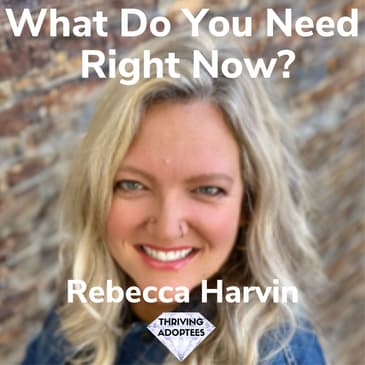
So many of us so much time ruminating on the past or worrying about the future. What Do You Need Right Now? The question can shock us into the present and unleash our wisdom. Listen in as Rebecca shares how that question changed everything and could do the same for you.
Rebecca Harvin is the founder and Executive Director of Haven. Rebecca, and her husband Brad, began fostering in 2017 and in July of 2022, they adopted a sibling set of four. They also have 2 biological children. Haven Retreats was born from a season of caregiver burnout and the assumption that if she needs a space for rest, therapy and Jesus... other people probably do too.
As an Enneagram 7, Rebecca loves adventure, traveling, spontaneity and engaging the world around her with humor and a positive outlook.
https://www.facebook.com/havenretreatsinc/
https://www.instagram.com/haven.retreats/?hl=en
https://www.instagram.com/rebeccaharvin/?hl=en
https://www.linkedin.com/in/rebecca-harvin/
Guests and the host are not (unless mentioned) licensed pscyho-therapists and speak from their own opinion only. Seek qualified advice if you need help.
Want to learn more about thriving for you, your kids, your families or your colleagues? Pick a time to talk here
[00:00:02] Hello everybody, welcome to another episode of Thriving Adoptees podcast. Today I'm delighted to be joined by Rebecca Harvin. I almost said Marvin then, but no it's definitely Harvin. Looking forward to our conversation today Rebecca. Me too, thanks for having me. You're welcome. So Rebecca and I spoke last week and we got on like a house on fire. And at one point in the conversation she was telling me a little bit about the story.
[00:00:28] And it was a question that came to you and the question was, how do we thrive? Yeah, it was like, we've been asking the wrong question. We've been asking how do we survive this? And I was wondering kind of out loud if we'd been asking the wrong question and if we could ask a different question, which was how do we thrive here?
[00:00:55] Yeah. So how long ago did that question come to you? Do you remember? Yep, that happened on New Year's Eve of 2018. Right. That's a pretty good memory there. Well, I did just tell you that I went to school to study history. So dates are kind of my thing.
[00:01:21] Ah, okay. Okay. So what have you learnt in those, well coming up five, seven years from that? What have you learnt about the answers to that question? Gosh, I think three different things. Can I do that? Can I answer three different ways? Okay.
[00:01:48] Okay. So the first thing that I have learned in a seven year, like 30,000 view is that I don't always remember to ask that question. There are definitely seasons where we slip back into the, how do we survive this instead of asking how do we thrive here?
[00:02:13] The second thing that I learned over the course of the last seven years was to fall madly in love with reality.
[00:02:26] And what I mean by that is not necessarily always being madly in love with the things that were happening in life, but this reckless commitment to being aware of reality and not telling a story about reality.
[00:02:48] Like I started becoming aware of the stories that I was telling myself that shaped my perspective of the scenario. Um, and so I started peeling that back layer by layer. And then the third thing that I've learned over the last seven years is to start asking myself, what do I need right now?
[00:03:15] Given that nothing might change about the landscape around me. What do I need right now in order to thrive here where my feet are and not wait for some ambiguous day off in the future? Yeah. Yeah. So, listeners, I perhaps should give you a bit of context.
[00:03:38] So, um, Rebecca is a mum of six, uh, four, uh, by adoption and two by kids and she also runs Haven retreats, which is what it sounds like. It's a retreat, but it's a retreat for where kids and parents go together when they're, when they're burnt out and are on the edge of burning out. I don't know. Um, and that you, you, you founded that on the back of one of those questions.
[00:04:08] Yeah. What do I need? What do I need? Right, right now. And the thing that you needed right now was a retreat, a space away, a sacred space, a piece, a space of peace, a retreat. Yeah. One of those things. So, um, falling madly in love with reality. So you've got this juxtaposition there between a reality and story.
[00:04:37] So how does that, what does that, what does that mean? Like, is it, is it about a view being slightly off? Like, Oh, okay. Is it trauma glasses? Sure. Well, we all tell ourselves stories all the time, right? Human beings are people of story. And so we tell ourselves stories to make sense of the world around us.
[00:05:00] If something were to happen, like, um, you didn't get invited to the party on Friday night that, and you find out that everybody's having a party. Instead of just saying, I didn't get invited to the party fact, you say, it's probably because, and then we fill in that gap with something that never honestly feels good to our bodies or our brains. Right. We filled it in that gap with a story of rejection.
[00:05:30] Um, and so I started learning how to peel that to, to come back to, I didn't get invited to the party on Friday night. In that example, um, in a much bigger, broader context, um, there's, um, can I tell you a story right now? Of course. Okay.
[00:05:55] So I was at one of our retreats and, um, somebody came up to me and they were, they were praying over my husband and I, and in the middle of the prayer, they said, um, you're going to receive, um, divine clarity this week. And I think that they thought that they were talking to both of us or whatever. It doesn't, it doesn't really matter, but I was leaving for Christian Alliance for Orphans conference CAFO. And I kind of held that, um, okay.
[00:06:25] Maybe some divine clarity is coming in that. Um, I have a. Rocky. Um, relationship with my father. I've, I have always had a rocky relationship with my father. Um, and that, that was at the surface during this season of life.
[00:06:50] So I am in a workshop and it's being led by, um, Dr. Kurt Thompson, who is a renowned psychiatrist. And he's talking about, um, suffering and like the neurodivergent path of healing or something like that. I'm completely botching the title suffering and the neuroplasticity of hope is the title of this workshop.
[00:07:16] And I'm sitting kind of in the front row and he's talking and he says, he's talking about suffering. And he says the three different ways that we suffer, we suffer because of things that happened to us. We suffer because of, um, things that. We do or say that that causes suffering. And then we suffer on our way towards healing. Right. And the second one was like things that we do or say, like stories that we tell ourselves that increases our suffering.
[00:07:46] And as he's walking on the stage, he says, um, my father will never love me in the way that I need him to is a story that you tell yourself that increases your suffering. And he makes direct eye contact with me. And he says, do you hear me? Do you understand what I'm saying to you? And I shake my head and I say, no, I don't understand this. And he stops what he's doing. There's 300 people in this room. He stops what he's doing. He looks me dead in my eyes.
[00:08:13] And he says, your father, my father will never love me in the way that I need him to is a story that you are telling yourself that is increasing your suffering. And I was like, well, I think that that was the moment. But I don't like know what it is. Right. And as I sat there thinking about it, because, because I did not experience my father's love in that season of life, nor do I experience it in this season of life. And so it was like, well, what is this? What is the question?
[00:08:42] What is the story? It's the will never that sentence right there increases my suffering because I apply it to my future. Does that make sense? Yeah. So it is currently accurate that my father does not love me in a way that I need him to. And I can, that's falling, that's falling in love with reality, understanding that and knowing that that's a part of my life right now. But to add will never is applying that to the future.
[00:09:12] And it leaves me without hope for that relationship. Yeah. Can I, I wanted to raise something that happened for me over the weekend, something that I saw over the weekend, which I think is similar, similar kind of a thing.
[00:09:33] So it's the difference between the sensation of panic and the thought of panic. Mm hmm. So we, we can have an, I had an embodied experience of panic. I guess what some people might call a panic attack. Sure.
[00:10:02] When I was in Orlando a few weeks ago and I thought I'd lost my car keys. Okay. I thought I'd lost, yeah. And how was I going to get home when I flew back to Manchester? That, there was the panic that was going on within my body. And then there was the thoughts that were going through my head. Mm hmm. And they're two completely different things. Mm hmm.
[00:10:32] Two different things. They're not, they aren't the same. You could, you could split those down to one. You really can't. You can separate it and you can tend to your body. Right. You can tend in that moment to my body is dysregulated. I'm having a panic. I need to breathe. Right. Like, how can I care for my body right now? I can, I can ground my feet on the floor and I can breathe and I can regulate my nervous system.
[00:11:00] The thoughts that are creating panic. They're all stories that our brain is making up. I'm not going to have my keys. I'm not going to be able to get home. I'm not going to be able to do X, Y, or Z. And you can come back to, first of all, you have to regulate your nervous system. You have to breathe here in a panic attack. And, and Lord knows I have, I have experienced panic attacks in the middle of all of in the middle of this too.
[00:11:30] Right. So just step one is I've got to breathe. I've got to ground myself. I'm here. And you bring yourself all the way back into reality. So for me, that looks like going, I'm 43. It looks like going, looking around the room and saying, I can see if you're in the parking lot, like I can see a red car. I see pavement. I see this. And then I remind myself that there's not a lion that's chasing me. Right. I just bring myself. I am safe.
[00:12:01] My body is safe because all of that is just messages of, of I'm not safe. Right. And then your brain is making up all of these supporting evidence. It's just creating supporting evidence. It's snowballing. It's snowballing. And so you get your, you get your nervous system regulated and then you go, okay, what do I know to be true? I'm 43. I'm standing here. I am fully safe. Okay. What am I afraid of?
[00:12:30] I'm afraid that my keys are not going to be here. Okay. Like there, you know, like, and you just kind of start working your way into it. Um, is definitely, it's a tool that I use all the time. So the thought I had on the back of that thought was that's what the, there's this distinction. There's a distinction between trauma and beliefs about trauma. Mm. Mm.
[00:13:00] So trauma isn't something we can put into words. Right. We can describe it. Right. We can describe it. We can tell a story about it. Mm hmm. But it's not a story. And it's trauma isn't a story. It's a felt sensation.
[00:13:19] And the thought that came up, the thought that prompted that was pre verbal trauma doesn't have words. Right. So if preacher, if pre verbal trauma doesn't have words, then anything I say about pre verbal trauma must be a fabrication. It must be a belief. It must be a story.
[00:13:49] Mm hmm. Mm hmm. So like, and this came as clear, I read a, I read a post on Facebook, and I just thought, that's a belief about story. That's a belief about trauma, that description of trauma. And, and it was similar to your thing with your dad, like the never, like, yes, I will never. Right. Yes.
[00:14:15] This, this thing, this, this post on Facebook was a belief about trauma, but trauma, you can't put trauma into words. You can't put, especially you can't put pre verbal trauma into words, because I had no words. I had no words when my, I had no words, when my, my mother placed me, you know, I could say my mother placed me, or I could say my mother relinquished me, couldn't I? And there would be, there would be a big difference around that. Mm hmm.
[00:14:45] But, but our, our, we've got, we've got, we're on dogs three and four, right? Okay. But, but out of our four dogs, the first one, I think was the one that cried the most on the night, you know, the first night away from her mom is eight weeks old. Yeah. And she's, she's spending that night with us and she's crying, right? Yeah. She's crying. So she hasn't, but she hasn't got words either. It's for her. It's a feeling.
[00:15:15] Trauma is the feeling. It's not, it's not something with words. Mm hmm. So it's, the whole thing is fabricate. The whole thing is, we fabricated it. Mm hmm. We fabricated it. And as you said, before we started recording, our, our beliefs make sense to us. Yeah. Our habits make sense to us. The way we vote makes sense to us. Yep. Right.
[00:15:43] And our story makes sense to them. That story makes sense to them. Yeah. Our story makes sense to us. Yep. Our beliefs about trauma make, make sense to us. Our trauma history makes sense to us. Yes. And, but it's, it's not, it's not words. Trauma isn't words. It's, it's sensations. Yeah. Yeah.
[00:16:10] I've heard of trauma as being like, it is, it is, it's a very embodied experience. You're absolutely correct about that. Like it lives. Um, my friend and I, when we talk about certain aspects of, of traumas that we've experienced in life. Um, and beliefs that have come because of that. We talk about it as living between the very cells of our bodies.
[00:16:39] Like, um, that to, that it can cause a lot of confusion moving into healing, moving into more freedom or, or whatever, because. These belief patterns live so deeply inside of us that it feels. Um, as if it lives in between the cells. Right. Um, in between the cells, in between the cells is how my friends and my friend and I talk about it.
[00:17:08] and the issue is in the tissue is what I've heard yeah there we go also the body keeps the score the body keeps the score and have you seen Bessel van der Kolk dancing no should I well maybe not I don't know his body is keeping the score and his body is keeping the score
[00:17:38] of how many pints of beer he drinks a night yeah I love beer I love beer so does Bessel so does Bessel yeah or maybe he loves food I don't know his body is keeping the score of something and that's to do with his intake or his lack of exercise one of those two things our bodies our bodies do keep
[00:18:07] like in that kind of sense right like our bodies gosh yeah I had a I had a couple medical procedures within the last two months and the first they're very similar in nature like the first one we were hoping would be enough that we didn't need the second one right but the first one said
[00:18:36] oh there's actually more problems than we know and we have to google the problems so we're definitely going to need the second the second procedure and slight concern there that well you know I'm not I'm not one to like get all up into like I don't web MD myself right like I kind of follow a doctor's leading until the doctor like can actually but the doctor's using google too that's the challenge
[00:19:05] the doctor actually did use google too the doctor was like I had to google this I've never seen I've never seen how this report came back but um the first procedure I respond I like I started having a panic attack on the way to the procedure um and my husband was driving the car no I was driving the car that was fun I was driving the car and I couldn't breathe I was completely beside myself because I had forgot my medicine at home that
[00:19:35] that she had prescribed for the procedure and I was gonna have to do that anyhow it's a it's a procedure you could do without medicine but it's gonna be very uncomfortable and so and I'm in the office and Simon when I tell you I am like I'm 43 I'm in this room I see the clouds I see that like and I'm like doing this I'm safe I'm safe I'm totally safe and it took me a long time in that room to realize
[00:20:03] that this procedure was triggering trauma from my past like I was it took me a very long time but I eventually realized what was happening and when it did I was able to use all of the tools that I've acquired over the last couple of years and therapies and different things and able to ground my body and all of that all of it well then I had to get back for this procedure just a couple days ago and
[00:20:32] it was a remarkable difference in my body right because I had attuned to my body the first time like it was saying all kinds of things that it didn't have words for I was falling apart in this doctor's office like they were like maybe you need to go home and I was like no just do the procedure but this time I was able to like really what I did and it was so sweet was like I was able to to care and to tend to my body on the front end
[00:21:01] and to say like you're good and you're worthy of being cared for and that's what we're doing here like we're just we're tending to you here and we just have to ask like very sweetly interacting this is brand new stuff to me like the body keeps the score shows up in real life but but tending to our bodies nurturing our bodies being being caring and kind that is brand new stuff to me um
[00:21:32] but I got to see the difference I got to see what it felt like to to tend to I also put my medicine in my car the night before so I did not have a panic attack on the way but anyhow it's it's very um trauma trauma does lock itself into our bodies for sure I have definitely experienced that I haven't done this for I haven't shared this on a podcast for a while and I'm sure I haven't shared
[00:22:02] it with you when I when I heard the body keeps the score I I thought about I thought about I was swimming and the following day or the same day as I heard about and I thought soccer I thought soccer a soccer analogy right so the the body keep the body keeps the score and uh for adoptees you know it's trauma scores first so it's it's trauma
[00:22:31] nil sorry it's trauma one adoptees nil trauma one adoptees nil but then what uh healing is about and uh the the uh the the conversations around that space and the conversations around healing in general uh means that uh the final score after 90 minutes is
[00:23:01] trauma one adoptees united 10 i love that i love that i love that so much simon let's make it even better adoption constellation 10 because otherwise adoptees united is a little bit you know um othering isn't it for for adoptive moms right so adoption constellation 10 is it othering or does it say
[00:23:31] like adoptees have so much agency and ability to heal and beauty in in the healing journey that other people get to come alongside i get to come alongside my kids but it is my children who actually are going to be the ones that do the work of healing over the course of their lives and i get a front row seat
[00:24:00] i get to be at adoptees united on the front row waving my like big big finger like fan number one right and i i have a job to do in that cheering section too but at the end of their life it will be my children who get to say trauma got the first trauma got the first score but i have dedicated my life
[00:24:29] to to winning this game and trauma doesn't actually get the final score here and that so that's going to be the shortest podcast i've ever done after 30 minutes right now we're going into extra time because that was the perfect point on which to end i mean we can if you want to right sorry you're totally fine but i see you getting i see you getting emotional on the screen and
[00:24:59] i i you know for so long as an adoptive mom i i i gripped um i over emphasized my role as the main character in the healing story and i made it about my ability to do the right things and say the right things and bring bring my kids to the right therapies and do i had this i over
[00:25:29] emphasized my role as the main i'm not the main character in their healing story they are the main characters and um and i get to be on the front row seat and i i get to watch them play this out and and release for me it's about releasing the outcome it's about releasing control and it's about saying like how can i
[00:25:58] let's use this soccer analogy all the way how can i set the field up how can how can i set the how can i how can i create a space that is healing for you how can i how can i set your life up in a way that is healing that you have the ability but to remove somebody's agency kind of a little bit creates a victim right
[00:26:28] like says like you're not able to do this and so it has to be mine and i will i will like dole out healing through the years but like you know what i mean it's a medical model but but but to what if what if they're not wounded to empower say that again what if they're not wounded what if they're not wounded um you and i both
[00:26:58] don't like the term broken right like you and i well i'm using those i would use those as um uh what's the word synonyms right i would use broken or um broken or wounded i would have those in i would use those interchangeably they have that both of them both of them uh to me don't reflect the truth neither of those reflects the truth
[00:27:29] okay i have a thought about that but i want to know what you what reflects the truth well i'm supposed to be interviewing you so you know what i mean um so the the let me go back before before i answer that question let me go back okay to to the moment that you realized you were um oh let's say over emphasizing your role
[00:27:59] oh sure yeah is that the word over emphasizing over yeah that's the word that i used is it okay oh wow right so what what was it that helped you see that what was it that helped me see that do you do you remember you remembered oh yes i remember um i remember um is this a bit embarrassing is that why no it's not embarrassing good it's not embarrassing
[00:28:29] and i'm just trying to like figure out how to package it succinctly um i realized that i was over emphasizing my role because i was i was just kind of at the complete and utter end of myself oh and so i was like something is not working here like i'm i'm waking up every day and i and by the end of the day
[00:28:58] i am completely and utterly depleted and actually we've been in this season where i i am so depleted and nothing that i'm doing is working um and then i asked the question like what what what is like you know like i started i called a friend actually and um she helped guide me through some questions like she's a really good external processor with me and she just kind of asks questions
[00:29:28] until i get to it and then i was like oh i am holding on so tight to um demanding outcomes that i'm not at all um i'm not able anymore to see my children for who they are i'm not i'm not able to um um i'm i'm putting such a high high pressure situation on myself my
[00:29:58] well my marriage therapist called it superhuman expectations of myself and i um i just kind of sat with that for a while and said okay what actually what would not superhuman expectations look like what does it look like then i you know i had to do a whole lot of work in codependency actually is where i ended up having to go to was like oh i'm i'm responsible for myself
[00:30:28] i'm responsible to a lot of things and i'm responsible for my children right like their safety and their and their upbringing and everything but at the end of the day i'm not responsible for the outcomes trying too hard trying too hard and the realization came to you in the pit though in the pit in the pit
[00:31:01] that's interesting isn't it because i often think of realizations coming to me when i'm feeling calm oh you know so i've heard this stuff i heard this story about from a mentor of mine and he was you know he's talking about he heard it from somebody else did he yeah um um so they interviewed
[00:31:32] so many uh managers across the u.s when do you have your best ideas and they were it was like in in the shower in the shower driving my car in the bath yeah okay you've heard that one right and and so the so the ceo here's this here's this story and and and so his question to the to the facilitator that shared this gem with him is uh so how many baths do my
[00:32:02] staff need to take my showers do my staff need to take well i think that really the question is like how much margin do we have right because those are the places that create margin in our lives we're we're by ourselves in the shower we're by ourselves in the car in those scenarios where we're just driving maybe we're listening to music maybe we're not but um i drive a ton and so the car is always where i process i was driving
[00:32:33] i was driving when i was having this conversation with my friend but at my core i love to solve a problem it's one of the things that i love in life is solving problems so in the pit is actually where you kind of see you're experiencing the problem and so i will go from that moment to like okay something's not working and i'll and i will pull myself out and look at it it's it's like i kind of visualize um
[00:33:02] like pieces on a table and i just kind of visualize what's happening and then i see what needs to be like moved around or or whatever so in that particular um when i started to understand that i was trying too hard that i was over emphasizing my role the it was really the like despondence that i was feeling
[00:33:32] in in our family situation that was the key that unlocked it yeah so what what i'm lesson i'm taking from this or the insight i'm having from this is that i can have insights in the shower i can have insights in the pit if i think of probably the most profound insights they've been in the pit
[00:34:03] what it what do how do i want to say this i i think that we get to um the good can come from anywhere right and so if we stop i'm not a fan of pits in life like being i'm not a fan of despondence or all of the
[00:34:33] negative feelings that come what sort of a living the human do i what sort of a person are you you're not a fan i'm not a fan i'm not a fan some people are i'm like i'm like give me the heck out of dodge you know but i have learned in the same way that like i've learned that when my body is having a large reaction to something it's actually trying to speak to me and so the
[00:35:03] pit like those big realizations come in the pit because life our body it's it's getting really loud right then and if we stop and and ask some questions it has a lot to tell us and the way that i felt that particular day had a lot to tell me yeah so you used a key word there right for me um a kind of a
[00:35:33] word realizations right and and you you talked about kurt thompson who a few people have mentioned to me actually i did some research did some digging around but i couldn't say anything that really wowed me maybe i didn't need to take another look at that because yeah um he used the word neuroplasticity in the name of his
[00:36:02] talk and that feels to me i think the jargon of the of the moment is gate capped that that you know neuroplasticity feels something that we need something like somebody else to help us with right not necessarily kurt thompson but maybe kurt thompson or or
[00:36:31] maybe the guy i mentioned before my mentor i was talking about who told the shower story guy called michael neom neuroplasticity feels like it's it's the domain of a specialist oh okay and and or but well i'm not even sure which right but neuroplasticity doesn't really
[00:37:01] mean anything but realizations that yeah they are neuroplasticity i'm sorry yeah a real like a realization is proof of neuroplasticity that's neuroplasticity is a change a change of a change in our mind a change of mind a change of perspective a realization an epiphany a shift in perspective a new idea but the bolt out
[00:37:30] of the blue an insight an epiphanate right it's like an epiphany but a bit smaller you know all these words all these words like you go on a course and you get epiphany envy right people are having bigger epiphanies than you you're just having epiphanates but so neuroplasticity is a change of mind a change of mind is a realization that's yeah that's
[00:37:59] how i see it and that what that the fact that i can but i can i can give a new name to it gives me a little bit more hope he talks about the neuroplasticity of hope well seeing that neuroplasticity is realizations gives me more hope because i'm more hopeful that my beliefs might change i might get out of my way
[00:38:29] more of the time you know this yeah yeah and just knowing like our brain is not a fixed organ right like our brains can grow and they can change and they can tell different stories right like they can we can create new neural pathways that instead of doing something the same reaching for the same thing we can you
[00:38:59] know don't don't realization sound a little bit a bit more attainable than changing our neural pathways um yeah for sure that that sounds um i think that i like it in terms of behavior like i like that the realization that leads to behavior change um yeah new thought new belief new behavior
[00:39:29] new be yeah new behavior new new level of um freedom you know like new new experience in the world around you and ability to um interact with the people around you so what are some of the biggest shifts then for you you've you've talked one of them you've talked about uh is the fact that you
[00:39:58] realized that you are overemphasizing your your part in the part in the game um what other big realizations have created the most change in your behavior one of my kids one of the one of the four children that we adopted
[00:40:28] um coming to our house so so we were foster parents and and we ended up adopting from foster care and this kid this child felt very safe and loved in their first foster home and blossomed there coming to our you say thrived instead
[00:40:57] oh thrived really truly like truly um i'm pulling you like but but that would actually be the word to describe how they were in their in their first foster home and in there in my kids like story of unfolding events as all four of them come together in our home this this one is dropped off and
[00:41:26] um and you can see the trauma happening as it's as the day unfolds like you could see you could watch them experience the trauma of being left at our at our home um with no verbal understanding of what was happening nothing like that that created for for this child and i a deep sense for them of of lack of safety in our home
[00:41:56] regardless of what i did or didn't do right and it persisted for years wow so you can imagine the relationship and also this one is this has this indomitable will that is so beautiful and i love a strong will and a child um so but if you mix that with i don't you took
[00:42:26] me away from this place that i loved um there's a whole lot of a whole lot of anger and distrust and probably borderline hate and also a desire to be loved and um a lot of conflicting emotions and a deep belief that now they are not safe actually anywhere and they need to keep themselves safe
[00:42:55] and so there i was with this over emphasis of my own ability to to uh create safety and healing and all and all that stuff and when i let go of that what i ended up having to do is accept this relationship we're back to falling madly in love with reality right i had to accept the bumps and the bruises and the nicks
[00:43:25] that had happened in this relationship with one of my children and the complicated feelings on both sides and i had to give it space and and accept that it was part of our story in that season of life by doing that and it was as if instead of fighting against it and trying to make it something that it wasn't by allowing it to be what it was i
[00:43:54] let both of us breathe simon we really like each other now we really we love each other now this is a child that i now am able to delight in but it is an absolute reflection of me actually taking my hands off the wheel and saying like i'm gonna fall madly in love with this reality
[00:44:23] yeah it's funny you say taking your hand off the wheel because as you were describing it like 10 minutes more than 10 minutes ago i actually thought about white knuckling that was a metaphor that came to mind and holding holding onto the wheel too tightly that is exactly how it felt it felt like just gripping this white knuckle grip holding all of the pieces of my life together as it felt like it was all falling apart
[00:44:51] and this learning to unclench my fist and to hold my hands out and say like here i am okay this is i'm gonna i'm gonna i'm accept life as it comes um and thrive here i can like but what i'm actually really saying is that i had to get to a place where i had to let go of
[00:45:21] a dream of having a very close relationship with one of my children which has always been like i want i want i'm a mother i want to be like a mother hen collecting her little ducklings or chicks or you know what i mean and i had to release that dream and say i don't get to i don't i don't know how this is gonna turn out and statistics can say a
[00:45:51] whole lot of things that can be actually really scary but what i can do is show up faithfully every single day and and what i can do is when my child walks into the room i can look at them with delight in my eyes and what i can do is i can find ways to connect here in the middle of a dysfunctional
[00:46:21] relationship that allow both of us space to breathe and not force this into being you can't force somebody to trust you you can only prove yourself trustworthy you know what i mean like that and just letting it letting letting us breathe created space to thrive and there
[00:46:51] we have the second ending of the pod and we're coming up on time as well so i perfect yeah wow that's great thank you rebecca thank you thank you we'll speak to you again soon bye bye